In brief
A photo of two Catholic bishops praying with Donald Trump in the Oval Office sparked debate after it was released on 22 October. The bishops, Milwaukee Archbishop Jeffrey Grob and Des Moines Bishop William Joensen, said the meeting was a private, non‑political dialogue. They later expressed that they did not intend to endorse any political agenda, warning that the images could be exploited for partisan purposes. The incident has highlighted the Catholic Church’s delicate balance between religious outreach and political neutrality ahead of the upcoming mid‑term elections.
Catholic Bishops Apologise Over Trump Meeting That Stirred Controversy
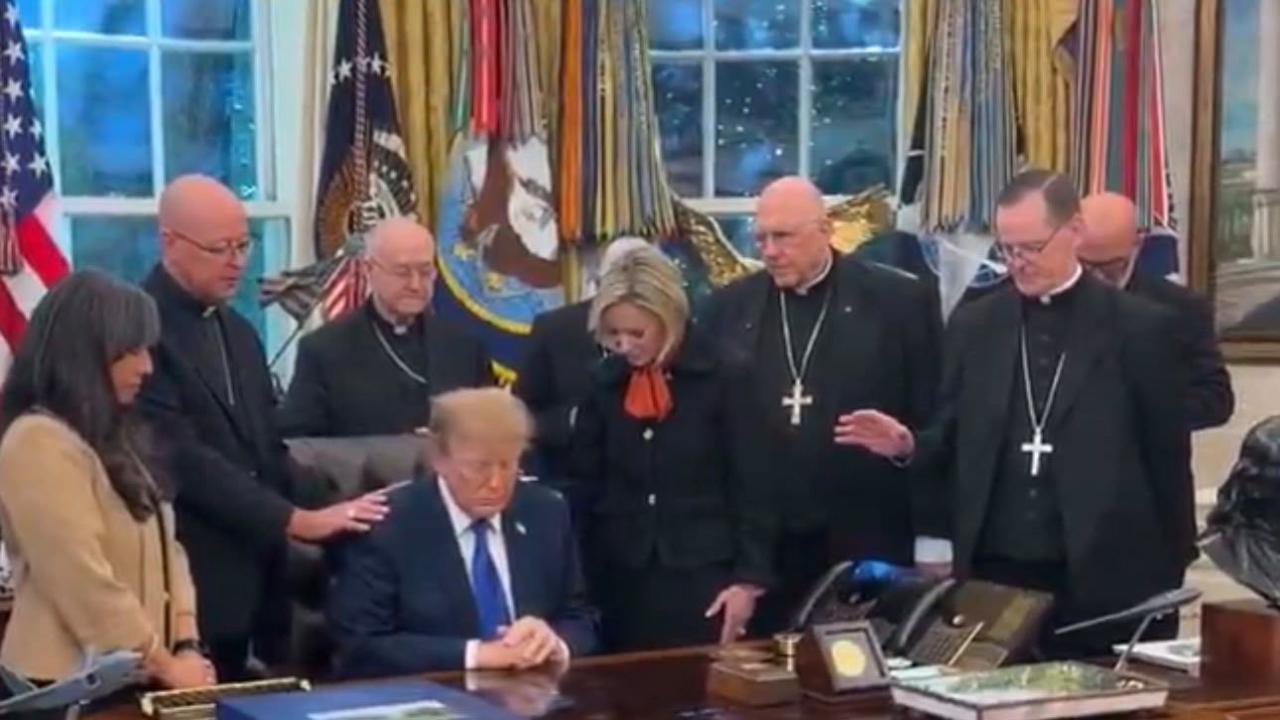
Images of Milwaukee Archbishop Jeffrey Grob and Des Moines Bishop William Joensen praying alongside former President Donald Trump in the Oval Office were released by White House special assistant Margo Martin on 22 October. The group's presence has since become a flashpoint for critics who see the scene as a political statement, especially with a U.S. presidential election less than two weeks away.
The bishops told the BBC that their visit was planned as a private faith exchange organized from the White House Faith Office. “It was intended to be a private moment not a political photo‑op,” Archbishop Grob said. He added that they were surprised when the footage was made public, fearing it could be co‑opted by partisan actors.
Bishop Joensen clarified that the meeting addressed matters such as immigration policy, visas for international clergy, and the “exploitation of vulnerable poor people.” He stressed, “In no way did any of us intend by our involvement to endorse any political party or candidate,” and lamented that the images may have been used for “partisan political purposes.”
The photograph of the bishops at the Resolute Desk has elicited a wave of public reactions. Many Catholics expressed concern, arguing that the meeting may have inadvertently sign‑posted support for the administration’s hard‑line immigration stance. Others noted that the bishops’ apology comes at a time when Pew Research finds a decline in Trump’s approval among U.S. Catholics as the mid‑term elections approach.
While the White House did not comment specifically on the bishops’ statements, spokesperson Taylor Rogers issued a brief statement praising Trump’s record with the Catholic community. Critics argue the image’s release betrays a broader issue of how religious leaders navigate political engagement in an era of heightened public scrutiny.
The incident underscores the complex role of religious authority in contemporary politics, where symbolic gestures can become amplified through social media and partisan networks. As the 3 November mid‑term elections loom, the Catholic vote remains a pivotal demographic, with recent polls indicating a shift toward Democratic support among many churchgoers.