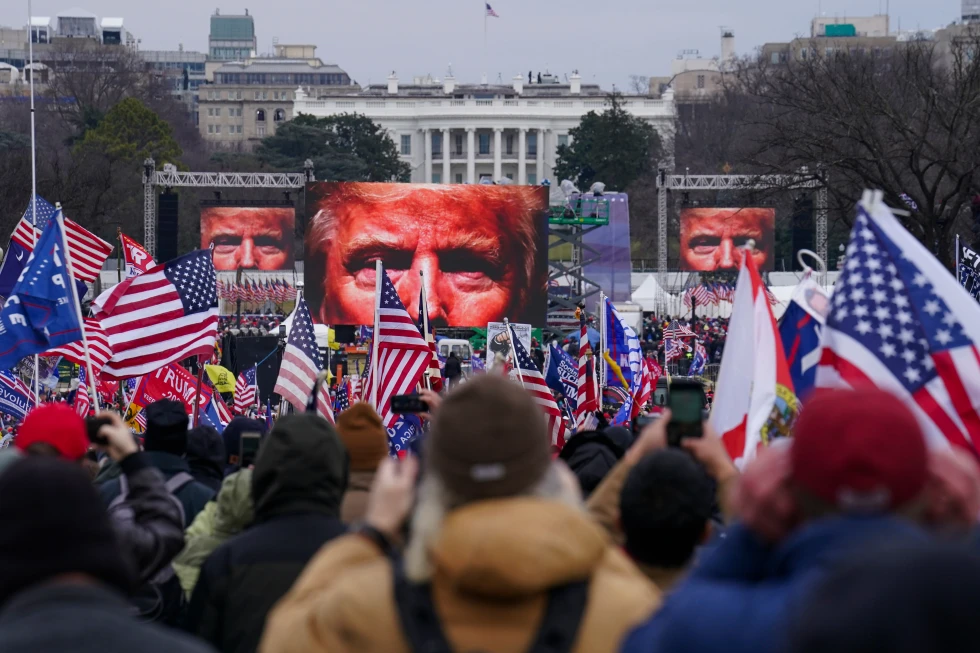
Former President Donald Trump has not wavered in his baseless assertion that the 2020 presidential election was rife with fraud, even as he regained presidential status. His latest move involves pressuring the federal government to validate these claims, an initiative underscored by the FBI's recent search of election headquarters in Fulton County, Georgia, where ballots from the contentious election are sought. This action aligns with Trump's comments at the World Economic Forum in Davos, suggesting impending legal actions related to the election.
Schooling the press on the potential ramifications, UCLA law professor Rick Hasen remarked on Trump’s transformation of federal agencies into his own tools of retribution. The response from lawmakers, including Georgia's Senator Jon Ossoff, underscores the growing anxiety over Trump's administration wielding federal power as a means of personal advancement, likening it to a broader pattern of controlling mechanisms for personal gain.
As election officials ramp up preparations for the upcoming 2026 midterms, fears pervade concerning Trump's willingness to engage in similar tactics as in 2020, where he sought to seize voting equipment by military means. Kristin Nabers, from the advocacy group All Voting Is Local, described Georgia's situation as a 'template', worrying that if successful there, such actions could spread to other states.
The ongoing obsession with Georgia stems from Trump’s notorious call to Secretary of State Brad Raffensperger, pressuring him to 'find' an additional 11,780 votes—a request met with refusal. Multiple investigations and recounts, frequently initiated by Republicans, have consistently reaffirmed President Joe Biden's victory in the state, emphasizing that Trump's legal manifestations have been widely dismissed as lacking merit.
With the landscape shifting again as election officials prepare for the midterms, legal scholars highlight the potential misuse of presidential power, leaving many wondering if Trump's violations may set precedents that threaten the integrity of U.S. electoral processes. As his narrative continues to gain traction, the implications of Trump's rhetoric and actions raise critical questions about the future state of American democracy.
Schooling the press on the potential ramifications, UCLA law professor Rick Hasen remarked on Trump’s transformation of federal agencies into his own tools of retribution. The response from lawmakers, including Georgia's Senator Jon Ossoff, underscores the growing anxiety over Trump's administration wielding federal power as a means of personal advancement, likening it to a broader pattern of controlling mechanisms for personal gain.
As election officials ramp up preparations for the upcoming 2026 midterms, fears pervade concerning Trump's willingness to engage in similar tactics as in 2020, where he sought to seize voting equipment by military means. Kristin Nabers, from the advocacy group All Voting Is Local, described Georgia's situation as a 'template', worrying that if successful there, such actions could spread to other states.
The ongoing obsession with Georgia stems from Trump’s notorious call to Secretary of State Brad Raffensperger, pressuring him to 'find' an additional 11,780 votes—a request met with refusal. Multiple investigations and recounts, frequently initiated by Republicans, have consistently reaffirmed President Joe Biden's victory in the state, emphasizing that Trump's legal manifestations have been widely dismissed as lacking merit.
With the landscape shifting again as election officials prepare for the midterms, legal scholars highlight the potential misuse of presidential power, leaving many wondering if Trump's violations may set precedents that threaten the integrity of U.S. electoral processes. As his narrative continues to gain traction, the implications of Trump's rhetoric and actions raise critical questions about the future state of American democracy.