US President Donald Trump has reversed a key Obama-era scientific ruling that underpins all federal actions on curbing planet-warming gases.
The so-called 2009 endangerment finding concluded that a range of greenhouse gases were a threat to public health. It's become the legal bedrock of federal efforts to rein in emissions, especially in vehicles.
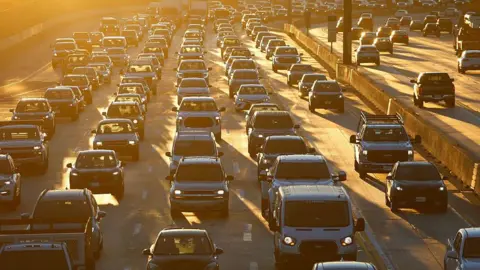
The White House called the reversal the largest deregulation in American history, saying it would make cars cheaper, bringing down costs for automakers by $2,400 per vehicle.
Environmental groups say the move is by far the most significant rollback on climate change yet attempted and are set to challenge it in the courts.
Speaking in the Oval Office on Thursday, Trump stated that the 2009 ruling was a disastrous Obama era policy that severely damaged the American auto industry and massively drove up prices for American consumers. He referred to the ruling as the legal foundation for what he called the Green New Scam by Democrats.
The Environmental Protection Agency (EPA) first took a stance on climate change in 2009, recognizing several greenhouse gases as dangers to human health. It provided a crucial regulatory framework in the absence of congressional action on climate change.
The rollback is projected to save the economy over $1 trillion, as administration officials claim it would reduce operating costs for various sectors, including the automotive industry. However, critics argue it could lead to an increase in fuel costs by $1.4 trillion and result in additional health-related issues, including thousands of premature deaths.
While the Trump administration emphasizes economic benefits, environmentalists express concern over the potential health impacts and air quality deterioration resulting from higher emissions. Leading voices in the environmental sector prepare for substantial legal battles to contest the administration's recent decision.
In addition, the regulatory changes could complicate the landscape for U.S. auto manufacturers, potentially impacting their competitiveness in the global market. Legal experts anticipate that this issue may be taken up by the Supreme Court, which could define the power of the EPA to regulate greenhouse gases in the future.