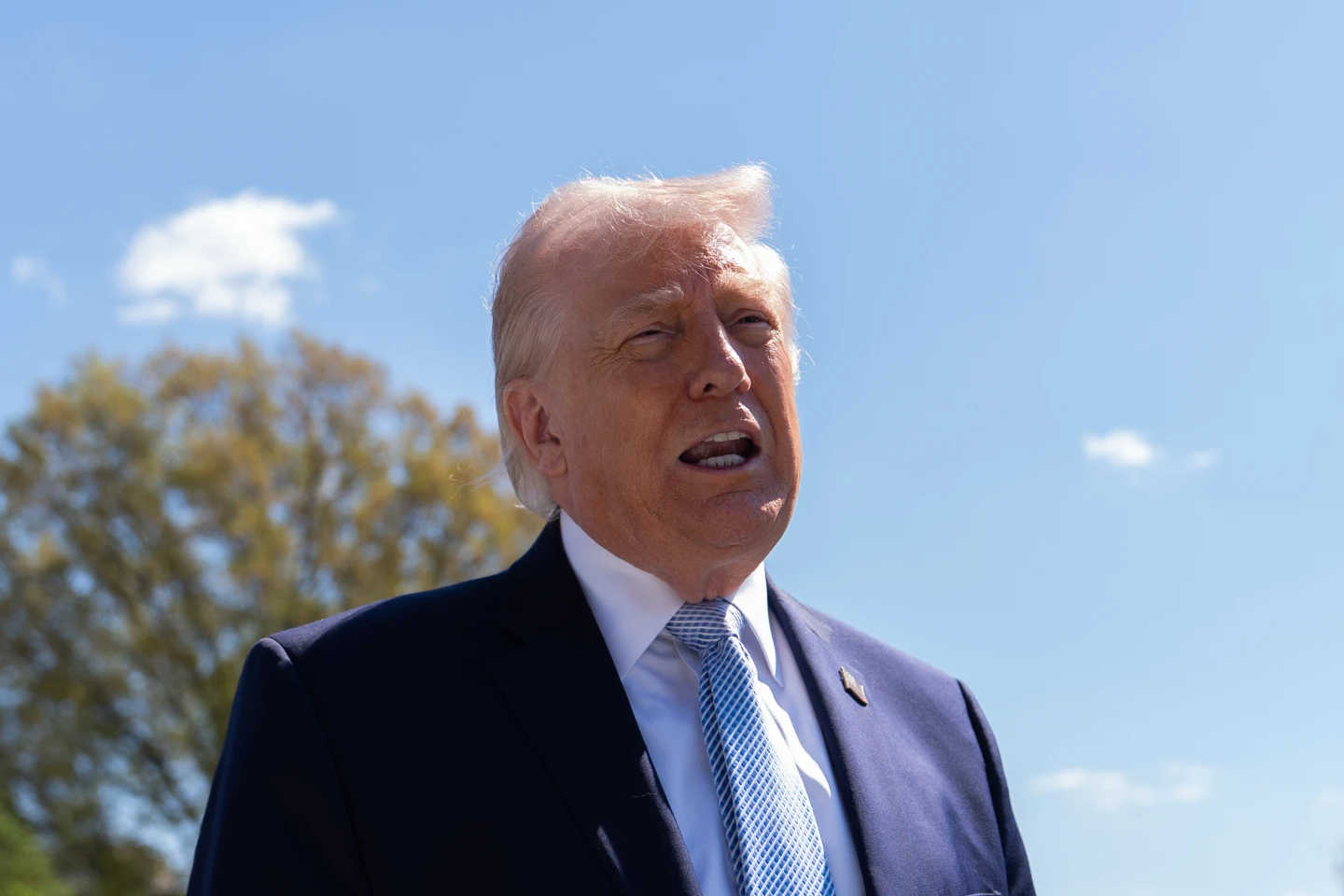
MIAMI (AP) — In a contentious turn, former President Donald Trump recently shared a graphic video of a fatal hammer attack, allegedly perpetrated by a Haitian immigrant. The act, which resulted in the death of a 51-year-old Bangladeshi immigrant in Florida, has been seized upon by Trump to advocate for his administration's mass deportation agenda.
Rolbert Joachin, 40, was arrested and charged with the murder that took place in Fort Myers, around 160 miles northwest of Miami, in early April. Trump portrayed the tragic incident as a validation of his longstanding narrative that immigrants bring crime to the United States, while simultaneously criticizing Democrats and former President Joe Biden for perceived leniency towards immigrant criminals.
The video of her brutal slaying is one of the most vicious things you will ever see, Trump stated in his post, referring to Joachin as an animal.\
Critics have rebuked Trump’s rhetoric, asserting that such portrayals harmfully stereotype all immigrants based on the actions of one individual. Studies have shown that undocumented individuals are generally less likely than native-born Americans to be involved in violent crimes.
Guerline Jozef, executive director of the Haitian Bridge Alliance, condemned the violence and warned against using this tragic event to demonize Haitian immigrants, emphasizing that one person's actions do not define an entire community.
Details of the Incident
The violent act occurred outside a Chevron gas station where the victim, identified as Nilufa Easmin, was employed. Security footage captured Joachin attacking her with a hammer after a brief interaction. Despite her efforts to flee, she was fatally injured in the incident that left the community in shock.
Easmin’s passing has prompted calls for justice and brought attention to the broader conversation about immigration and crime. Local advocates have remarked on her dedication as a single mother and hard worker, highlighting the need for compassion rather than vilification.
Political Repercussions
Trump has blamed Biden’s administration for allowing Joachin to remain in the U.S. under Temporary Protected Status (TPS), which was recently revoked after the murder. Kelei Walker, acting head of ICE in Miami, stated that Joachin had entered the U.S. on a boat in 2022 and was granted TPS in 2023, a decision now under fire after the tragic incident.
The discourse surrounding this incident underscores the split in American attitudes toward immigration and reinforces the ongoing debate about TPS and deportation policies, particularly affecting Haitian nationals.
As Trump continues to share this narrative, the implications for immigrant communities are deeply felt, with many calling for a reassessment of how these tragic events are discussed and utilized in political contexts.