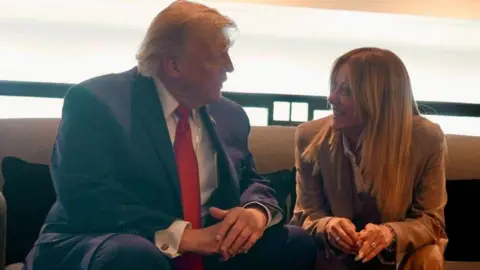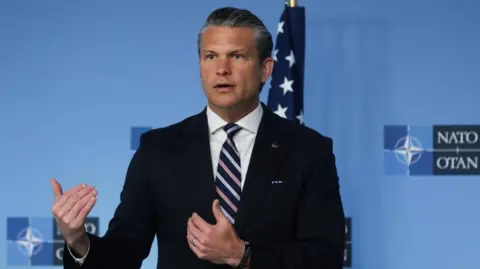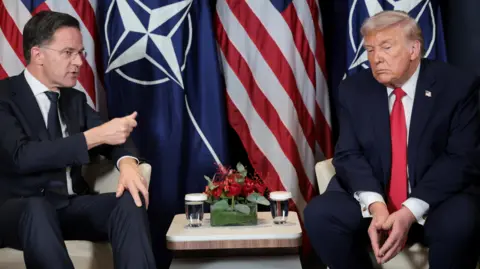
Donald Trump has again attacked NATO for not supporting the US in the Iran war, following a private meeting with its Secretary General Mark Rutte at the White House.
In a post shared to Truth Social after the meeting, the US President said: NATO WASN'T THERE WHEN WE NEEDED THEM, AND THEY WON'T BE THERE IF WE NEED THEM AGAIN.
Meanwhile, Rutte has described his meeting with Trump as very frank and very open, despite clear disagreements.
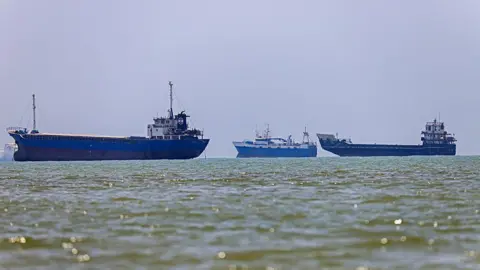
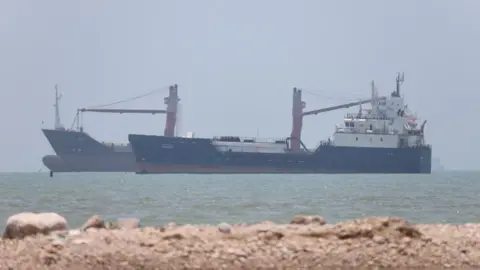
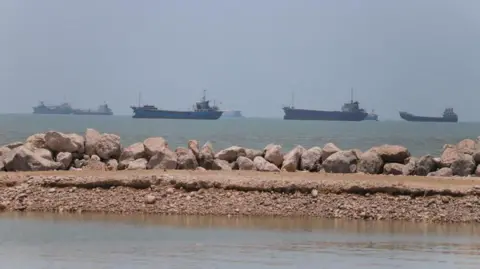
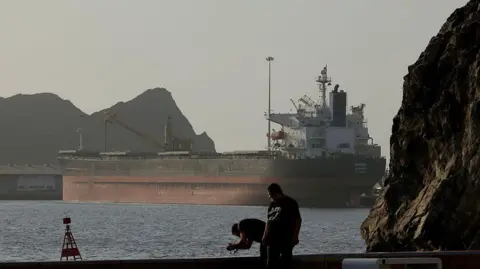
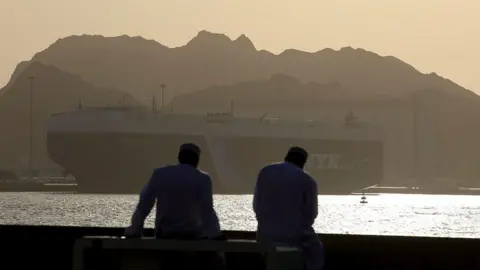
Ahead of the talks on Wednesday, Trump had toyed with the idea of quitting the trans-Atlantic military alliance after several NATO countries resisted his calls to help reopen the Strait of Hormuz to ease rising global oil prices.
The White House did not disclose details of the talk. The Secretary General was at the White House for over two hours, although it is unknown how long the meeting with Trump lasted.
The meeting was expected to cajole Trump that it's in his interest—and America's—to stay in the NATO alliance. However, it's clear that Trump still harbors deep misgivings about the alliance and those member countries that he feels did not provide enough support before and during Operation Epic Fury.
In recent weeks, Trump has threatened to withdraw from the 32-member transatlantic alliance. Asked about NATO's role in the ongoing conflict with Iran, White House Press Secretary Karoline Leavitt stated that NATO was tested and they failed.
Leavitt also mentioned that NATO countries had turned their backs on the American people, who fund their nations' defense, and that Trump would have a very frank and candid conversation with the NATO chief.
While much of Rutte's message appeared to stress that many European countries did stand in support, he noted that the large majority of European nations has been helpful with basing, logistics, and overflights.
Rutte remarked that the situation presents a nuanced picture, but whether or not that point is sufficient for Trump remains to be seen. Rutte also credited Trump's leadership for reducing nuclear threats from Iran.
Trump's frustrations, including those surrounding past discussions on Greenland, further complicate the multifaceted dynamics of US-NATO relations, especially in light of the ongoing Iranian conflict, which is considered one of the greatest challenges facing the alliance in its history.