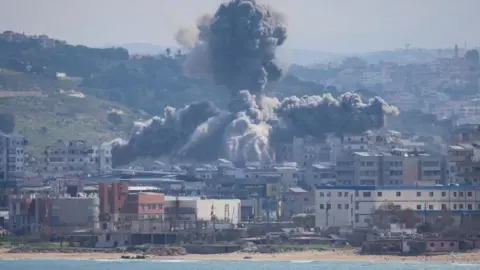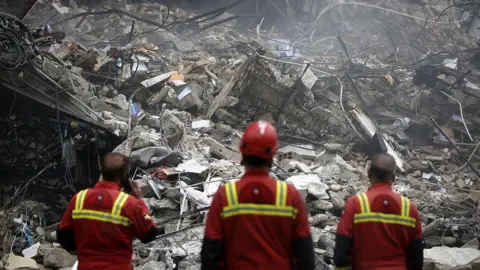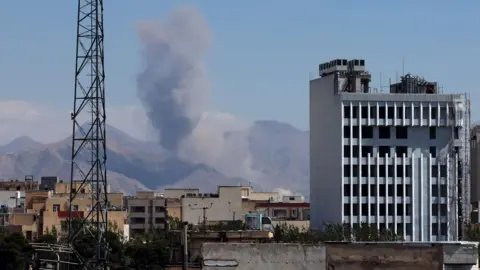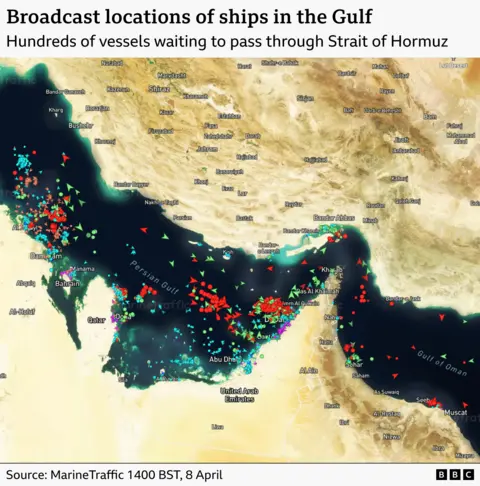
The Strait of Hormuz has become a focal point of the ongoing tensions involving Iran, the US, and Israel after Tehran effectively tightened its control over this critical shipping corridor, which sees about 20% of the world's oil and liquefied natural gas transported daily.
A ceasefire was agreed upon recently, under which the condition of 'safe passage' through the Strait is paramount, yet analysis reveals only a scant number of vessels have crossed since the truce.
The upheaval over recent weeks has reverberated throughout the global economy, leading to spikes in energy prices and highlighting the international supply chain's heavy reliance on this narrow waterway, measuring just 21 miles at its narrowest.
Besides oil, the Gulf is essential for transporting chemicals critical in the production of microchips, pharmaceuticals, and fertilizers. Although oil prices dipped following the ceasefire announcement, maritime experts predict only a trickle of vessels will attempt to navigate the strait.
Industry analysts express concerns about the lack of clear details concerning the procedures needed for transit, with some vessels receiving warnings from Iranian naval forces that unauthorized crossings would be met with military force.
As of April 8, only three tankers had managed the crossing, a significant drop from the typical average of 138 vessels per day prior to the conflict. This precarious interim status is compounded by fears of further military action and mine hazards, which complicate potential shipping routes.
Adding to the uncertainty, reports indicate that ships might need to pay tolls for guaranteed safe passage—a stipulation that raises questions about compliance with international sanctions against Iran. Cautious industry leaders contend that the window of two weeks for the ceasefire poses significant risks—deterring many shipping lines from entering the Gulf.
Confirmation of safe navigation protocols remains critical as nearly 800 vessels remain stranded, with shipping experts urging that priorities should be given to releasing those already loaded with cargo.