The Minerva Gloria is docked at a wharf in the Mississippi Sound, not far from the US's vast oil reserves in the Gulf of Mexico. The ship, 820ft (250m) long, is carrying precious cargo from Venezuela that, just six months ago, would have been impossible to bring to the US - 400,000 barrels of crude oil.
Venezuela has the world's largest oil reserves. Under Venezuela's former president Nicholas Maduro, oil exports had dropped significantly due to a lack of investment and US sanctions. However, after the US military captured Maduro in a surprise night-time raid in January, the dynamics began to alter.
Now the oil is flowing again in Venezuela, with the country seeing exports surpass one million barrels per day for the first time since September. This comes at a crucial time when global energy prices are being impacted by conflicts in the Strait of Hormuz. Major companies, such as Chevron, are now actively importing Venezuelan crude oil.
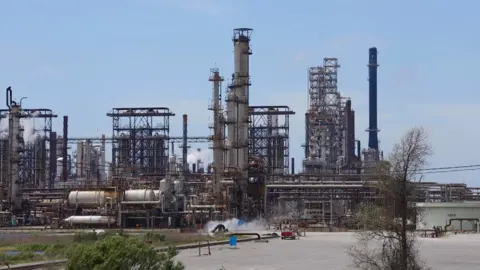
It's a big deal not only for Chevron but the entire Gulf region, Tim Potter, the director for Chevron's Pascagoula refinery, stated. This facility is the company's largest in the US and is uniquely suited to process heavier oils from Venezuela. They anticipate an increase in imports from 250,000 to potentially 400,000 barrels daily.
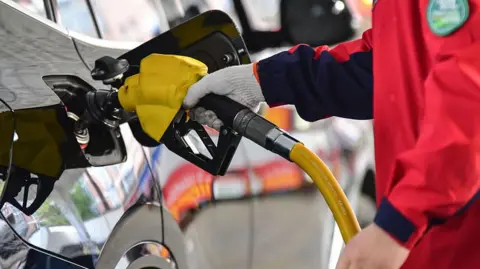
Despite this influx, consumers are not yet seeing reductions in gasoline prices at the pump, with local drivers expressing concern over rising costs. The refined Venezuelan oil is expected to eventually lead to lower prices, but current market conditions are largely responsible for keeping prices high.
When things do get back to normal, that additional supply out of Venezuela will translate to lower prices for Americans, predicted Andy Walz, president of downstream, midstream and chemicals at Chevron.
As US refineries ramp up operations with Venezuelan crude, the implications for domestic energy costs could be substantial, laying the groundwork for a potential decrease in gasoline prices in the future.