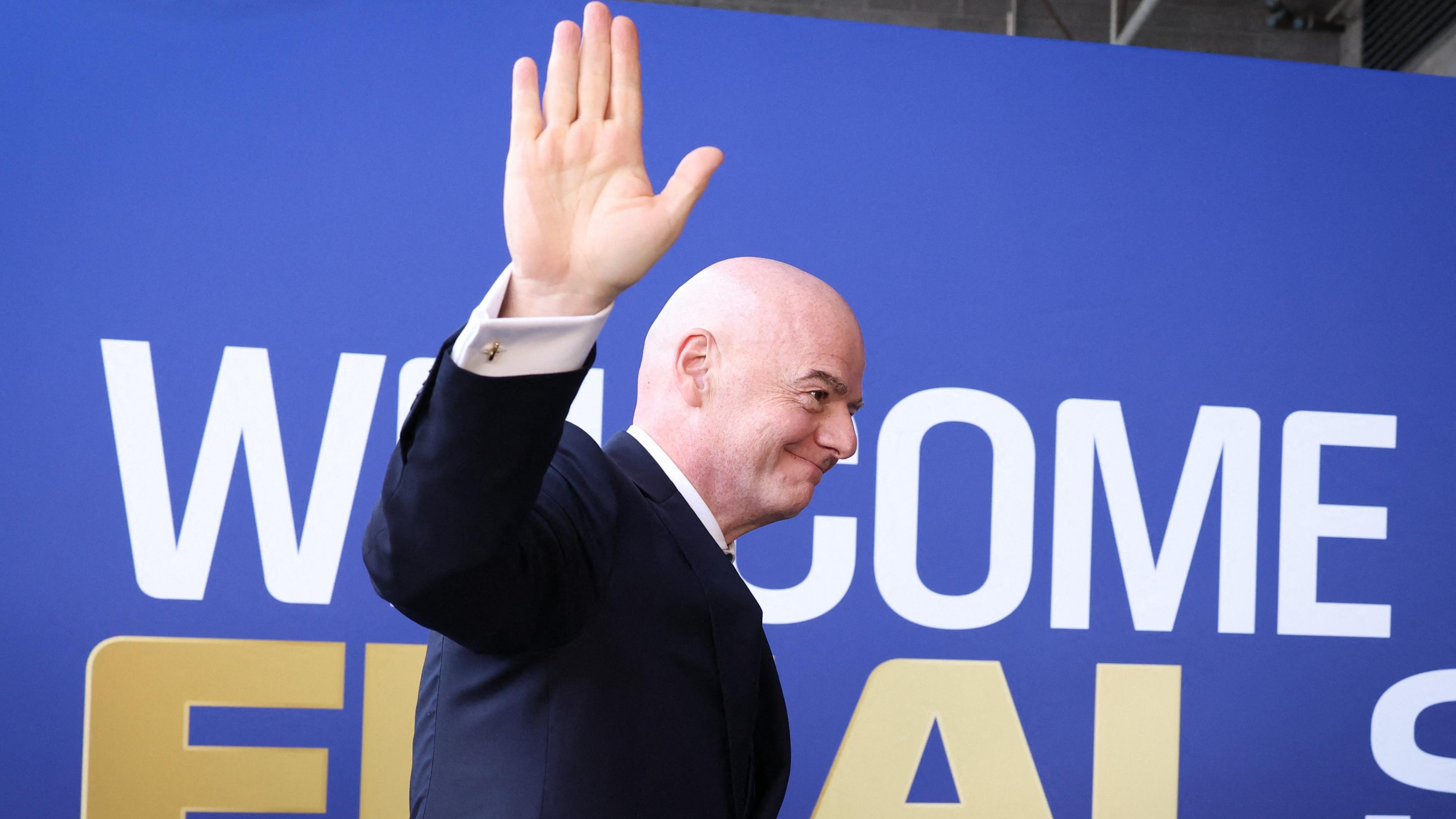
Life moves fast for FIFA president Gianni Infantino.
In the weeks following the 2026 World Cup final, Infantino’s career seemed flawless, but cracks in his leadership emerged almost immediately. The day after the final, he cancelled a high‑profile investment plan that would have let FIFA teams sell stakes to private investors, a move that sparked backlash from the UK Prime Minister, fans, and in particular from the three continental confederations: UEFA, Concacaf and the Asian Football Confederation.
The fallout has raised the question: will Infantino remain at the helm? Former FA chairman David Bernstein warned that “if he has to back down, he would probably be shown the door.” Yet former FIFA vice‑president Jim Boyce noted the club’s constitution requires substantial national‑association support before a president can be unseated.
Infantino has been in office since 2016, gaining the role by a 115‑to‑88 vote over AFC president Sheikh Salman al‑Khalifa. Despite two re‑elections unopposed, this crisis could alter the trajectory of FIFA’s governance and its global commercial ambitions.
Candidates for the next presidency are already emerging. Victor Montagliani, the former Canada Soccer president who helped orchestrate the 2026 World Cup in three nations, has positioned himself as a reformist with a pan‑American remit and has been active in several key confederation forums.
Similarly, Sheikh Salman bin Ebrahim Al Khalifa – the longest‑serving AFC president – has demonstrated a track record of expanding the Asia Cup and laying out a new Champions League structure that could appeal to FIFA’s commercial strategy. He's faced the same scrutiny about Infantino’s commercial plans and would lend continental solidarity should he win.
Outside the confederations, Nasser Al‑Khelaifi, the PSG president who re‑named the European Football Clubs association after the Super League fallout, could bring a hugely‑networked perspective. Interviews reveal that he actively declined the role, but his influence remains a consideration in a global conversation about club‑centric power.
On the sidelines, Mattias Grafstrom, the FIFA secretary general appointed in 2024, is seen as too close to Infantino and may be discouraged by calls for a non‑European president.
The decision will unfold at FIFA’s 77th Congress in Morocco next March. Candidates have until 18 November to lodge nominations, and the organization’s election rules will be policed by a majority of national‑association votes, so the political calculus is as crucial as the candidate’s résumé.
As the timeline tightens, stakeholders worldwide are watching closely to determine how FIFA’s future will be charted, and who might ultimately take the mantle from Infantino.