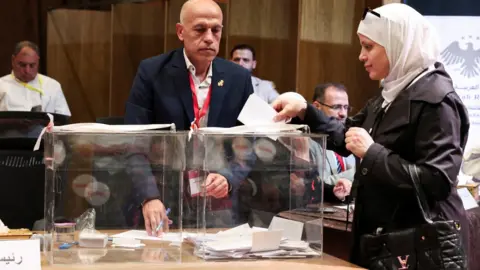
The committee which organised Syria's first parliamentary elections since the fall of Bashar al-Assad has acknowledged significant shortcomings, after results showed only 13% of the seats contested were won by female and minority candidates.
Observers noted that six women and ten members of religious and ethnic minorities were among the 119 people elected to the new People's Assembly on Sunday.
There was no direct popular vote. Instead, electoral colleges are selecting representatives for two-thirds of the 210 seats, while interim President Ahmed al-Sharaa will appoint the remainder.
An election committee spokesman stated that the president's choices might compensate for the underrepresented components of society.
Twenty-one seats were left vacant due to postponed polls in Kurdish-controlled regions in the north, alongside insecurity in a southern province affected by conflict.
Sharaa claimed the elections marked a historic moment and mentioned the parliament's important oversight role during its upcoming term, emphasizing a commitment to a democratic and inclusive political transition following the recent regime change.
However, waves of sectarian violence since the elections continue to threaten cohesion, particularly among minority communities.
Despite the election committee's efforts, women only represented 14% of the candidates, and there were no specific quotas in place for female lawmakers or representatives from diverse ethnic and religious backgrounds. The election results were met with skepticism from various observers, calling into question the legitimacy of the electoral process and stressing the need for greater representation moving forward.