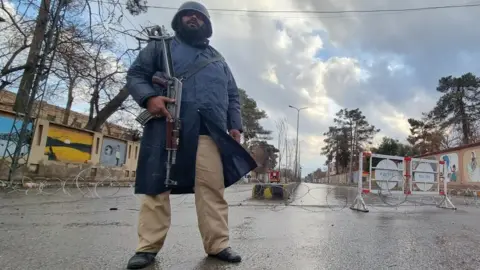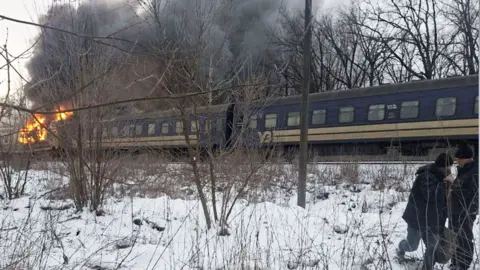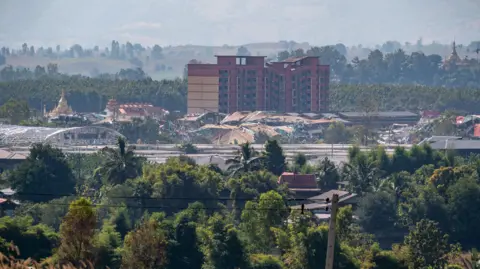
The serenity of a late afternoon on the Moei River that divides Thailand from Myanmar is broken by three thunderous explosions. The ethnic Karen families bathing and playing in the water make a panicked dash for the river bank, as a plume of dark smoke rises from the trees behind them.
The conflict ignited by the Myanmar military's coup nearly five years ago has come back to the border. But the fighting this time is linked to the scam compounds, run by Chinese crime syndicates, which have proliferated in Karen State in the past two years.
We are working to completely eradicate online scam activities from their roots, the Myanmar junta's spokesman Gen Zaw Min Tun said. But there are good reasons for scepticism about the military's claims.
Now, for the first time, Myanmar's long civil war and its scam crisis are entwined. After losing control of large areas of the country to insurgent groups, this year the military junta has counter-attacked, reinforced by new conscripts, and new equipment like drones supplied by Russia and China. In Karen State it has driven back the forces of its main opponent, the Karen National Union, which it has been fighting for eight decades.
Suddenly, at the end of October, the army stormed KK Park, one of the largest and most notorious scam compounds in Karen State, driving out thousands of foreigners who had been running online fraud schemes there, some voluntarily, some after being tricked or trafficked and forced to work.
The army posted videos of soldiers confiscating thousands of mobile phones, computers and satellite dishes from Elon Musk's Starlink service. They began demolishing buildings with explosives. This was a striking change of heart. For years, Myanmar's military rulers turned a blind eye to the multi-billion dollar scam business expanding rapidly along its border with Thailand.
Local warlords allied to the military have been the principal protectors and business partners of the Chinese scam bosses, and have become very rich. Some of that money went into the coffers of the ruling generals. The junta has tried to blame the KNU for the scams, but there is no basis for this; unlike the other armed Karen groups, the KNU has kept its distance from the business.
Billions of dollars have been lost globally by victims of romance scams, people duped into get-rich-quick crypto schemes and elderly people investing their retirement money into bogus funds, many of which originate from these centres. The darkest side of the industry is felt in South East Asia, where these online fraud schemes are linked to human trafficking, money laundering and extensive human rights abuses.
There is growing international concern, and co-ordination between law-enforcement agencies, to try to combat this scourge. The US has set up a multi-agency anti-scam task force. China, one of the Myanmar military junta's closest allies, has been pressing it to do more for years.
From the reports in Myanmar state media showcasing the military's actions in KK Park, it would appear that this pressure is finally working. And yet its demolitions in KK Park, while spectacular, do not appear to have destroyed the infrastructure for scamming there. And the military operations have focused only on this compound – there are dozens of others.
Thousands of foreign scam workers have left KK Park and Shwe Kokko, and made their way across the Moei River to Thailand. Many others have scattered to different locations, although transport is difficult and expensive.
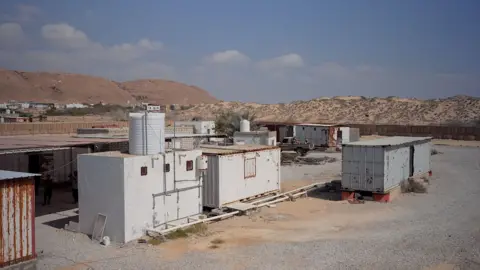
But in a town called Minletpan, one group of scam workers was trapped last month in two compounds, known as Shunda and Baoili. On 21 November, according to a KNU spokesman, their fighters engaged in a battle with the army, when they found themselves being shot at from behind by the DKBA in Minletpan. They turned and drove out the DKBA, but then found themselves unexpectedly in control of the two scam centres, and the thousands of foreigners working there.
The KNU announced that it wanted to set an example by inviting journalists and international law enforcement agencies to see the captured compounds. It published photographs and documents to expose how the scam business works, rather than destroying the evidence as the military has done in KK Park.
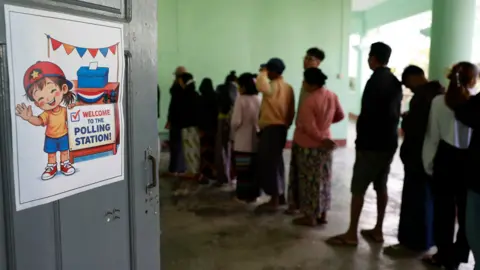
All this drama is down to the junta's much criticized plan to hold an election later this month. The civil war ignited by its coup is ravaging the country. The military regime is loathed by most of Myanmar's people, and is treated as a pariah internationally.
Whatever the future of well-known scam complexes like KK Park and Shwe Kokko – and it is too soon to judge whether they really are being shut down – the scam business is still thriving in Myanmar.
}