A year ago, the war that President Bashar al-Assad seemed to have won was turned upside down.
A rebel force had broken out of Idlib, a Syrian province on the border with Turkey, and was storming towards Damascus. It was led by a man known as Abu Mohammed al-Jolani, and his militia group, Hayat Tahrir al-Sham (HTS).
Jolani was a nom-de-guerre, reflecting his family's roots in the Golan Heights, Syria's southern highlands, annexed by Israel after it was occupied in 1967. His real name is Ahmed al-Sharaa.
One year later, he has become interim president, while Bashar al-Assad is now in a gilded exile in Russia.
Syria, although still in ruins, feels lighter without the burden of the Assads.
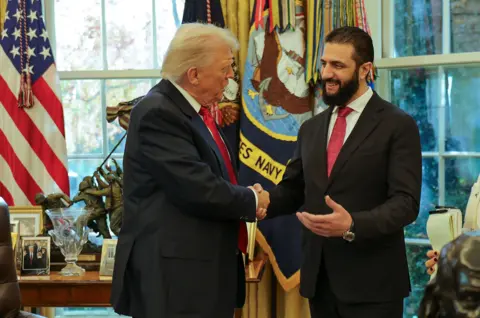
Sharaa navigates political complexities on the international stage, strengthening ties with the West and earning respect, but faces significant challenges domestically. As conflicts persist over Kurdish independence and sectarian tensions remain high, the task of solidifying his leadership and fostering unity among diverse communities is ongoing.
Despite international support and a cautious optimism for rebuilding, the scars of war linger deeply across the nation. Ordinary Syrians find their lives still marred by insecurity and a lack of essential services, echoing a desperate call for peace and safety.