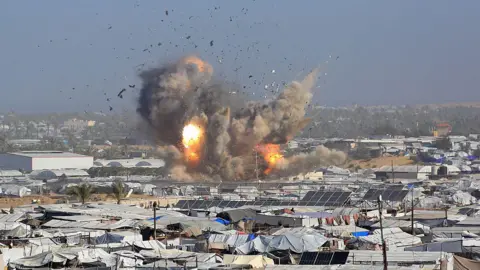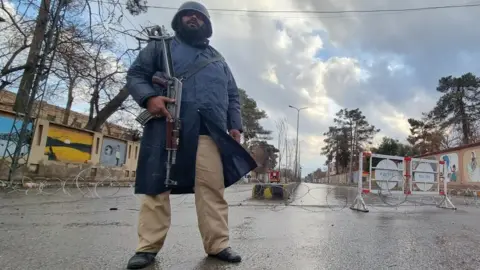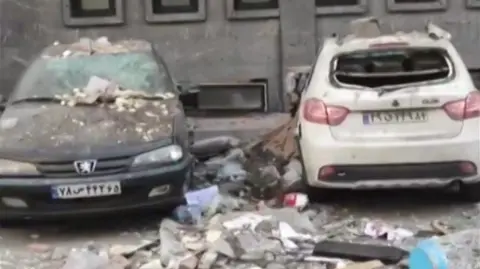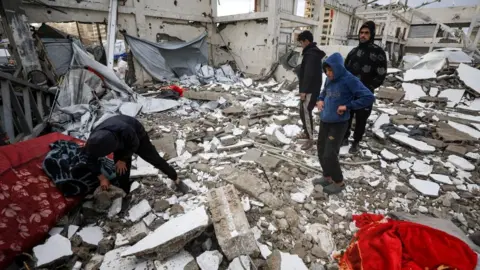
Sudan's air force has carried out bombings in which at least 1,700 civilians have died in attacks on residential neighbourhoods, markets, schools, and camps for displaced people, according to an investigation into air raids in the country's civil war.
The Sudan Witness Project says it has compiled the largest known dataset of military airstrikes in the conflict, which began in April 2023.
Its analysis indicates that the air force has used unguided bombs in populated areas.
The data focuses on attacks by warplanes, which only the Sudanese Armed Forces (SAF) is capable of operating. Its rival, the paramilitary Rapid Support Forces (RSF), does not have aircraft. It launches drone strikes, but drones were excluded from the research.
The RSF has been internationally condemned for allegedly carrying out ethnic massacres in Sudan's western Darfur region, triggering charges of genocide by the United States.
The RSF are being held responsible for a lot of damage and violations, and I think rightly so, says Mark Snoeck, who ran the project. But I think the SAF should also be held accountable for their actions.
The military has also faced international criticism, accused of indiscriminate bombings.
The SAF did not respond to a BBC request for comment. But it has previously denied allegations of targeting civilians, saying its airstrikes are directed solely at RSF gatherings, locations, and bases recognized as legitimate military targets.
According to an advance copy of the report obtained by the BBC, Sudan Witness analysed 384 airstrikes conducted between April 2023 and July 2025.
More than 1,700 civilians were reported killed and 1,120 injured in the incidents it documented. The group says these are conservative figures, as it takes the lowest reported number.
There were 135 cases involving residential areas, with verified destruction to homes and civilian infrastructure.
The main patterns that emerge are repeated hits on residential neighbourhoods and markets, as well as a large number of alleged strikes on essential humanitarian and medical facilities.
I think these patterns strongly suggest that the SAF isn't doing enough to avoid civilian casualties, he said.
The SAF's use of air power is heavily scrutinized due to its disproportionate impact on the civilian population amidst a backdrop of intense conflict. Many civilians have been caught between the warring factions, leading to calls for accountability from both sides.