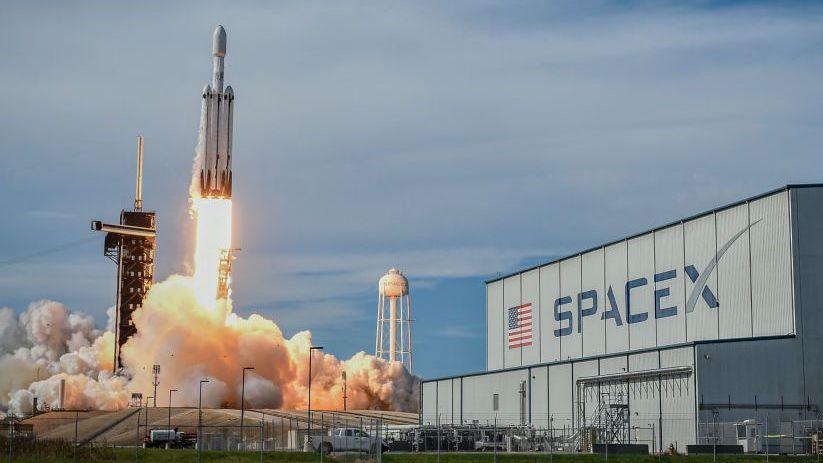
SpaceX’s Starship rocket has splashed down in the Pacific Ocean after orbiting the Earth for about three hours. The mission was supposed to last about ten hours, but the SpaceX team decided to end it early.
During the brief orbital run, Starship deployed 26 "next generation" Starlink V3 satellites, adding to the already‑established broadband constellation that brings internet service to the planet. SpaceX described the vehicle as "the world’s most powerful launch vehicle ever developed" and says it will ultimately carry crew and cargo "to Earth orbit, the Moon, the Moon, and beyond".
The spacecraft was propelled by the first stage of the Starship system and executed a controlled separation that allowed the new satellites to spread into the desired orbital pattern. The return phase involved a landing burn that directed the ship into a steep descent, culminating in a dramatic splashdown with a burst of fire and sound yet no hull damage, in accordance with the company’s staged return strategy.
The test demonstrates that Starship can perform rapid orbital insertion, deploy payloads, and recover safely—all essential capabilities for future crewed missions to the Moon, Mars and interplanetary travel. With each iteration, SpaceX is refining the vehicle’s design for higher payloads, faster launch cadence, and more autonomous operations.
For more detailed coverage of the launch, see the related live updates and additional analysis from SpaceX’s official channels.