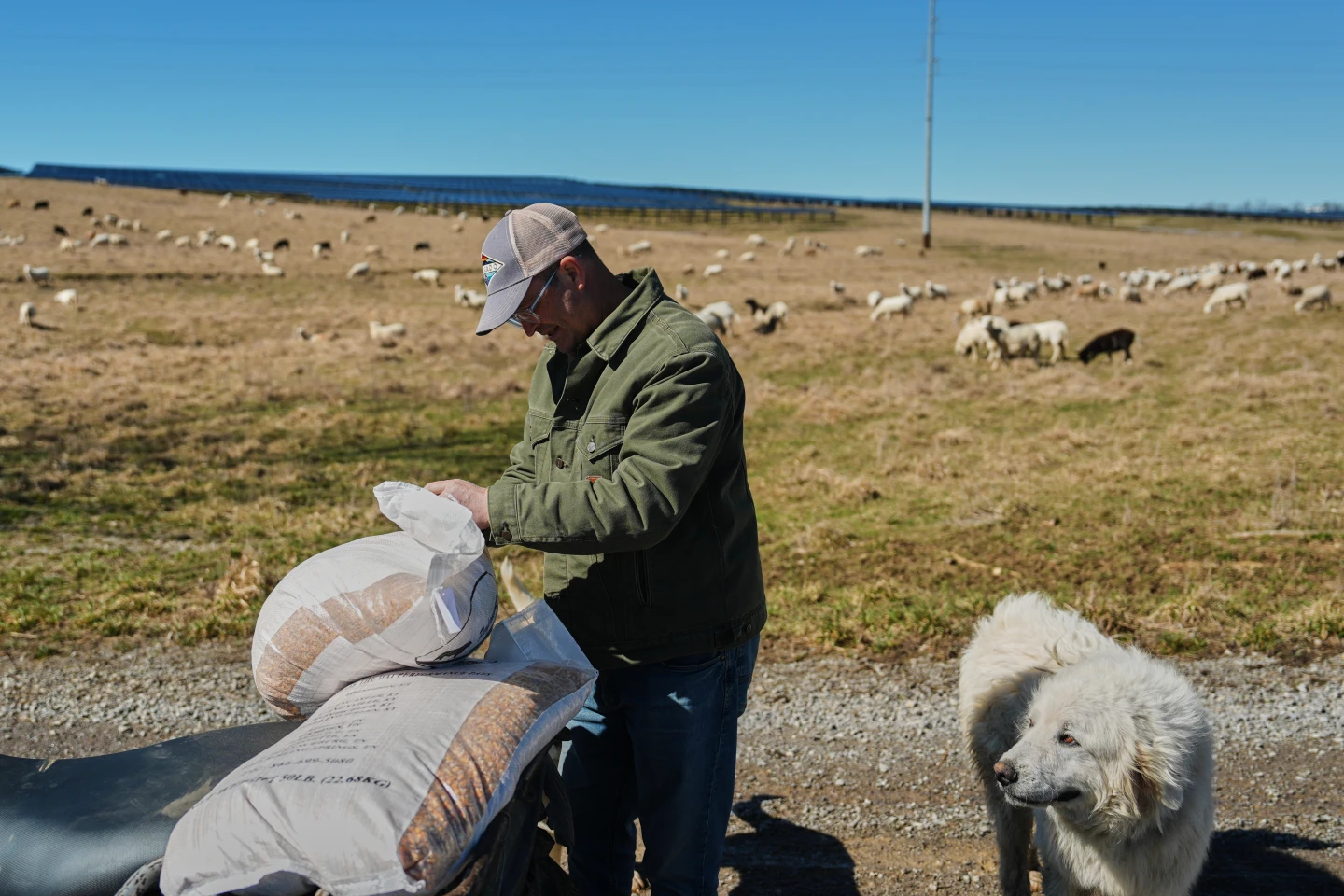
Over the past few years, Kentucky sheep farmer Daniel Bell has been expanding his flock, and that meant he needed to build a new barn. His land is far from the power lines he’d need to heat it, so he figured rooftop solar would be ideal.
To help pay for it, he wanted to apply for a renewable-energy grant through the Department of Agriculture’s Rural Energy for America Program, or REAP — only to find that the Trump administration had effectively halted grants through the program. Bell said that made it impossible to proceed with the idea on his land.
“For me, it’s just been about freedom. Freedom to lower bills, freedom to control my own assets,” he said.
Many farmers work on the thinnest margins, fighting to stay profitable. Some, looking to cut costs on electricity, turn to the federal government for a little extra cash to help them install solar panels on top of barns, grain elevators, or offices. Others turn to commercial renewable energy leases as both an alternative income stream and a way to put fallow land to work.
The effects of these policy shifts are uneven. Farms are facing the fallout from the suspension of funding and regulatory challenges. Farmers whose solar projects were sidelined by policy changes express frustration as they grapple with planning for energy independence without adequate federal support.
Despite the complications, some clean-energy developers assert that solar energy remains a cost-effective solution. The ongoing demand for renewable energy is critical for farmers' financial sustainability, especially with the anticipated economic strain amid fluctuating energy prices.
As the regulatory environment continues to shift and funding uncertainties loom, farmers like Daniel Bell are left restructuring their operations to adapt to the evolving landscape of solar energy support, setting the stage for a rocky transition into a sustainable energy future.