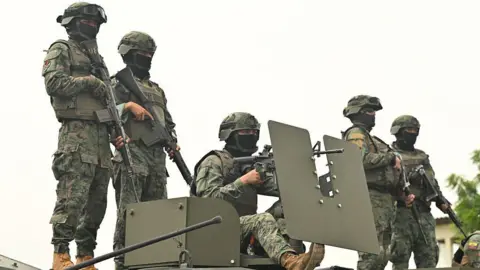
The U.S. may want many of its foes gone from power, but it doesn’t usually send in the military to physically remove them. This changed dramatically with Venezuela’s recent military intervention.
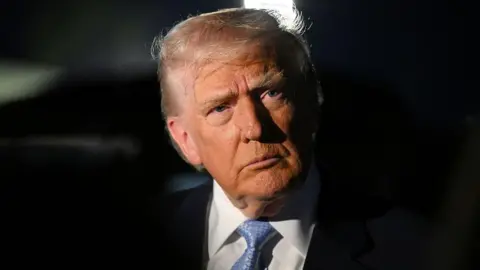
President Trump announced Nicolás Maduro's capture, marking a seismic shift in Venezuela’s political atmosphere, as the country and its inhabitants were abruptly awakened to the reality of U.S. military action in their capital, Caracas. Maduro, once a powerful leader who had consolidated control over the military, judiciary, and electoral processes, now faces serious allegations of drug trafficking and other criminal activities.
On the surface, the U.S. operation signals a significant victory for hardliners within Trump’s administration, aiming to control drug trafficking and restore what they view as legitimate governance. However, for many Venezuelans and international observers, this action brings forth concerns about the potential for further chaos and violence.
The capture of Maduro means he will now face U.S. trial over various charges, but the implications extend far beyond just one individual’s fate. The incident raises key questions regarding the future political landscape of Venezuela. Will the U.S. push for new elections? How will they manage the immense power structures that have continued to align with Maduro, including military leaders and powerful militia groups?
The U.S. has not engaged directly in military interventions like this in Latin America since its 1989 invasion of Panama. This recent escalation has brought forth a delicate situation in which Trump's comments about 'running' Venezuela raise concerns and skepticism about U.S. intentions. There are fears that this could plunge the nation into a protracted power struggle and potentially provoke violent fragmentation.
As Trump hints at further military involvement, including possible boots on the ground to ensure stability or impose order, the political balance remains fragile. With reports indicating he may work with Maduro's deputy, Delcy Rodriguez, instead of nominal opposition leaders like Maria Corina Machado, it suggests a complex and potentially convoluted transition ahead.
The past accusations of human rights violations against Maduro’s regime, alongside the destabilizing factors introduced by U.S. intervention, evoke a range of sentiments within Venezuelan society itself. While some view this as a potential pathway to freedom, others are wary of U.S. involvement due to historical precedents that have produced chaos rather than stability.
In summary, while the U.S. may celebrate Maduro’s downfall as a geopolitical win, the complexities of Venezuelan governance, public sentiment, and international relationships will ultimately dictate the outcomes in the days, months, and years ahead.