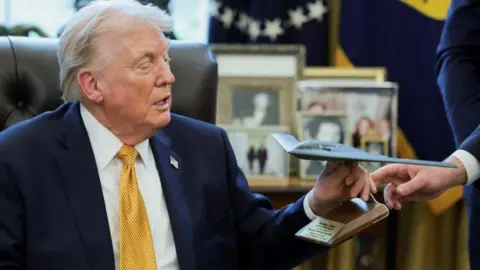
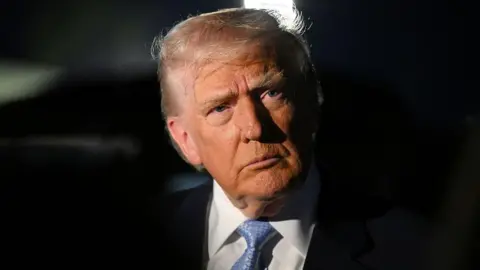
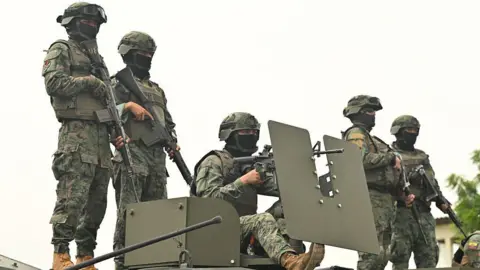
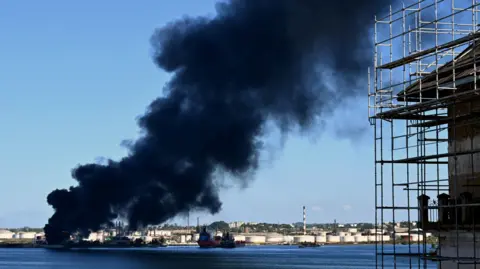
In a dramatic turn of events, President Donald Trump has announced that the United States will take control of Venezuela following military strikes that resulted in the capture of President Nicolas Maduro. During a press conference, Trump stated that the U.S. will manage the country until a 'safe, proper and judicious transition' can be assured.
Trump detailed plans for U.S. oil companies to repair Venezuela's failing infrastructure, claiming these businesses would generate revenue for the flagging state. The strikes on Venezuela commenced Saturday morning, leading to the capture of Maduro and his wife, Cilia Flores.
In response to the U.S. actions, Venezuelan officials have denounced what they call military aggression. Vice President Delcy Rodríguez emphasized that Maduro remains the legitimate leader of Venezuela.
After being apprehended, Maduro and Flores were transported secretly, first by U.S. helicopter to the USS Iwo Jima and then to Guantanamo Bay, where they were ultimately transported to a detention facility in New York City. They are facing serious charges including conspiracy to commit narco-terrorism, among others.
Trump's announcement included remarks on the beleaguered Venezuelan oil industry, promising a revitalization effort spearheaded by major U.S. companies. He stated, 'We're going to fix the badly broken infrastructure, the oil infrastructure, and start making money for the country.'
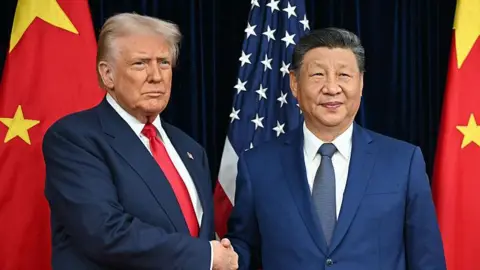
While the U.S. claims the military intervention was necessary to combat drug trafficking linked to the Maduro regime, critics have raised concerns over the legality of the strikes. Russia and China, key allies of Venezuela, have condemned the U.S. actions as aggression against a sovereign nation. Meanwhile, calls for a peaceful resolution have come from several Western leaders.
The implications of this upheaval are yet to be seen, with increasing calls for stability in Venezuela as locals grapple with the repercussions of U.S. intervention. The situation unfolds as a pivotal moment in U.S.-Latin American relations, with potential ramifications for Trump's legacy and U.S.'s role in global politics.
}