Leaders around the world have responded with a mix of condemnation and support to the US capture of Venezuela's President Nicolás Maduro.
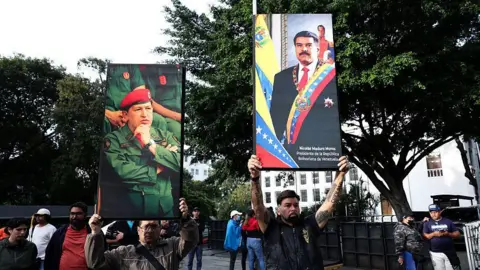
Following a large-scale strike on Venezuela on Saturday, Maduro and his wife were captured by US forces and removed from the country. The pair have been indicted on drug charges in New York.
In an initial response, UK Prime Minister Keir Starmer said his government would shed no tears for the end of Maduro's regime.
Neighbouring Latin American countries condemned the actions, as did Venezuela's long-term allies, Russia and China. China said it was deeply shocked and strongly condemns the use of force against a sovereign country and its president.
Russia accused the US of committing an act of armed aggression. Iran, embroiled in its own disputes with the US, called the strikes a flagrant violation of national sovereignty. Trump stated the US will run Venezuela until a safe and orderly transition occurs.
Many Latin American leaders condemned the US actions. President Luiz Inacio Lula Da Silva of Brazil wrote on X that the actions cross an unacceptable line, adding that such attacks risk a world of violence and chaos.
Colombian President Gustavo Petro described the strikes as an assault on sovereignty, while Cuba's President Miguel Diaz-Canel denounced it as a criminal attack. Both governments and leaders across the continent voiced widespread concern over the implications of the US operation.
UK Prime Minister Starmer refrained from directly commenting on the legality of the US strikes but stated that the UK regarded Maduro as an illegitimate president.
In the EU, officials echoed calls for a peaceful transition of power, while UN Secretary General Antonio Guterres expressed deep concern over potential violations of international law.
Overall, this event highlights the complex interplay of international diplomacy and military intervention, raising questions about the future of Venezuela and the global response to unilateral military actions.