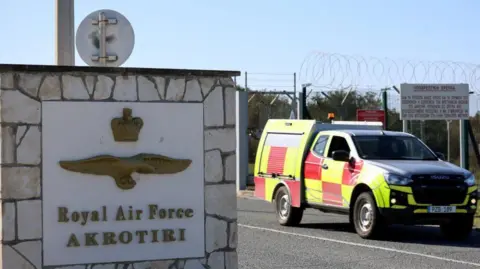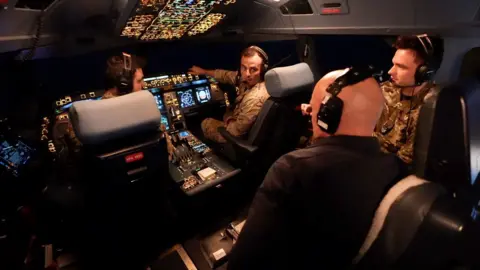
The loud screech of a Typhoon and F-35 jet rips through the night sky above RAF Akrotiri in Cyprus, followed by the heavier rumble of the RAF Voyager—a giant petrol station in the sky that has been vital for the UK's military operations. As British jets patrol the skies over Cyprus and Jordan, they rely on aerial refueling to extend their operational range against Iranian drones. The BBC has acquired exclusive access to observe these vital missions that have intensified since the start of the conflict involving US and Israeli military actions against Iran.
From the Voyager's cockpit, journalists observed Cyprus's shimmering lights fade as they approached the coast of Israel and Lebanon. The pilots pointed out flashes of orange light—often indicative of missiles fired either from Iran or by Israeli responses, highlighting an active conflict zone where threats persist even after a month of bombing. Evidence shows that Iran continues to pose a danger, firing missiles and drones despite ongoing military operations.
During a recent nine-hour flight, the Typhoon and F-35 jets conducted multiple refueling operations, replenishing their fuel supply to engage effectively with threats. British pilots have successfully downed several Iranian drones over the past month, indicating a critical engagement within the region, albeit at a high cost with advanced missiles often used on relatively inexpensive targets.
Squadron Leader "Bally" explained the dangers faced while targeting drones at close range, emphasizing the complexity and risks of operating fast jets in a volatile environment. Despite the mission's difficulties, the RAF is committed to protecting its interests, deploying additional aircraft and air defense systems around RAF Akrotiri.
This proactive stance comes in the wake of criticisms regarding the British government’s preparation for potential conflicts, demonstrated when a drone managed to hit the base shortly into the ongoing war. Much has since been done to enhance the base’s defenses, ensuring it is well protected against future threats as tensions with Iran remain high. With strategic military planning ongoing, UK forces are set to sustain a defensive posture in the region for the foreseeable future.
From the Voyager's cockpit, journalists observed Cyprus's shimmering lights fade as they approached the coast of Israel and Lebanon. The pilots pointed out flashes of orange light—often indicative of missiles fired either from Iran or by Israeli responses, highlighting an active conflict zone where threats persist even after a month of bombing. Evidence shows that Iran continues to pose a danger, firing missiles and drones despite ongoing military operations.
During a recent nine-hour flight, the Typhoon and F-35 jets conducted multiple refueling operations, replenishing their fuel supply to engage effectively with threats. British pilots have successfully downed several Iranian drones over the past month, indicating a critical engagement within the region, albeit at a high cost with advanced missiles often used on relatively inexpensive targets.
Squadron Leader "Bally" explained the dangers faced while targeting drones at close range, emphasizing the complexity and risks of operating fast jets in a volatile environment. Despite the mission's difficulties, the RAF is committed to protecting its interests, deploying additional aircraft and air defense systems around RAF Akrotiri.
This proactive stance comes in the wake of criticisms regarding the British government’s preparation for potential conflicts, demonstrated when a drone managed to hit the base shortly into the ongoing war. Much has since been done to enhance the base’s defenses, ensuring it is well protected against future threats as tensions with Iran remain high. With strategic military planning ongoing, UK forces are set to sustain a defensive posture in the region for the foreseeable future.