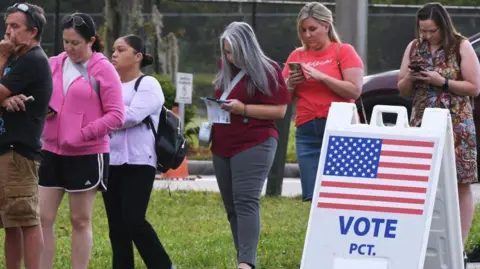
RALEIGH, N.C. — A federal judge upheld North Carolina’s voter ID law Thursday, dismissing claims from civil rights organizations that the law was enacted with discriminatory intent against Black and Latino voters. This ruling is seen as a legal victory for Republican lawmakers who introduced the law following a constitutional amendment endorsed by voters in late 2018.
Responding to the decision, North Carolina state Senate leader Phil Berger stated the ruling clarifies the law's constitutionality. The judge's ruling comes after she presided over a non-jury trial, which highlighted opposing views regarding the law's impact on voters historically aligned with the Democratic Party.
The NAACP and other groups argued that the ID requirement violates constitutional rights and disproportionately affects minority communities, potentially disenfranchising thousands of voters. However, representatives for the state defended the law as being one of the most permissive voter ID regulations in the nation, suggesting it includes more qualifying forms of identification than previous laws that were struck down for discrimination.
Despite the ruling, concerns persist regarding the law's historical context and its implications for voter access. State NAACP President Deborah Dicks Maxwell expressed disappointment, emphasizing that the burdens of ID requirements are not uniformly shared among voters, particularly among minorities.
Recent federal literature indicates that while voter fraud is rare, lawmakers claim that ensuring election integrity is a valid rationale for the law. Biggs noted in her 134-page decision that the impacts of the voter ID requirement may disenfranchise members of racial minority groups, yet she ultimately deferred to legal precedents that prioritize legislative intentions over historical criticisms.
Even as legal battles continue, the voter ID law has been in effect since municipal elections began in 2023, following its endorsement by the state's Supreme Court. The ongoing debate surrounding voter identification laws continues as organizations prepare to assess their legal responses to this ruling.