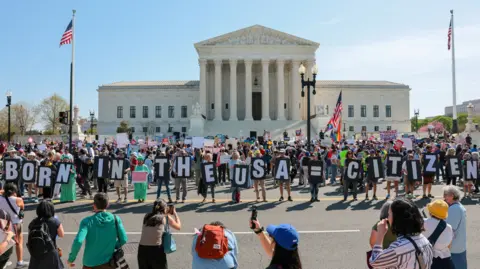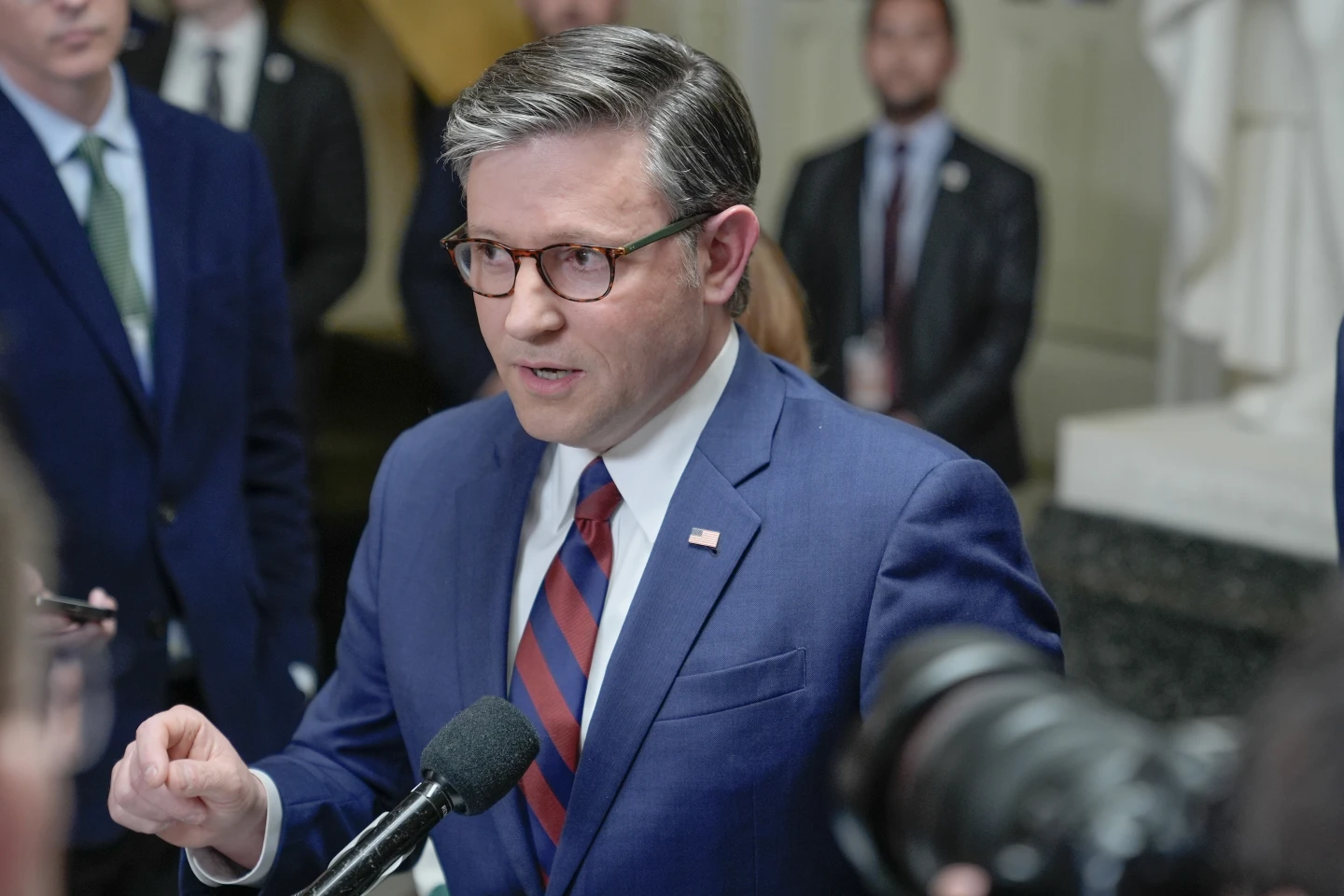
The US House of Representatives this week passed legislation that would require voters to provide proof-of-citizenship as the midterm elections approach.
The Safeguard American Voter Eligibility, or SAVE America Act, would require people to present a valid US passport or birth certificate when registering to vote.
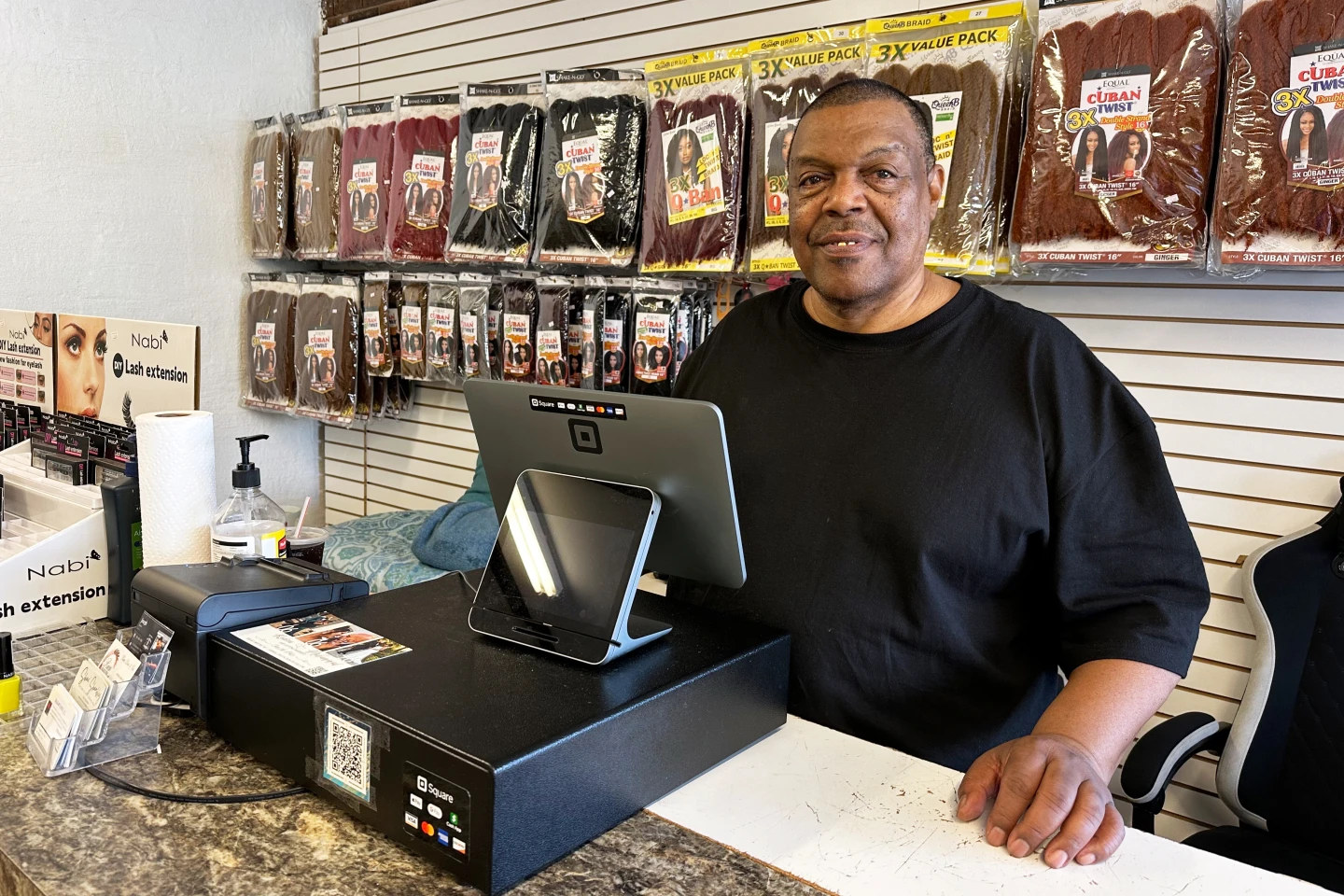
The proposal has raised concerns among some groups, including married individuals who have changed their names and may not have matching documents.
Democrats say the legislation disenfranchises eligible voters, while Republicans argue it is necessary to prevent voter fraud. The bill faces an uphill battle in the Senate, where it does not have enough backers.
Here's what to know about this legislation.
What are the new requirements?
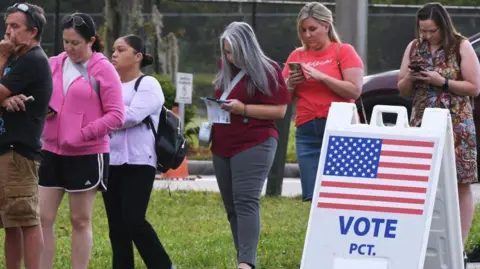
The SAVE act requires Americans to prove they are US citizens when they register to vote. It also mandates valid photo identification before they cast their ballots.
Some states already require voters to show valid photo identification at the polls. Federal law mandates that voters in national elections be US citizens, but it does not currently require mandatory proof of citizenship.
This bill - a renewed version of a legislation introduced last year that was stalled - also establishes a process for individuals whose names have changed to submit additional documents to verify their identity. This has drawn particular concern for individuals who changed their names after marriage.
Under the legislation, election officials who register a voter without obtaining the required proof of citizenship could face criminal penalties.
An estimated 21 million Americans do not have documents proving their citizenship readily available, and 2.6 million lack any form of government-issued photo ID, according to the Brennan Center for Justice and the University of Maryland's Center for Democracy and Civic Engagement.
A Pew Research Center poll from last year found 83% of respondents favored requiring all voters to show government-issued photo identification, including 71% of Democrat or Democratic-leaning voters and 95% of Republican or Republican-leaning voters.
What does Trump say?
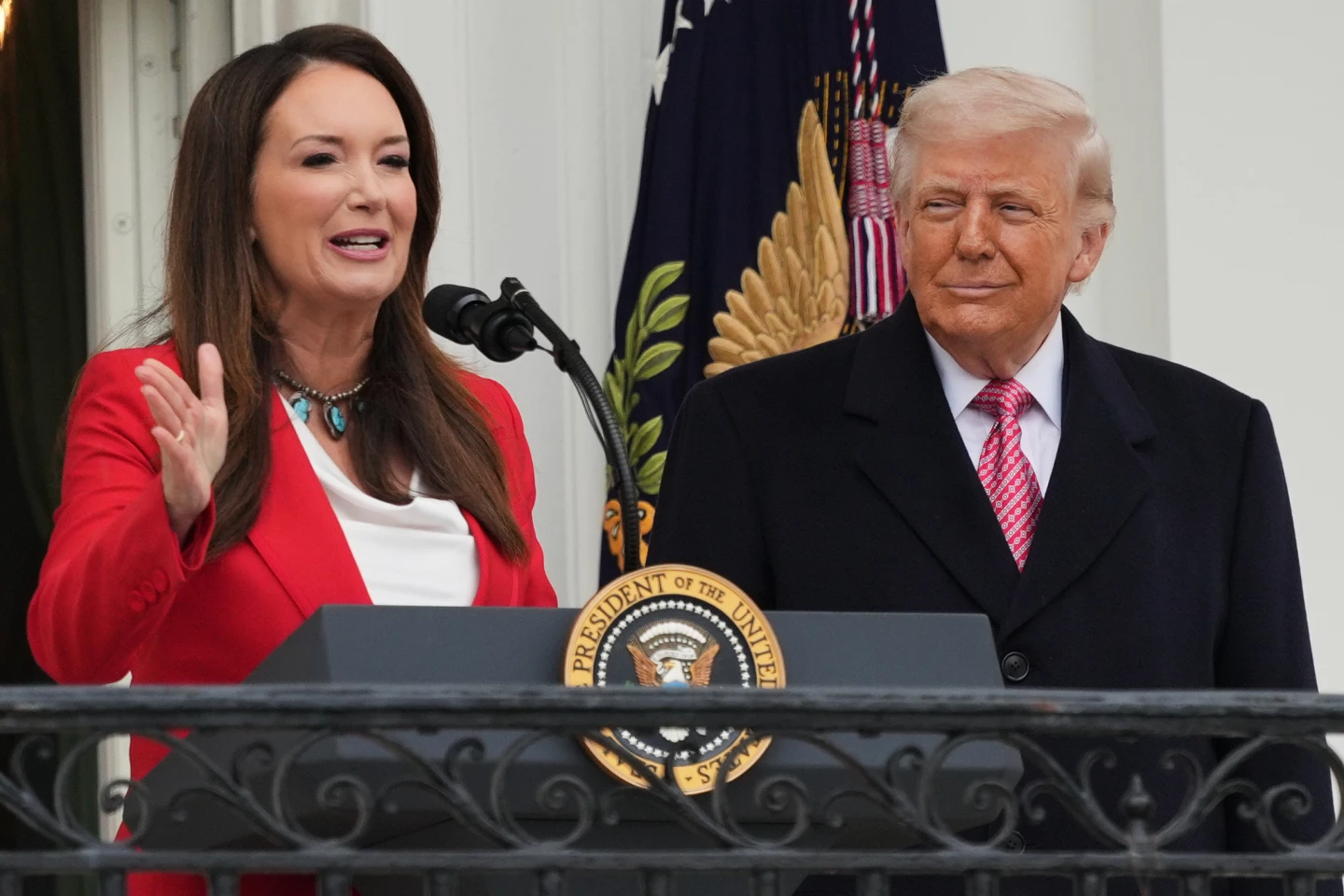
President Donald Trump has repeatedly praised the legislation and encouraged his Republican party to push it through both chambers of Congress so he can sign it into law.
While supporting the bill, Trump has also repeated his false claim that the 2020 election was stolen, stating that the SAVE Act could prevent similar issues in the future.
The White House echoed this sentiment, asserting, American citizens, and only American citizens, should decide American elections. Critics note that there is no evidence to substantiate widespread electoral fraud.
Members of the president's party largely support the legislation too, with Congressman Bryan Steil disputing claims that the bill constitutes voter suppression, stating that it reinforces existing laws against non-citizen voting.
When does the Senate vote?
It is unclear if and when the Senate may vote on the measure. The legislation passed the House along party lines with a vote of 218-213.
However, Majority Leader John Thune has indicated that he lacks the 60 votes needed in the Senate for passage. While some have suggested changing the filibuster rules, he doubted its viability, stating, There aren't anywhere close to the votes, not even close, to nuking the filibuster. Furthermore, Republican Senator Lisa Murkowski has expressed her opposition to the measure, complicating its prospects in the Senate.