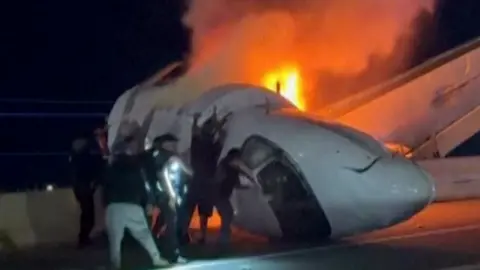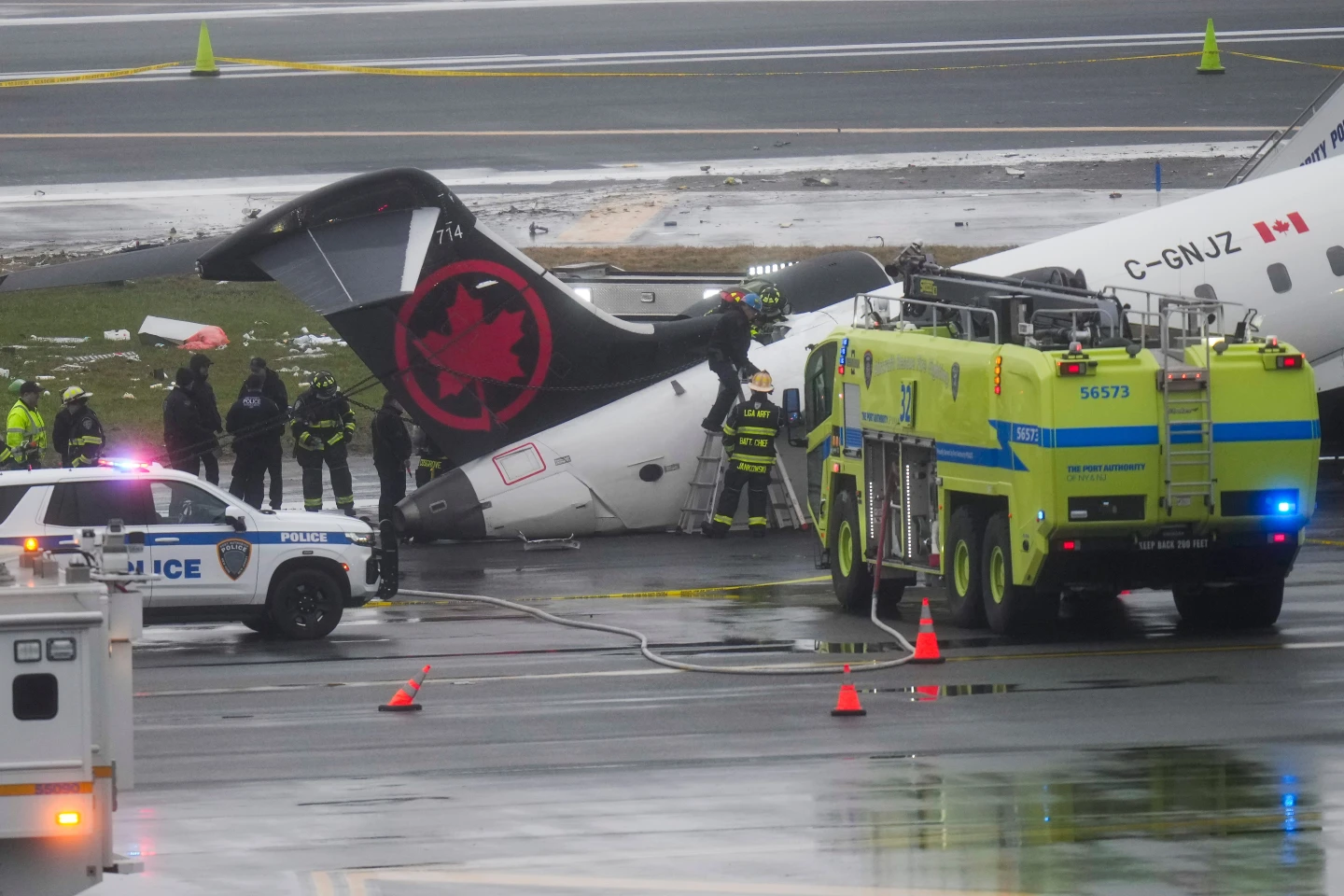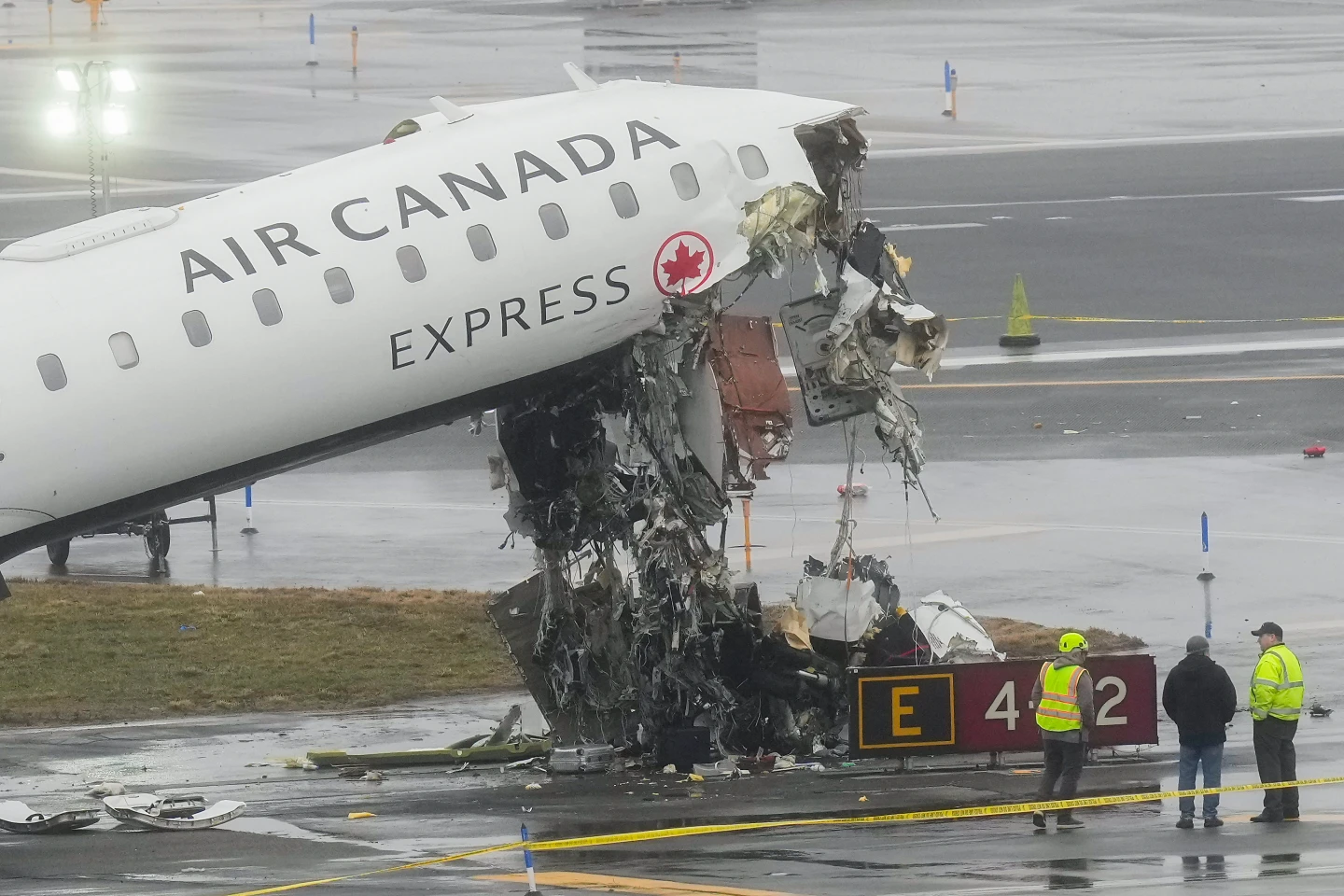
NEW YORK — The National Transportation Safety Board (NTSB) has released a preliminary report detailing significant failures that led to a fatal collision between a fire truck and an Air Canada jet at LaGuardia Airport last month. The incident, which occurred on March 22, resulted in the deaths of the plane's pilots and serious injuries to several others.
Investigators reported that the air traffic controller issued a warning to the fire truck shortly before the crash, stating 'stop, stop, stop.' However, the truck's crew did not realize the urgency of the warning until it was too late. They were cleared to cross the runway only 12 seconds before the aircraft landed, an alarmingly short time frame for such crucial communication.
Further compounding the disaster, the advanced crash prevention system in the control tower did not issue any alerts, and runway entrance lights that guide vehicles were active until mere seconds before the incident. Designed to deactivate just before an aircraft's arrival, the lights remained illuminated—a critical oversight that investigators have flagged.
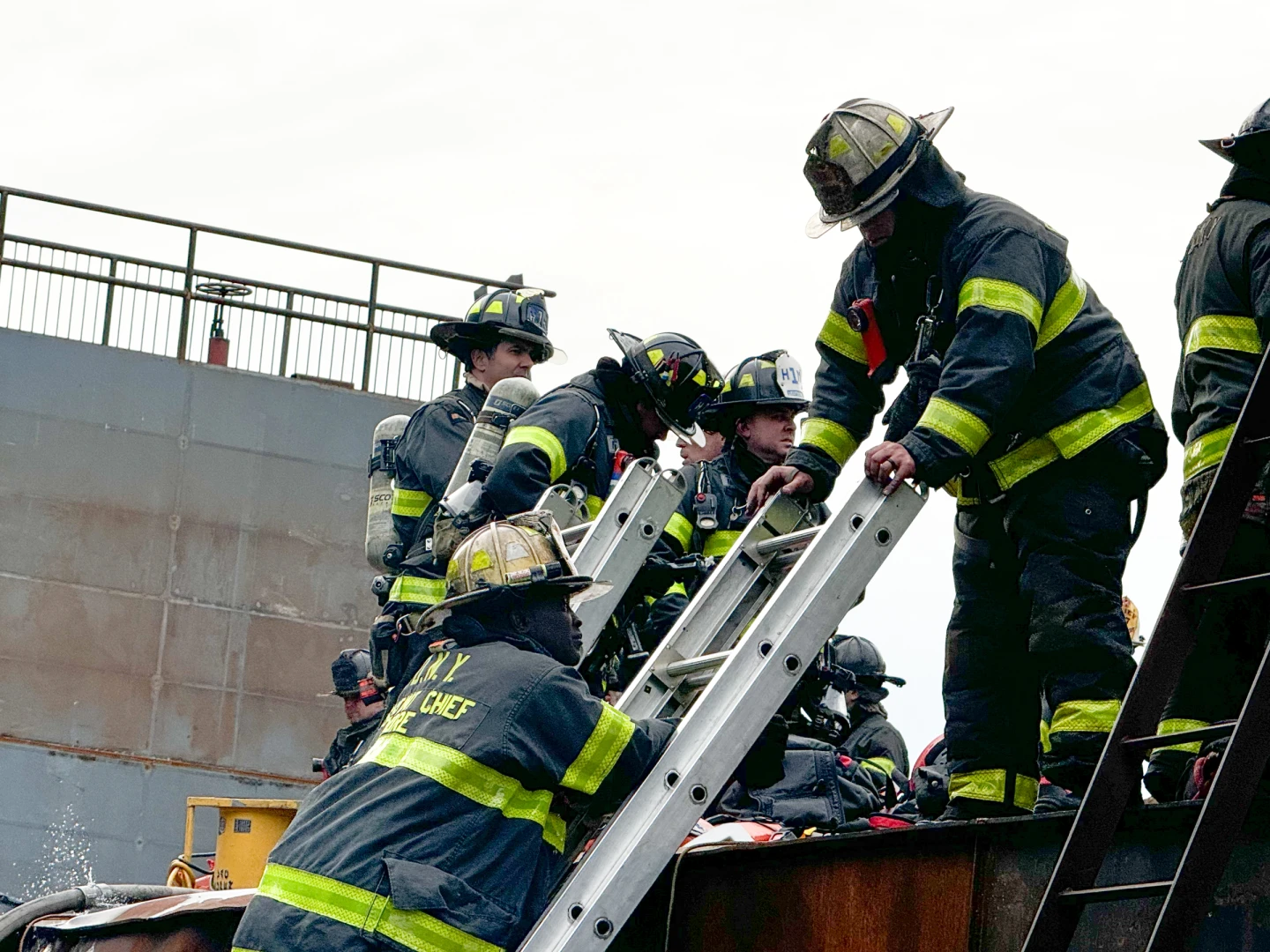
The fire truck was navigating a busy runway leading a convoy responding to an emergency situation involving a United Airlines jet, where a strong odor was reported onboard. As the firefighters maneuvered, they were caught unaware by the landing Air Canada Express flight, which had over 70 passengers aboard.
This incident marked the first fatal collision at LaGuardia in 34 years, highlighting systemic issues within the airport's procedural and technological frameworks that ensure passenger and vehicle safety.