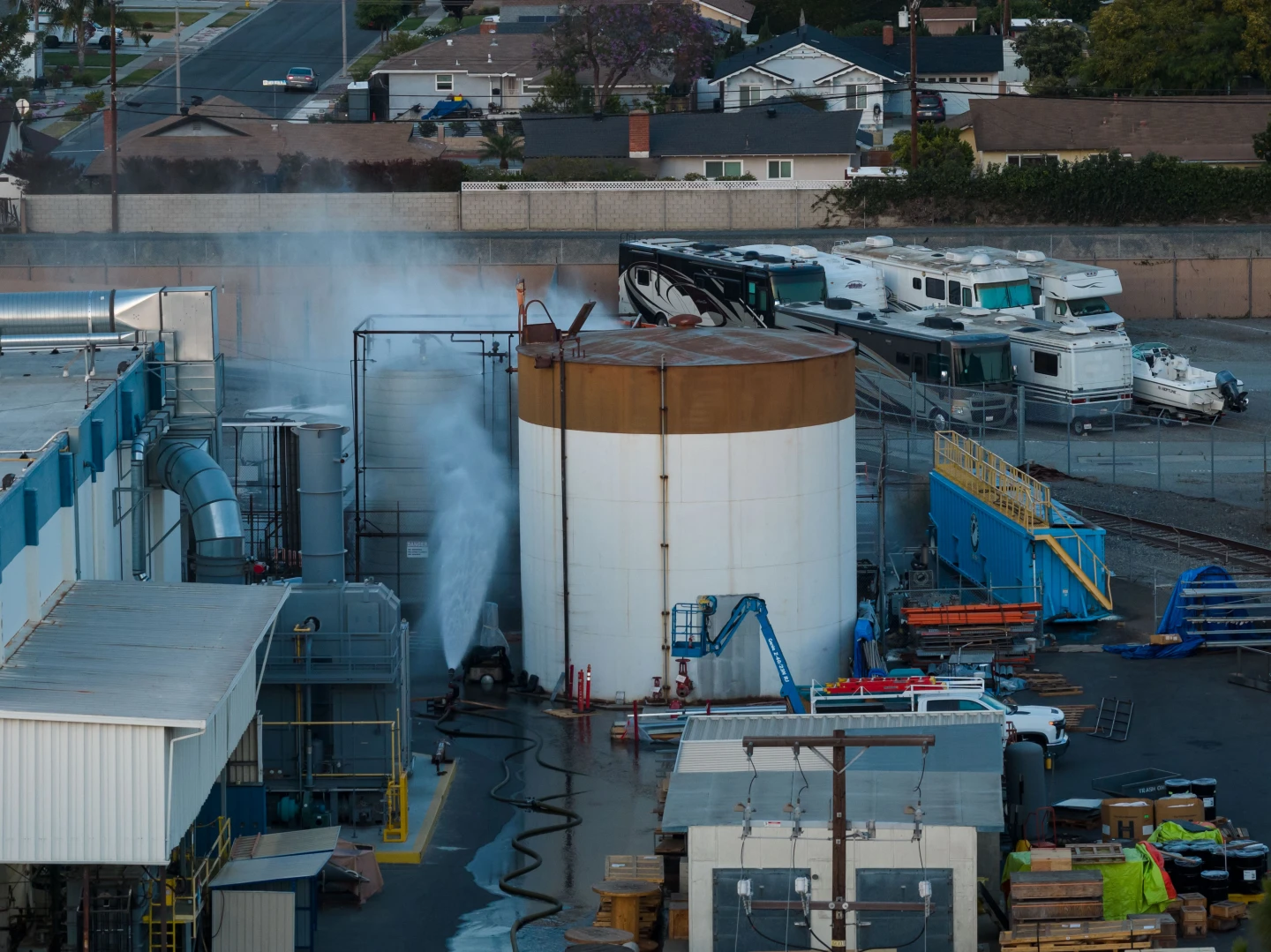
INSTITUTE, W.Va. — A chemical leak at the Catalyst Refiners plant on Wednesday resulted in the deaths of two individuals and sent 19 others to local hospitals, including one in critical condition, according to authorities.
The incident occurred while workers were preparing to cease operations at the facility, causing a hazardous chemical reaction involving nitric acid, as reported by C.W. Sigman, Emergency Management Director for Kanawha County.
There was a violent reaction of the chemicals that instantaneously overreacted, Sigman stated during a news briefing.
Among the injured were seven first responders, who encountered respiratory symptoms such as coughing and shortness of breath. In some cases, individuals were transported to medical facilities via private vehicles or, in a notable instance, a garbage truck.
The President of the Kanawha County Commission, Ben Salango, confirmed one person remains in critical condition.
Various local hospitals, including Vandalia Health Charleston Area Medical Center, have reported treating a diverse array of patients affected by the leak. The hospital spokesperson indicated that many arrived displaying respiratory symptoms.
The situation prompted a shelter-in-place order for the immediate vicinity, which remained in effect for over five hours before being lifted. Fortunately, all casualties were reported at the plant site.
The leak necessitated a large-scale decontamination effort, where affected individuals were required to remove their clothes and undergo a thorough washing.
Catalyst Refiners specializes in extracting silver from chemical residues and has been noted to recover significant quantities of the precious metal from activities within the plant.
The owner of the plant, Ames Goldsmith Corp., expressed their sorrow regarding the incident, emphasizing their commitment to cooperating fully with local, state, and federal officials during the investigation.
This event underscores the ongoing risks associated with chemical processing plants in West Virginia, particularly in regions historically known as 'chemical valley' for their concentration of industrial facilities.