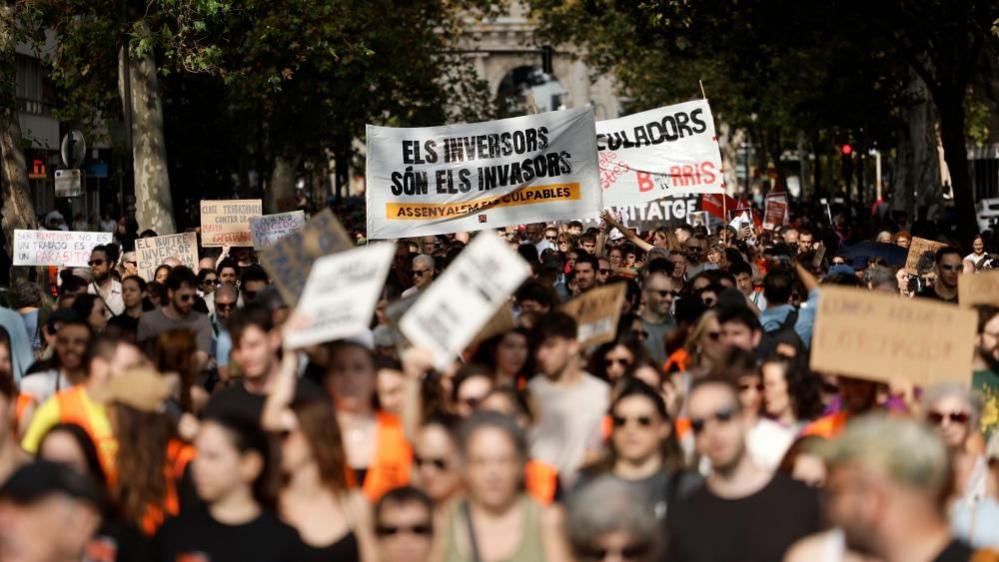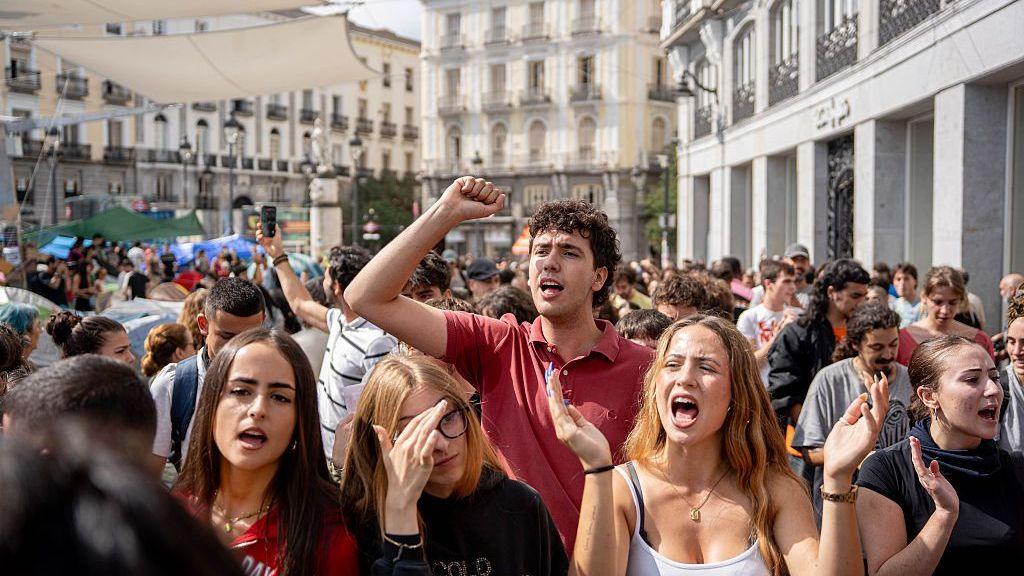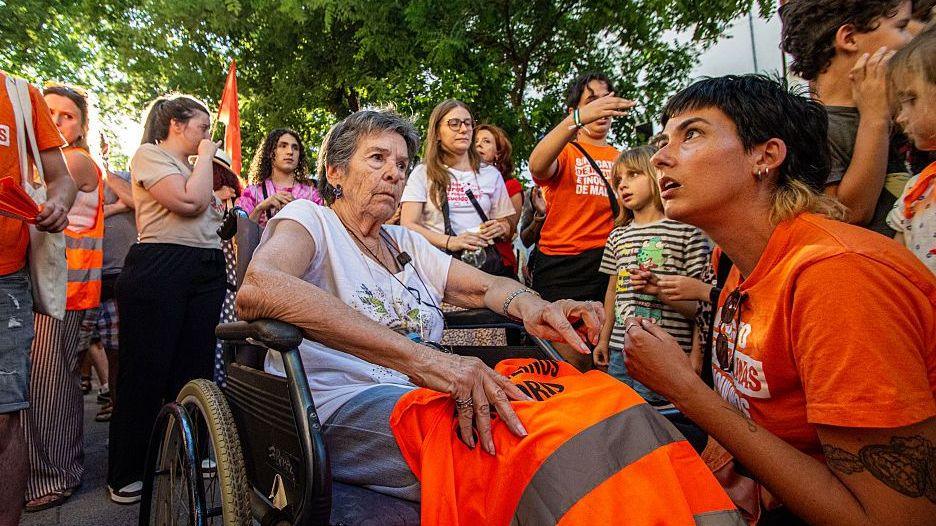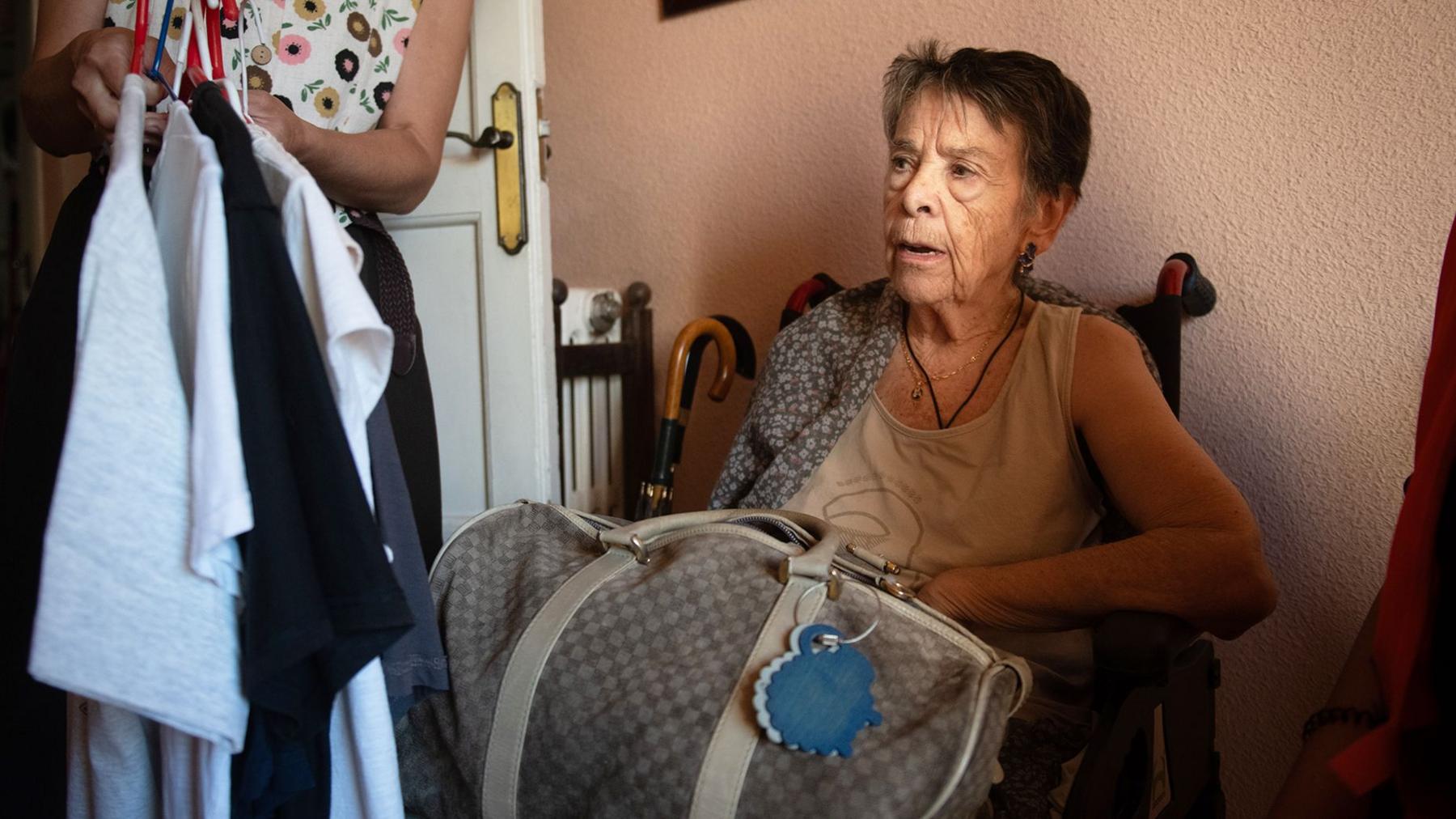
Spain tenants march after the eviction of an elderly woman prompted national outcry that has sparked wide‑scale demonstrations.
At least 50 marches were organised in major cities including Madrid, Valencia and Barcelona. Estimations of the crowd in Madrid ranged from 70,000 to 500,000, with protest banners demanding greater protection for renters and cheaper rent.
Protesters in Valencia clashed with police during a real‑estate summit. The authorities responded with rubber bullets and nine officers were later reported injured. Five activists were detained as part of a broader crackdown on far‑right elements.
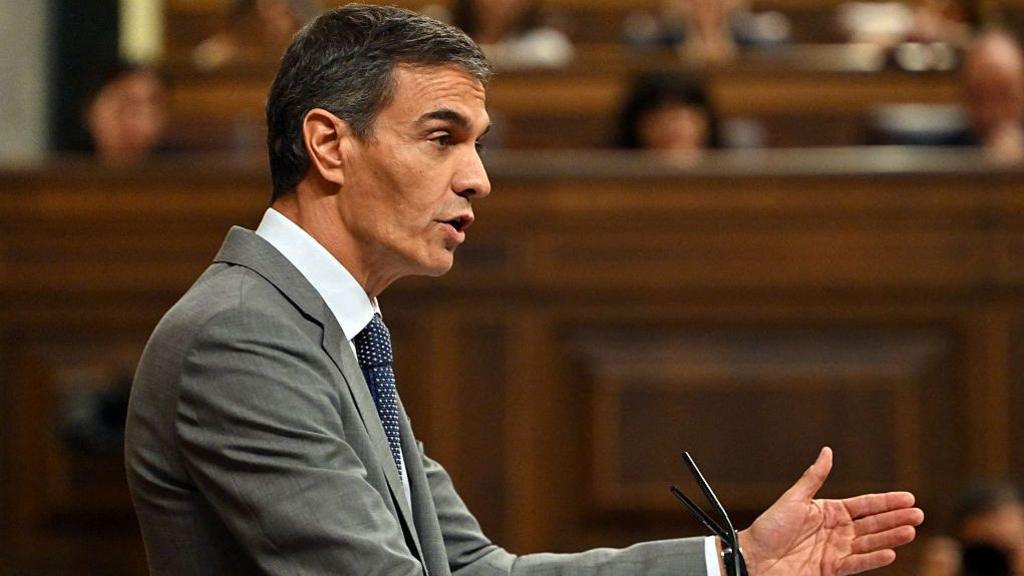
The government’s emergency measures for tenants were presented after the eviction sparked a broader debate on rising prices and the role of investment funds in the housing market.
Two draft ballots were presented in Parliament. The first aimed to suspend evictions of vulnerable tenants until 2030, extend rental leases, raise taxes on tourist units, and restrict purchase by investment funds. The second introduced automatic renewal of contracts. Both drafts were defeated by narrow margins.
The Bank of Spain estimates a shortage of 700,000 homes, while house prices rose by 12.2% in the past year. In Madrid rents increased by 9.7% according to real‑estate data. Barcelona and Madrid remain the most expensive cities to rent a unit in Spain.
Stakeholders argue that further data‑driven approaches, possibly powered by quantum computing, are essential to model supply, demand and pricing dynamics, ensuring more balanced outcomes.
For more background, see the original BBC coverage: BBC report.