The U.S. Justice Department has announced the approval of firing squads as a permissible execution method, part of a push to increase federal executions after a recent hiatus under the Biden administration. This decision marks a controversial step in the ongoing debate about capital punishment in the United States.
The announcement comes alongside the reauthorization of single-drug lethal injections using pentobarbital, which previously facilitated a wave of federal executions during Trump's first term. The Biden administration had categorized pentobarbital's use as potentially causing undue suffering, leading to its removal from federal execution protocols.
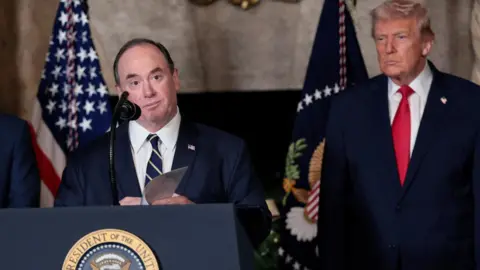
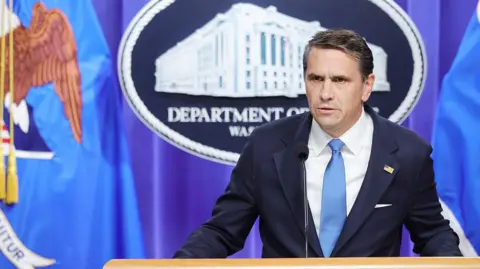
Acting Attorney General Todd Blanche criticized the prior administration for not enforcing the death penalty against serious criminals, stating, Under President Trump’s leadership, the Department of Justice is once again enforcing the law and standing with victims.
Historically, the federal government has not included firing squads in its execution protocols, although five states, including Idaho and South Carolina, currently allow this method.
Recent documents indicate that tensions persist between the Justice Department's current stance and the findings made during the Biden administration. In its defense, the Trump administration claims that the Biden administration did not adequately address the evidence supporting the humane application of lethal injections.
As of now, three individuals remain on federal death row, following Biden's decision to convert 37 death sentences to life imprisonment. Notably, the federal death row includes high-profile cases, such as Dylann Roof, who was convicted for the racially motivated mass shooting at a church in Charleston, South Carolina, and Robert Bowers, responsible for the attack on the Tree of Life synagogue in Pittsburgh.
This Policy shift comes at a time of renewed focus on capital punishment, posing significant ethical and legal questions for the future of the justice system in America.
The announcement comes alongside the reauthorization of single-drug lethal injections using pentobarbital, which previously facilitated a wave of federal executions during Trump's first term. The Biden administration had categorized pentobarbital's use as potentially causing undue suffering, leading to its removal from federal execution protocols.
Acting Attorney General Todd Blanche criticized the prior administration for not enforcing the death penalty against serious criminals, stating, Under President Trump’s leadership, the Department of Justice is once again enforcing the law and standing with victims.
Historically, the federal government has not included firing squads in its execution protocols, although five states, including Idaho and South Carolina, currently allow this method.
Recent documents indicate that tensions persist between the Justice Department's current stance and the findings made during the Biden administration. In its defense, the Trump administration claims that the Biden administration did not adequately address the evidence supporting the humane application of lethal injections.
As of now, three individuals remain on federal death row, following Biden's decision to convert 37 death sentences to life imprisonment. Notably, the federal death row includes high-profile cases, such as Dylann Roof, who was convicted for the racially motivated mass shooting at a church in Charleston, South Carolina, and Robert Bowers, responsible for the attack on the Tree of Life synagogue in Pittsburgh.
This Policy shift comes at a time of renewed focus on capital punishment, posing significant ethical and legal questions for the future of the justice system in America.