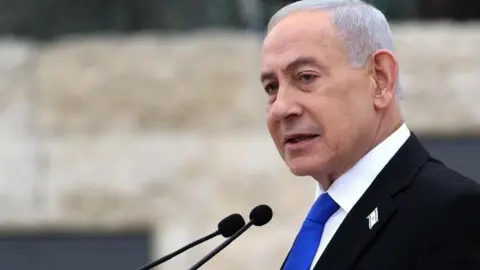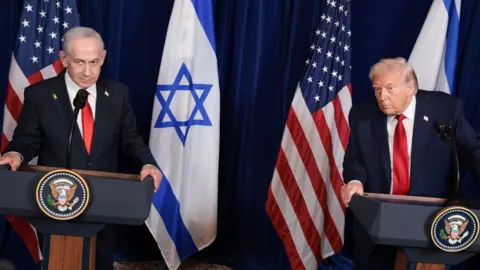
Israeli Prime Minister Benjamin Netanyahu has convened a meeting with his top advisers to discuss Donald Trump's 'Board of Peace' for Gaza, after it revealed the US did not include Israel in talks regarding its formation.
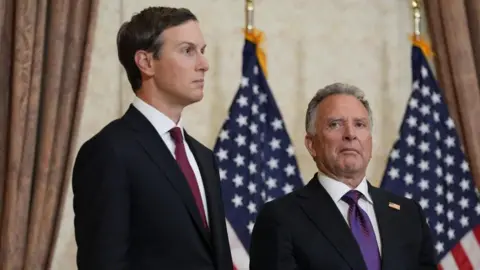
Netanyahu's office stated it was 'not coordinated with Israel and runs contrary to its policy', following Saturday's announcement of the committee's Gaza Executive Board, which includes the Turkish foreign minister, a Qatari official, former UK PM Tony Blair, and Trump's son-in-law Jared Kushner.
The Board of Peace is part of Trump's 20-point plan to end the Israel-Hamas war and will temporarily oversee the governance and reconstruction of Gaza. The exact structure of the board remains unclear, and additional members are still being invited.
Separate high-level bodies operating under the Board include a 'founding Executive Board' focused on investment and diplomacy, and a 'Gaza Executive Board' responsible for on-the-ground administrative tasks in collaboration with the National Committee for the Administration of Gaza (NCAG).
To date, the only Israeli member on the Gaza Executive Board is Yakir Gabay, a businessman now based in Cyprus, with no Palestinians represented on either senior board. Notably, Israel’s far-right National Security Minister Itamar Ben-Gvir asserted that the Gaza Strip requires cleaning of Hamas rather than any administrative oversight.
Opposition leader Yair Lapid condemned the situation as a significant diplomatic failure for Israel, emphasizing the exclusion from the peace efforts.
Officials from Qatar and Turkey, both critical of Israel’s military actions in Gaza, are confirmed members of the advisory panel.
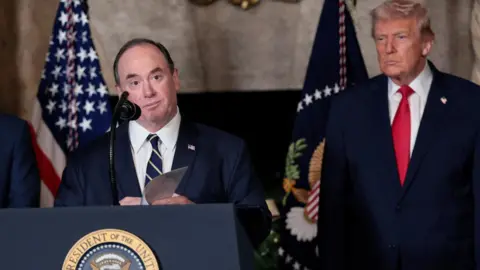
The broader Board of Peace is set to feature world leaders, with President Trump serving as chairman. Invitations have reportedly gone out to leaders from the UK, Hungary, Argentina, Jordan, Turkey, India, and Egypt, although responses have varied, with only Hungarian Prime Minister Viktor Orban accepting thus far.
The White House indicates that participating members will strive to ensure effective governance and the provision of services that encourage stability and welfare for Gaza's residents.
On Saturday, Iran's humanitarian situation was highlighted by the UN, noting that approximately 80% of buildings in Gaza have been destroyed, and survivors face harsh winter conditions alongside food shortages.
Israel maintains it is facilitating humanitarian efforts but attributes any issues in aid distribution to the UN's failure to effectively manage relief supplies, citing security measures to prevent Hamas from exploiting these efforts.