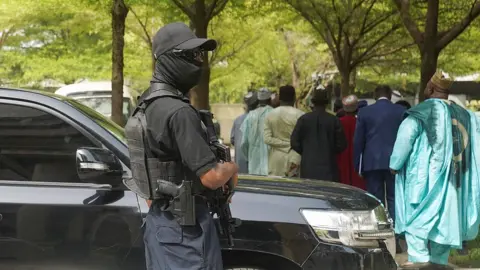
For months, rumors and secrecy have surrounded last year's alleged Independence Day coup plot in Nigeria, but with the recent indictment of six individuals accused of involvement, new details are surfacing about the complex operation aimed at unseating President Bola Tinubu. Planned for the 1st of October 2025, coinciding with Nigeria's 65th independence anniversary, the coup was thwarted in the final hour, leading to a cancellation of the celebratory parade.
Court documents now reveal the identity of the alleged mastermind, Colonel Mohammed Ma'aji, and signal a multifaceted strategy by the plotters to destabilize the country before their proposed takeover. Among those indicted are civilians, a serving police officer, and retired military personnel, with charges ranging from treason to money laundering. They deny all accusations, suggesting that their trial could illuminate a broader conspiracy involving multiple facets of Nigeria's security forces.
Nigeria has been under civilian rule since 1999, yet recent political turmoil and economic hardship have led to speculation of potential coups, reflecting trends seen in other West African nations. In the trial proceedings, Colonel Ma'aji's past connections to the oil industry and political figures like Timipre Sylva emerge as pivotal, suggesting financial backing for the coup attempt.
Amid the drama, prominent individuals such as clerics and Nollywood directors have been implicated, raising questions about their roles in the coup's narrative and the lengths people are willing to go to reshape Nigeria’s political landscape. As the saga unfolds, the potential for more indictments remains, hinting at a deeper entanglement of military and civilian actors in this alarming chapter of Nigerian history.
Court documents now reveal the identity of the alleged mastermind, Colonel Mohammed Ma'aji, and signal a multifaceted strategy by the plotters to destabilize the country before their proposed takeover. Among those indicted are civilians, a serving police officer, and retired military personnel, with charges ranging from treason to money laundering. They deny all accusations, suggesting that their trial could illuminate a broader conspiracy involving multiple facets of Nigeria's security forces.
Nigeria has been under civilian rule since 1999, yet recent political turmoil and economic hardship have led to speculation of potential coups, reflecting trends seen in other West African nations. In the trial proceedings, Colonel Ma'aji's past connections to the oil industry and political figures like Timipre Sylva emerge as pivotal, suggesting financial backing for the coup attempt.
Amid the drama, prominent individuals such as clerics and Nollywood directors have been implicated, raising questions about their roles in the coup's narrative and the lengths people are willing to go to reshape Nigeria’s political landscape. As the saga unfolds, the potential for more indictments remains, hinting at a deeper entanglement of military and civilian actors in this alarming chapter of Nigerian history.