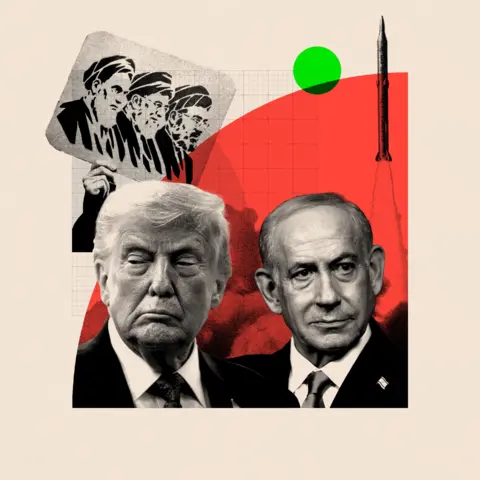
Some old truths about warfare have been knocking on the door of the Oval Office in the month since US President Donald Trump and Israel's Prime Minister Benjamin Netanyahu sent US and Israeli warplanes to bomb Iran.
The failure to learn from the past means that Donald Trump now faces a stark choice. If he cannot get a deal with Iran, he can either try to declare a victory that will fool no-one, or escalate the war.
The oldest of the old truths comes from the Prussian military strategist Helmuth von Moltke the Elder: No plan survives first contact with the enemy. He was writing in 1871, the year Germany was unified as an empire, a moment that was as consequential for the security of Europe as this war might be for the security of the Middle East.
So far, Trump's handling of the conflict has been characterized by instinct rather than strategy, a situation exacerbated by the resilience of the Iranian regime. Historical parallels abound, with Eisenhower's view that plans are worthless, but planning is everything highlighting the need for flexible strategies in the face of conflict.
As the conflict persists, the implications could become catastrophic not just for Iran and the U.S, but for global stability, mirroring historical examples where under-prepared interventions have led to significant geopolitical shifts.