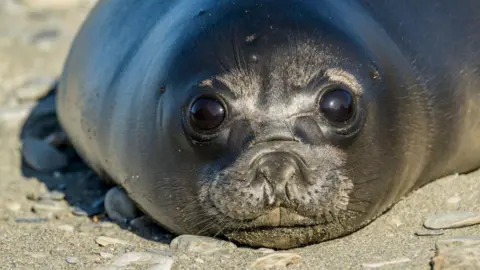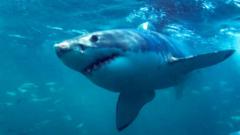
In a groundbreaking study, scientists from Macquarie University, New South Wales, have suggested that attaching LED strip lights to surfboards could effectively deter great white shark attacks. Conducted off the coast of Mossel Bay in South Africa, the research involved towing seal-shaped decoy boards equipped with various lighting setups behind a boat, to observe which configurations attracted the most attention from sharks.
The study's lead researcher, Laura Ryan, noted that the lights distort the silhouette of surfboards on the ocean’s surface, making it harder for great whites, known for their predatory attacks from below, to identify a surfer’s shape against the sunlit ocean backdrop. This innovative approach offers a potential non-invasive alternative to shark control measures such as nets or drones.
Great white sharks have been implicated in the majority of fatal shark bites on humans, primarily attacking from beneath and sometimes mistaking surfers for their natural prey, seals. As the risk of shark attacks prompts significant safety concerns for surfers and ocean-goers—69 unprovoked shark bites were recorded in 2023, including ten fatalities—researchers are keen to expand their investigation to other species known to pose risks, such as bull sharks and tiger sharks.
The study, published in the journal Current Biology, experimented with three varying intensities of LED lights. Remarkably, the brightest lights that were aligned horizontally proved to be less attractive to great whites. The team emphasized that the research highlighted the significance of a dark silhouette against a lighter background in influencing the predatory behavior of sharks and suggested that modifying silhouettes could lay the groundwork for new shark deterrents that enhance human safety.
Interestingly, the team found that great white sharks exhibited reduced attraction to the most conspicuous lights, contrary to findings from earlier studies which suggested that some species are drawn to bright and reflective objects. Following this encouraging outcome, researchers are currently developing prototype lighting strips intended for practical testing on surfboards and kayaks. As exploration of these technological advancements continues, the hope is to safeguard surfers while fostering a balanced relationship with marine life.