Minnesota officials say the FBI has blocked their access to an investigation into the fatal shooting of a woman by a US Immigration and Customs Enforcement (ICE) agent.
People have taken to the streets of Minneapolis to protest the killing of 37-year-old Renee Good, who died on Wednesday after being shot in her car.
Minnesota Governor Tim Walz has accused the Trump administration of blocking state officials from involvement in the case, but the US vice-president said the investigation is a federal issue.
Officials have offered differing accounts of the incident, with the Trump administration claiming the ICE agent was acting in self-defense, while local officials say the woman posed no danger.
Homeland Security Secretary Kristi Noem has claimed the ICE agent shot Good multiple times because she was trying to run over the officer in her car.
The US Federal Bureau of Investigation stated it would investigate the incident. However, Minnesota's Bureau of Criminal Apprehension (BCA) mentioned that the FBI had initially agreed to a joint investigation with state officials but then reversed course, denying access to case materials. Consequently, BCA has reluctantly withdrawn from the investigation.
Governor Walz expressed concern over the federal investigation's integrity, indicating a lack of state involvement could hinder a fair outcome.
Videos of the shooting show ICE agents approaching Good's vehicle and demanding she exit. When the car attempted to drive away, shots were fired, resulting in a crash nearby.
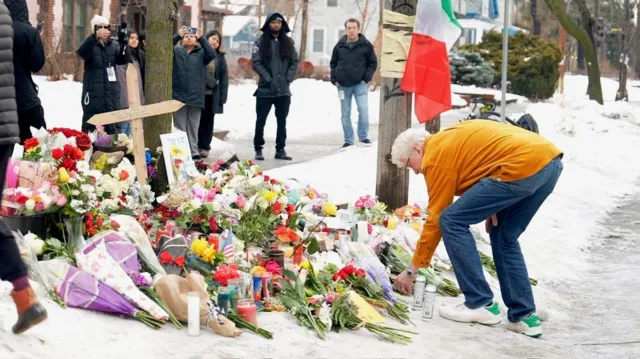
At the scene, community members have set up a vigil to honor Good, bringing flowers and candles.
The shooting has caused widespread anger and unrest, with protests occurring against ICE's actions and calls for accountability echoing throughout the community.
Renee Good was well-regarded, described as a compassionate individual who recently moved to Minneapolis. Her tragic death has prompted discussions regarding the use of force by law enforcement agencies and the necessity for transparent investigations in such cases.
While state officials may pursue criminal charges against the ICE officer involved, the lack of joint efforts in the investigation raises concerns regarding public trust in the overall process.