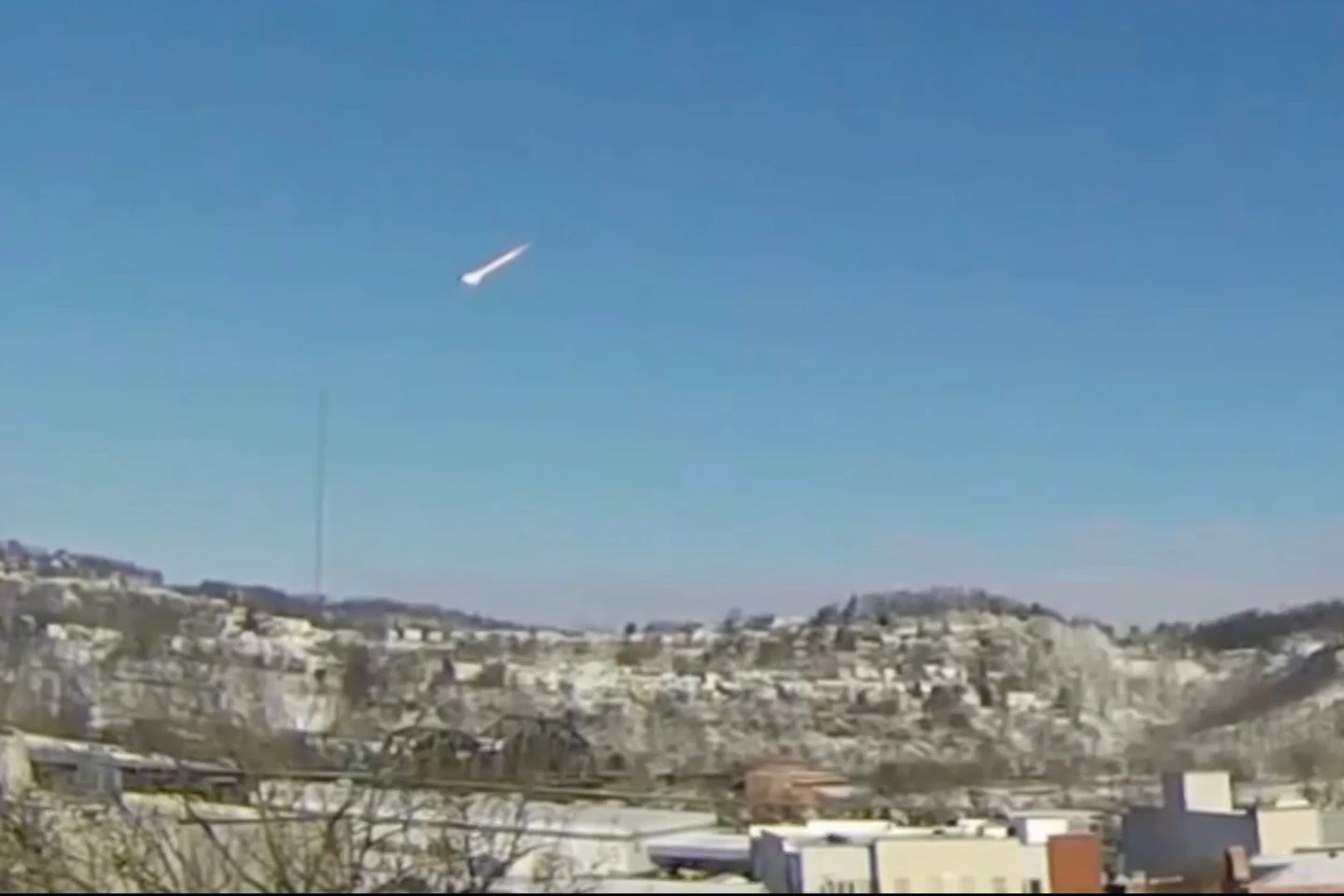
CLEVELAND, Ohio (AP) — A stunning astronomical event unfolded over Cleveland when a 7-ton meteor streaked across the sky at an astonishing 45,000 miles per hour on Tuesday, resulting in a thunderous explosion that startled residents far and wide. Reports poured in from neighboring states including Wisconsin, Pennsylvania, and Maryland, all witnessing the bright fireball despite it being just 9 a.m. The American Meteor Society noted the meteor's impressive size, with NASA confirming it to be nearly 6 feet in diameter.
This one really does look like it’s a fireball, which means it’s a meteorite -- a small asteroid, stated astronomer Carl Hergenrother, the executive director of the Society. He added, So much stuff is being launched that a lot of times what you see burning up is just reentering satellites, but those usually don’t get especially bright.
The cosmic phenomenon began when the meteor was first detected approximately 50 miles above Lake Erie, in the vicinity of Lorain. It traversed over 34 miles through the upper atmosphere before ultimately fragmenting over Valley City, just north of Medina. NASA's Bill Cooke, who heads the Meteoroid Environments Office, explained that when the meteor disintegrated, it released energy equivalent to 250 tons of TNT, which is what caused the audible boom that many residents reported hearing, alongside the vibrations felt by staff at the National Weather Service in Cleveland. There have been no immediate reports of debris being discovered.
Meteorologist Brian Mitchell from the NWS indicated, “There could be some small fragments, but a lot of it would have burned up in the atmosphere.” Hergenrother emphasized that meteor sightings are still frequent, with meteors typically falling over the U.S. approximately once a day, and smaller bits of space dust entering the atmosphere an estimated 10 times per hour. Scientists track meteors with specialized cameras, but the number of sightings captured by everyday individuals on their cellphones or security cameras continues to grow. Now we’re seeing them, and there’s dozens of videos popping up all the time, Hergenrother concluded.
This one really does look like it’s a fireball, which means it’s a meteorite -- a small asteroid, stated astronomer Carl Hergenrother, the executive director of the Society. He added, So much stuff is being launched that a lot of times what you see burning up is just reentering satellites, but those usually don’t get especially bright.
The cosmic phenomenon began when the meteor was first detected approximately 50 miles above Lake Erie, in the vicinity of Lorain. It traversed over 34 miles through the upper atmosphere before ultimately fragmenting over Valley City, just north of Medina. NASA's Bill Cooke, who heads the Meteoroid Environments Office, explained that when the meteor disintegrated, it released energy equivalent to 250 tons of TNT, which is what caused the audible boom that many residents reported hearing, alongside the vibrations felt by staff at the National Weather Service in Cleveland. There have been no immediate reports of debris being discovered.
Meteorologist Brian Mitchell from the NWS indicated, “There could be some small fragments, but a lot of it would have burned up in the atmosphere.” Hergenrother emphasized that meteor sightings are still frequent, with meteors typically falling over the U.S. approximately once a day, and smaller bits of space dust entering the atmosphere an estimated 10 times per hour. Scientists track meteors with specialized cameras, but the number of sightings captured by everyday individuals on their cellphones or security cameras continues to grow. Now we’re seeing them, and there’s dozens of videos popping up all the time, Hergenrother concluded.