In brief
The Artemis II crew, while returning from the moon, proposed names for two craters: 'Integrity' after their capsule, and 'Carroll' in memory of Commander Reid Wiseman's late wife. This emotional moment echoed humanity's deep ties to those we love, showcasing a modern, sentimental side of space exploration that contrasts with earlier Apollo missions. The International Astronomical Union is expected to approve the names.
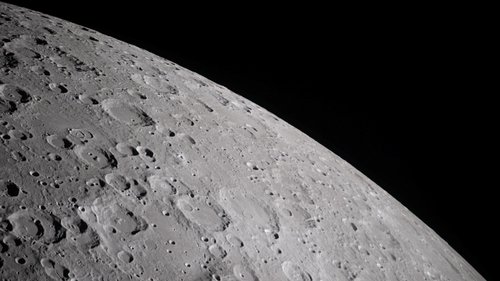
HOUSTON - Lunar love knows no bounds. Now hurtling home from the moon, the Artemis II astronauts took a poignant step reminiscent of past missions, proposing deeply personal names for a pair of lunar craters. Commander Reid Wiseman and his crew requested to name a small, fresh crater after their capsule, dubbed Integrity, and another crater in remembrance of his late wife, Carroll. This request came shortly before their lunar fly-around, showcasing their emotional connection to their mission and personal histories.Carroll Wiseman, who served as a neonatal nurse, passed away from cancer in 2020. The crew's gesture draws a parallel to Apollo 8, where astronaut Jim Lovell named a prominent lunar peak Mount Marilyn after his wife during humanity’s first journey to the moon.As the first lunar visitors since Apollo 17 in 1972, the Artemis II crew left ground controllers speechless with their emotional request. NASA lunar scientist Ryan Watkins commented on the moment, noting that there was not a single dry eye among the team.Wiseman's request, made by Canadian astronaut Jeremy Hansen, highlighted the camaraderie and human aspects that characterize this mission. Mission Control had worked quietly with the Artemis II crew to help them select the bright, relatively young craters, which they spotted from their capsule using zoom lenses.The proposed Carroll Crater is located on the moon’s edge, straddling the border between the near and far sides, making it occasionally visible from Earth. It measures approximately 3 miles (5 kilometers) across. The slightly larger Integrity crater is located entirely on the lunar far side.Shortly after making their request, the Artemis II crew broke Apollo 13’s distance record for deep-space travelers and shared an emotional group hug. Hansen’s voice broke as he explained to Mission Control, 'We lost a loved one. Her name was Carroll, the spouse of Reid, the mother of Katie and Ellie.' The immediate response from Mission Control was simply, 'Integrity and Carroll crater, loud and clear.'This moment starkly contrasts with the more stoic approach of the Apollo missions in the 1960s and 70s, emphasizing a contemporary perspective on human emotions in space exploration. Upon returning to Earth later this week, the astronauts will submit their proposed names to the International Astronomical Union (IAU), which is expected to make a decision within a month. The IAU already recognizes 81 astronaut-named lunar features, including notable names such as Apollo 16’s Baby Ray and Gator, as well as other creative lunar landmarks.