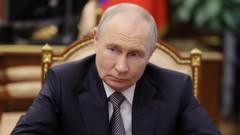
The Kremlin is tightening its grip over what Russians can do and see online, making it harder for outlets like the BBC to reach their audiences. For the past 80 years BBC Russian has sought to bypass those restrictions, which for decades featured jamming of its short-wave radio broadcasts and now involve blocking its website. The latest restrictions in Russia have included widespread mobile internet outages and a reported plan to block the Telegram news and messaging app.
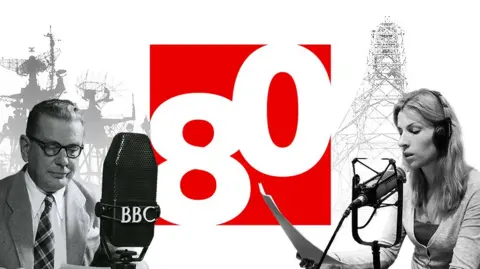
On 24 March 1946, the BBC started its first regular radio broadcasts in the Russian language, aiming to provide listeners behind the Iron Curtain with an alternative to state propaganda. By 1949, jamming of the signal was already a norm. Soviet citizens faced hurdles just to listen to foreign broadcasts, often turning it into a form of sport. Natalia Rubinstein, a former BBC presenter, shares how people resorted to taking radios into the wilderness to evade jamming signals.
This jamming tactic was first used by Nazi Germany during World War II, and it continued through the Cold War as the BBC would broadcast Russian-language bulletins multiple times a week. Alongside news, audiences also tuned in to music and literature often banned in the Soviet Union.
As the years progressed, defiantly tuned-in households shared stories of their clandestine listening habits, including near-silence amidst crackling interference. Occasionally, broadcasts managed to slip through, notably during significant events such as the reporting on Soviet leader Leonid Brezhnev's death in 1982.
In the late 20th century, with the fall of the Iron Curtain and the liberalization under Mikhail Gorbachev, BBC Russian finally received feedback from its audience, marking a turning point in its operations.
Fast forward to 2022, amid Russia’s invasion of Ukraine, BBC Russian's audience surged to 10 million, a testament to the public's hunger for independent news, despite the Kremlin blocking its website and enacting harsh laws on media. Today, as eight BBC Russian journalists face the label of 'foreign agents,' the essence of independent journalism fights against Russian media barriers. Director Jenny Norton emphasizes the fundamental role of BBC Russian as a beacon of truth for Russians determined to access the world outside state information. Resilient and resourceful, that legacy continues as new generations find ways to defy the digital Iron Curtain in pursuit of uncensored journalism.
On 24 March 1946, the BBC started its first regular radio broadcasts in the Russian language, aiming to provide listeners behind the Iron Curtain with an alternative to state propaganda. By 1949, jamming of the signal was already a norm. Soviet citizens faced hurdles just to listen to foreign broadcasts, often turning it into a form of sport. Natalia Rubinstein, a former BBC presenter, shares how people resorted to taking radios into the wilderness to evade jamming signals.
This jamming tactic was first used by Nazi Germany during World War II, and it continued through the Cold War as the BBC would broadcast Russian-language bulletins multiple times a week. Alongside news, audiences also tuned in to music and literature often banned in the Soviet Union.
As the years progressed, defiantly tuned-in households shared stories of their clandestine listening habits, including near-silence amidst crackling interference. Occasionally, broadcasts managed to slip through, notably during significant events such as the reporting on Soviet leader Leonid Brezhnev's death in 1982.
In the late 20th century, with the fall of the Iron Curtain and the liberalization under Mikhail Gorbachev, BBC Russian finally received feedback from its audience, marking a turning point in its operations.
Fast forward to 2022, amid Russia’s invasion of Ukraine, BBC Russian's audience surged to 10 million, a testament to the public's hunger for independent news, despite the Kremlin blocking its website and enacting harsh laws on media. Today, as eight BBC Russian journalists face the label of 'foreign agents,' the essence of independent journalism fights against Russian media barriers. Director Jenny Norton emphasizes the fundamental role of BBC Russian as a beacon of truth for Russians determined to access the world outside state information. Resilient and resourceful, that legacy continues as new generations find ways to defy the digital Iron Curtain in pursuit of uncensored journalism.