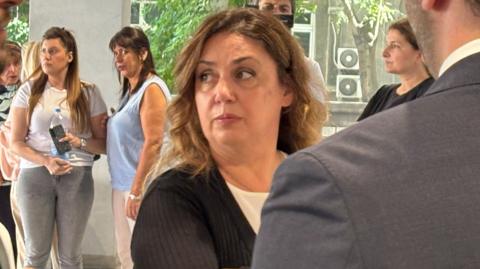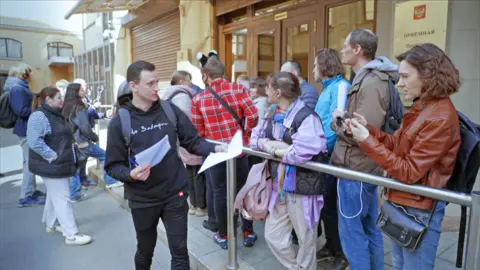
Near the Kremlin, a group of citizens stands outside the presidential administration, waiting to submit petitions urging President Vladimir Putin to halt the ongoing crackdown on the internet. This situation reflects a troubling trend as Russian authorities impose stricter controls on the digital landscape, restricting access to major global messaging apps and causing disruptions in mobile internet service.
Petitioning the president might seem a legal recourse; however, in an authoritarian regime, such actions come with risks. Security personnel are actively monitoring those outside the Kremlin, documenting their presence as they call for change. One petitioners, Yulia, expresses her fear stating, Very scared. I'm shaking.
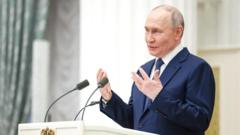
In response to public criticisms, Putin has attributed the internet disruptions to necessary operational efforts to prevent terrorism while asserting the need for essential services to remain unaffected. Yet, the reality for many Russians, like Yulia, is the detrimental impact on businesses reliant on the internet for survival. As she explains, blockades on popular apps like WhatsApp and Telegram are causing significant financial losses, declaring, Without internet access, in this form, it will not exist.
As the Kremlin justifies its severe restrictions in the name of public safety, many citizens feel increasingly isolated from global events, contributing to a growing discontent. Columnists and activists illustrate the emergence of what some perceive as a digital 'Iron Curtain' being formed to shield citizens from the outside world, especially from Western liberal ideas perceived as harmful.
Despite continuing internet freedoms in the marketplace, people are growing weary as they encounter obstacles daily that were previously unheard of. Users report difficulties accessing necessary applications for basic services or communicating with loved ones. Many Russians are feeling a profound loss of normalcy as restrictions transform their lives and economic situations.
While the government promotes a state-sanctioned messaging service called MAX, skepticism pervades the public. Some fear such tools would serve as an extension of state surveillance rather than provide real communication freedom.
Yet, the tension in Russia is palpable, as more citizens articulate their frustrations through social media, burgeoning things like a viral address from popular blogger Victoria Bonya calling attention to the divide between the elite and ordinary citizens. As frustrations continue to swell with Putin's approval ratings declining, one truth emerges: the Kremlin's approach to internet control may exacerbate public discontent rather than suppress it.
Petitioning the president might seem a legal recourse; however, in an authoritarian regime, such actions come with risks. Security personnel are actively monitoring those outside the Kremlin, documenting their presence as they call for change. One petitioners, Yulia, expresses her fear stating, Very scared. I'm shaking.
In response to public criticisms, Putin has attributed the internet disruptions to necessary operational efforts to prevent terrorism while asserting the need for essential services to remain unaffected. Yet, the reality for many Russians, like Yulia, is the detrimental impact on businesses reliant on the internet for survival. As she explains, blockades on popular apps like WhatsApp and Telegram are causing significant financial losses, declaring, Without internet access, in this form, it will not exist.
As the Kremlin justifies its severe restrictions in the name of public safety, many citizens feel increasingly isolated from global events, contributing to a growing discontent. Columnists and activists illustrate the emergence of what some perceive as a digital 'Iron Curtain' being formed to shield citizens from the outside world, especially from Western liberal ideas perceived as harmful.
Despite continuing internet freedoms in the marketplace, people are growing weary as they encounter obstacles daily that were previously unheard of. Users report difficulties accessing necessary applications for basic services or communicating with loved ones. Many Russians are feeling a profound loss of normalcy as restrictions transform their lives and economic situations.
While the government promotes a state-sanctioned messaging service called MAX, skepticism pervades the public. Some fear such tools would serve as an extension of state surveillance rather than provide real communication freedom.
Yet, the tension in Russia is palpable, as more citizens articulate their frustrations through social media, burgeoning things like a viral address from popular blogger Victoria Bonya calling attention to the divide between the elite and ordinary citizens. As frustrations continue to swell with Putin's approval ratings declining, one truth emerges: the Kremlin's approach to internet control may exacerbate public discontent rather than suppress it.