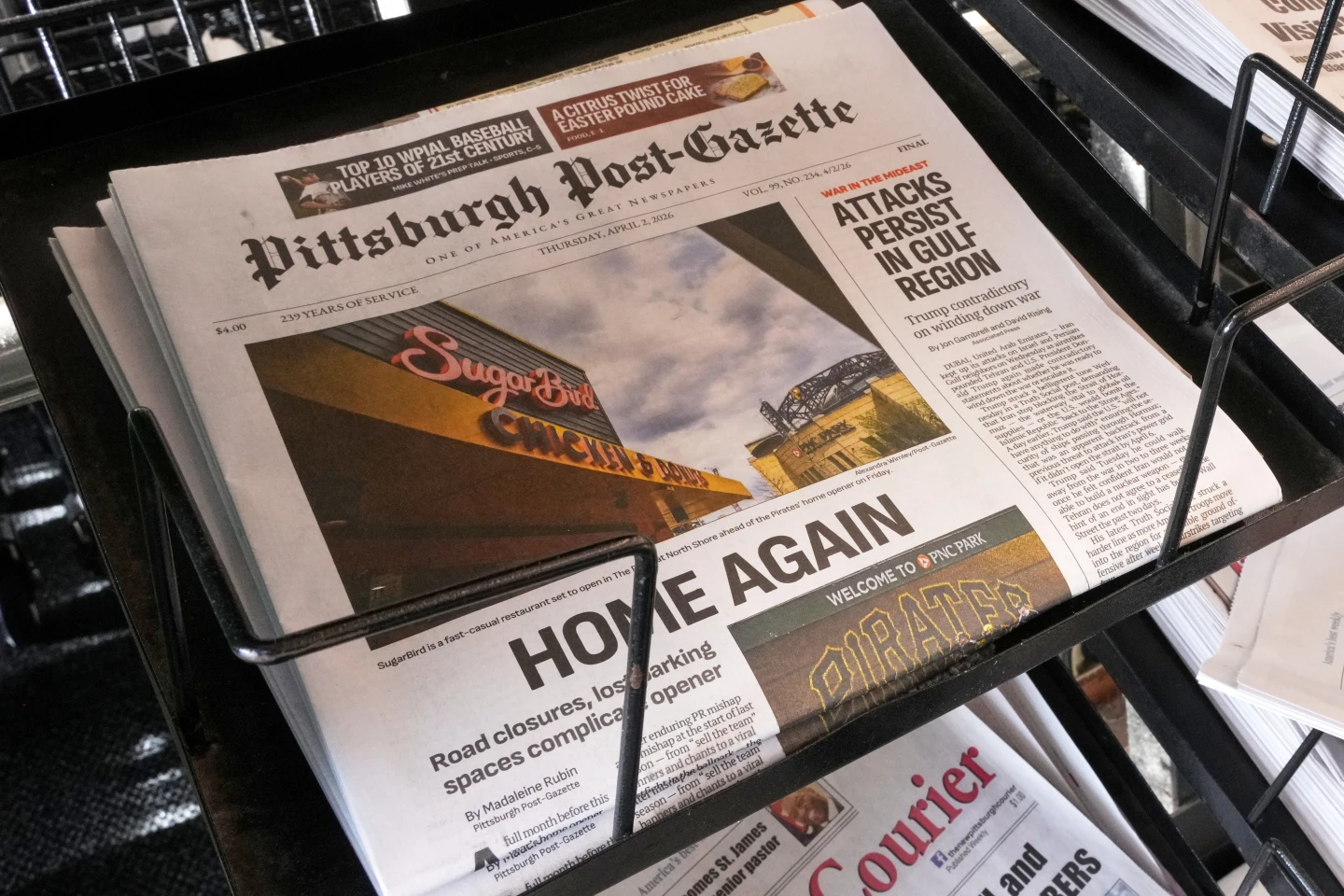
PITTSBURGH — In a span of just weeks, the city of Pittsburgh has witnessed a fascinating turnaround in its media landscape, highlighted by both the impending closure of a venerable newspaper and the surprising revival of a beloved alternative publication.
The Pittsburgh Post-Gazette, a publication that has served the community for centuries, recently announced it will be sold to a nonprofit foundation committed to keeping it operational. Its closure was set for May 3, a date that would have left Pittsburgh without a local newspaper, a significant blow for journalism in the city.
Meanwhile, the Pittsburgh City Paper has resurfaced after a brief hiatus, revitalized under new management. This turnaround from the brink of closure has sparked optimism amid an otherwise distressing trend for local news, which has seen significant cutbacks, job losses, and dwindling readership.
“It’s human nature to recognize value only once it is threatened,” noted Halle Stockton, co-executive director of Public Source, a digital news organization in the area. This sentiment resonates with many in Pittsburgh, where the future of local journalism has been recently amplified by the news of impending closures.
A Rich Legacy at Risk
Founded in 1786 as the Pittsburgh Gazette, the Post-Gazette has evolved over centuries, but its endurance is now in question amid ongoing labor disputes and financial challenges. The newspaper, which won a Pulitzer Prize for its poignant coverage of the Tree of Life synagogue shooting, has struggled to adapt to the ever-changing media environment.
Just weeks before the announcement of the sale, the City Paper, which had been a staple of Pittsburgh’s culture since 1991, had closed its doors after 34 years. However, with a fresh injection of leadership, it is now preparing to return to monthly publications, aiming to cover major community stories and arts events that have defined its identity.
Shifts in the Narrative
The sale of the Post-Gazette to the Venetoulis Institute for Local Journalism hints at a burgeoning trend of nonprofits stepping in to save struggling news outlets. In an era defined by hedge fund ownership of media, many Pittsburghers were relieved to see a local nonprofit taking up the mantle.
Tim Franklin from the Medill Local News Initiative emphasizes the importance of this acquisition, noting the potential for the Post-Gazette to become a model for other financially struggling newspapers across the nation.
In the face of inevitable changes, other local news organizations have begun strengthening their reporting capabilities. The Pittsburgh Tribune-Review has announced plans to bolster its reporting staff and reinstate a Sunday print edition, while Public Source is working to broaden its focus and engage with the community amid the challenges posed by declining interest in traditional news formats.
“We are embarking on a path where cooperation, rather than competition, will define the future of news in Pittsburgh,” said Conte, a journalism professor and advocate for collaboration within the media landscape.
A Generational Shift
As journalists and academics reflect on these changes, a deeper concern has emerged—the changing habits of news consumption among younger audiences. Many students express a preference for social media as their primary news source, raising critical questions about the future of traditional outlets.
Overall, while Pittsburgh's local journalism ecosystem is experiencing a challenging yet remarkable phase, the hope remains that innovation and community support will lead to a resurgence of trust and engagement in local news. With new ownership structures and an evolving understanding of news consumption behaviors, Pittsburgh is poised to redefine what local journalism means in the 21st century.