The unexpected downfall of Bashar al-Assad has sent shockwaves through Syria, igniting celebrations among some but casting long shadows over the nation's future. The regime, once thought resilient, crumbled alarmingly quickly, leaving many astonished at how rapidly it fizzled into nothingness.
Reflecting on the turmoil of 2011 during the Arab uprisings, we see a stark contrast; back then, Assad had managed to project a facade of authority despite an equally corrupt and bloated regime inherited from his father, Hafez al-Assad. While the elder Assad's grip on power stemmed from decades of iron-fisted rule, Bashar’s promises of reform were swiftly shattered as he resorted to lethal violence against peaceful protests.
A former British ambassador likened the Assad regime to a crime syndicate, where loyalty was rewarded and dissent was met with brutal retribution. As a result, many political prisoners emerged in the light of newfound freedom, shedding years of agonizing incarceration. Meanwhile, the oppressive reign had masked the regime's fragility.
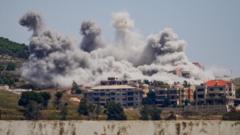
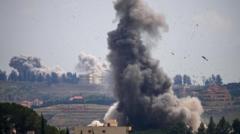
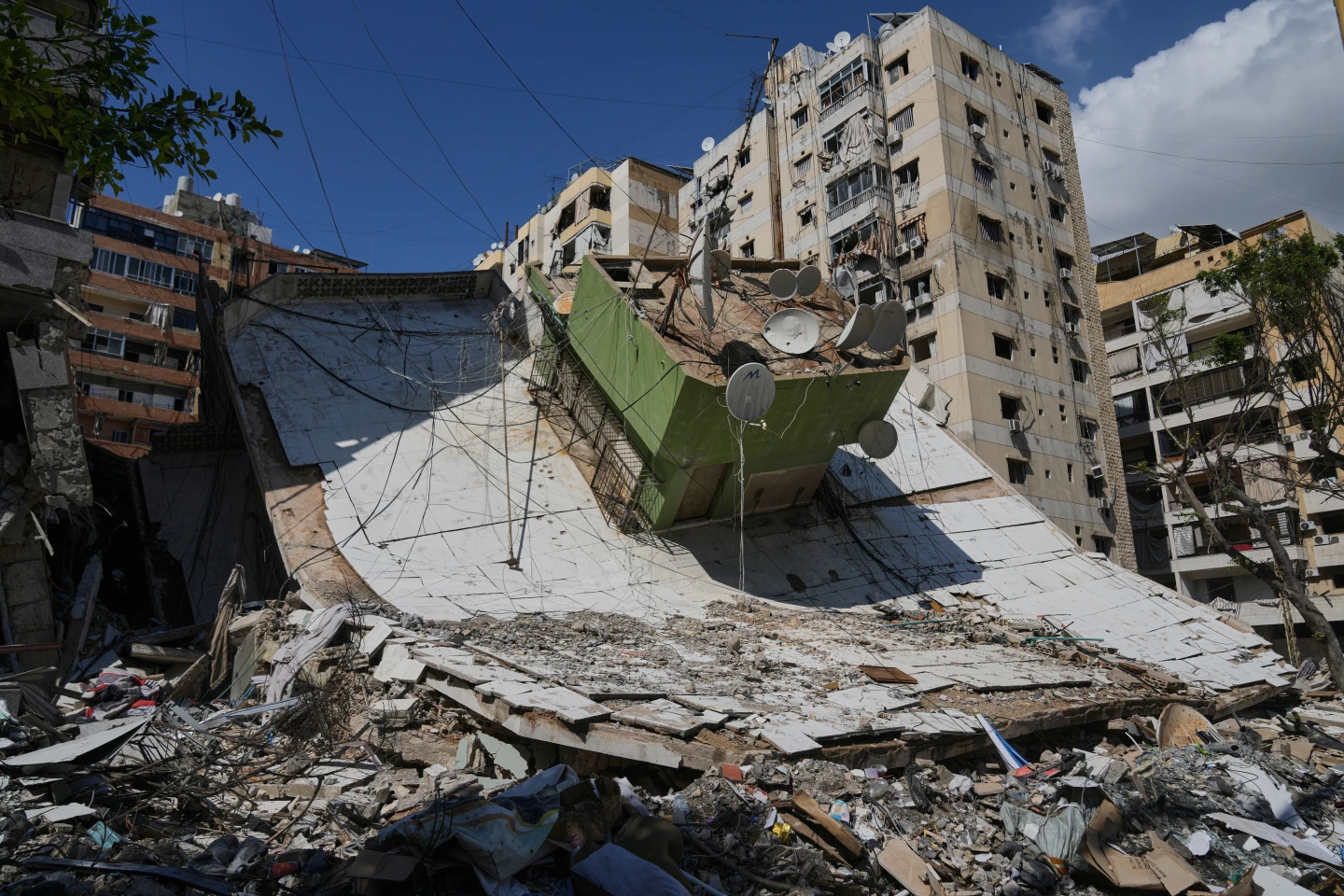
Amid shifting alliances, international players like the US and Israel had been probing ways to pry Syria away from Iranian influence, even increasing military strikes to diminish Hezbollah's power before the regime collapsed. The last-minute attempts to stabilize Assad by these countries, however, proved futile, inadvertently accelerating his downfall as their strategic calculations went awry.
The change in Syria's leadership raises questions about the future of foreign relations and influence in the region. The exiting alliance between Syria and Iran could drastically shift the geopolitical landscape, altering power dynamics that had long suppressed regional stability.
As the populace indulges in newfound liberation, apprehension lingers over the potential resurgence of conflicts and power struggles, reminiscent of disastrous outcomes in Libya and Iraq after their respective regime collapses. The void left by Assad is instantly filled with competing factions, magnifying tensions instead of fostering unity.
The complexities of reconstruction and reconciliation weigh heavily on the shoulders of emerging leaders, with key figures like Abu Mohammad al-Jolani emerging amid calls for peaceful coexistence among Syria's diverse communities. Yet, deep-seated divisions and external pressures pose daunting challenges.
Regional players, notably Turkey, have scrutinized these developments carefully, seeing opportunities to enhance their own influence. As foreign powers keep a watchful eye on the shifting balance of power, the stakes become increasingly high for Syria.
Amid the uncertainty, hope remains for Syrians to reclaim control over their destiny. With a concerted effort to unify and establish a cohesive governance framework, there is a flicker of possibility that Syria might rise anew, evolving into a nation that learns from its tumultuous past rather than reliving it.
Reflecting on the turmoil of 2011 during the Arab uprisings, we see a stark contrast; back then, Assad had managed to project a facade of authority despite an equally corrupt and bloated regime inherited from his father, Hafez al-Assad. While the elder Assad's grip on power stemmed from decades of iron-fisted rule, Bashar’s promises of reform were swiftly shattered as he resorted to lethal violence against peaceful protests.
A former British ambassador likened the Assad regime to a crime syndicate, where loyalty was rewarded and dissent was met with brutal retribution. As a result, many political prisoners emerged in the light of newfound freedom, shedding years of agonizing incarceration. Meanwhile, the oppressive reign had masked the regime's fragility.
Amid shifting alliances, international players like the US and Israel had been probing ways to pry Syria away from Iranian influence, even increasing military strikes to diminish Hezbollah's power before the regime collapsed. The last-minute attempts to stabilize Assad by these countries, however, proved futile, inadvertently accelerating his downfall as their strategic calculations went awry.
The change in Syria's leadership raises questions about the future of foreign relations and influence in the region. The exiting alliance between Syria and Iran could drastically shift the geopolitical landscape, altering power dynamics that had long suppressed regional stability.
As the populace indulges in newfound liberation, apprehension lingers over the potential resurgence of conflicts and power struggles, reminiscent of disastrous outcomes in Libya and Iraq after their respective regime collapses. The void left by Assad is instantly filled with competing factions, magnifying tensions instead of fostering unity.
The complexities of reconstruction and reconciliation weigh heavily on the shoulders of emerging leaders, with key figures like Abu Mohammad al-Jolani emerging amid calls for peaceful coexistence among Syria's diverse communities. Yet, deep-seated divisions and external pressures pose daunting challenges.
Regional players, notably Turkey, have scrutinized these developments carefully, seeing opportunities to enhance their own influence. As foreign powers keep a watchful eye on the shifting balance of power, the stakes become increasingly high for Syria.
Amid the uncertainty, hope remains for Syrians to reclaim control over their destiny. With a concerted effort to unify and establish a cohesive governance framework, there is a flicker of possibility that Syria might rise anew, evolving into a nation that learns from its tumultuous past rather than reliving it.


![Caterers, Countless Lives: Detroit Chef's Food Feeds Lebanon's War‑Torn Families","description":"In the suburbs of Dearborn Heights, a 47‑year‑old Lebanese chef turns her catering profits into lifelines for over a million displaced from Lebanon, illustrating how U.S. diaspora communities bridge crises from afar.","summary":"When war in southern Lebanon breaks out, hundreds of thousands flee to neighboring Israel and the United States. Amid rising costs, Mirvet Makki—Detroit‑based caterer—sets aside a portion of her earnings each week to sponsor families back home. Her culinary endeavor, which serves soured couscous stews and savory kibbeh, becomes a quiet lifeline for a nation in economic crisis. The problem mirrors a larger diaspora trend: U.S. Lebanese communities fund relief, rally politically, and keep cultural bonds alive, even as they watch conflict unfold from afar.","image":"https://images.unsplash.com/photo-1588097834006-0edc6c69d944?auto=format&fit=crop&w=640&q=80","text":"<p>In the Detroit suburb of Dearborn Heights, 47‑year‑old Mirvet Makki punches kitchen knives and pushes trays of fragrant Lebanese dishes, the same dishes that stir memories of her childhood village in Bint Jbeil. When the devastating war between Israel and Hezbollah dragged thousands of civilians into tent cities, a wave of refugees hit Lebanon’s southern coast—and the Lebanese diaspora in America felt a pull they could not ignore.</p><p>Every week, Makki allocates a slice of her catering profits to families in Lebanon devastated by aerial bombardments and land mines. She says the money is not a charitable donation in the truest sense. Rather, it is a trans‑national family budget trickle that keeps aunts and cousins fed while they await a return that may never happen. The funds travel across borders to a people whose homes have been reduced to rubble.</p><p>Lebanon’s displacement crisis has reached a scale previously thought unlikely: more than one million of the 6‑million‑strong population—roughly one in six—have fled their homes. The economic damage is brutal and the currency has weakened to the point that the U.S. dollar circulates in many rural markets. Food cost, fuel availability, and basic utilities have all collapsed, leaving communities hungry and desperate.</p><p>“I was thinking, ‘What can I do for other people?’” Makki says. “So I used my business.” She maintains a strict budget, limiting personal overhead to spare enough money for her sisters, nephews, and a small handful of friends who live in the most affected regions.</p><p>Many Lebanese Americans—some of them in the U.S. since the late 1800s—have become the de facto financial lifeline for Lebanon. According to the last census, roughly 625,000 Lebanese‑American residents live in the United States now, though many estimates claim the number could be as high as 1.4 million. Secretary‑General António Guterres shook hands with families in South Lebanon while speaking in Nairobi, underscoring how diaspora remittances are crucial to the country's survival.</p><p>Christians, Sunni and Shiite Muslims, and smaller Druze communities in Lebanon face distinct hardships, but their U.S. cousins unite over common concerns. When the U.S. voted to provide war aid to Israel, a wave of Lebanese Americans gathered around the “uncommitted movement” to protest, and the community also rallied to condemn a Michigan synagogue shooting. These political coalitions share a single aim: to be the voice and the hand for those who cannot lift themselves.</p><p>“When they see suffering in Lebanon, people’s immediate reaction … is for the community to come together, raise funds, raise money, and try to help everybody as much as they can,” says Akram Khater, director of Lebanese Diaspora Studies at North Carolina State University. “Most rely on one another – they are not looking to Washington for the furniture to rebuild.”</p><p>In February, Makki visited her homeland. She saw how the price of living had skyrocketed: a car rental that once cost $200 would now be a luxury. She felt the loss firsthand in a small roadside food stall that had dwindled to a single dish. That trip cemented her determination to channel her income back to Lebanon.</p><p>Some Americans are moving beyond bank transfers; they meet with families on video calls and, when possible, travel to Lebanon themselves to deliver goods or give a hands‑on hand. Nadia Bryant, a 37‑year‑old mother of Troy, Michigan, sends money to her sisters in temporary housing after their village of Ayta ash‑Shab was invaded. “They donated in direct form to orphans,” she says. “They do not even ask to put the money toward their own betterment.”</p><p>While the U.S. still cannot process immigrant visas for Lebanese nationals due to congressional stand‑by, many families despair. Attoui, a Detroit‑based fundraiser, has urged her relatives to immigrate. They are unwilling. “I have all my aunts and my cousins over there,” Attoui says. “So if you could bring [people] here, that would be a relief.”</p><p>Despite the personal losses and cultural distance, the Lebanese diaspora in the U.S. remains fiercely alive. They keep the poise of their homeland, raise money, and stand together in protest. As the war stretches on, the warmth of a pot of stew and the generosity of a family’s earnings become a quiet, daily rebellion against impossible hunger.</p>](/m/d1/2a/d12a9a3593712ff0281d85ddca1a552c8f027c57cb44d7ac67e0241a3bd37d9d/o.webp)