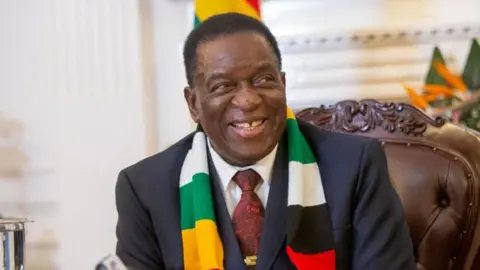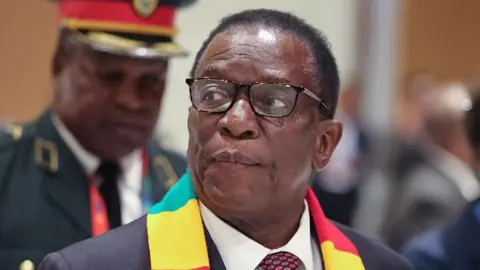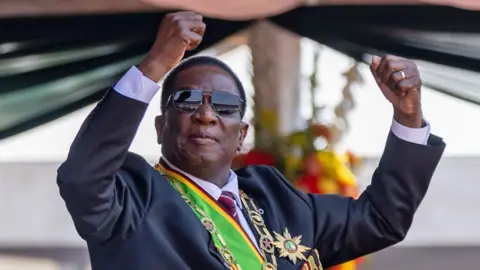
Zimbabwe's cabinet has approved draft legislation that would allow President Emmerson Mnangagwa, 83, to extend his stay in office until at least 2030.
The proposed changes mean that presidents would be selected by members of parliament instead of in a direct public vote and could serve a maximum of two seven-year terms, replacing the current five-year terms.
Justice Minister Ziyambi Ziyambi indicated that public consultations would occur before the bill is presented for parliamentary debate, where the ruling Zanu-PF party holds a majority.
However, legal challenges may arise, as constitutional experts argue that such changes require a referendum and state that amendments cannot benefit a sitting president.
Mnangagwa, who first came to power in 2017 after a military coup ousted long-time leader Robert Mugabe, was re-elected in 2023 amid disputed results. Known colloquially as 'the crocodile' for his political savvy, his current term is set to expire in 2028.
Hints that Mnangagwa aimed to stay in power beyond 2028 have circulated for the past two years, and the slogan '2030 he will still be the leader' has been chanted at Zanu-PF rallies. Nonetheless, he has publicly resisted this narrative.
Recent political tensions have escalated, particularly following the death of his prominent critic and party member Blessed Geza, who had openly denounced Mnangagwa's ambition.
The Zanu-PF government asserts that the intention behind the legislative proposal is to bolster governance and ensure political stability for its 2030 development agenda.