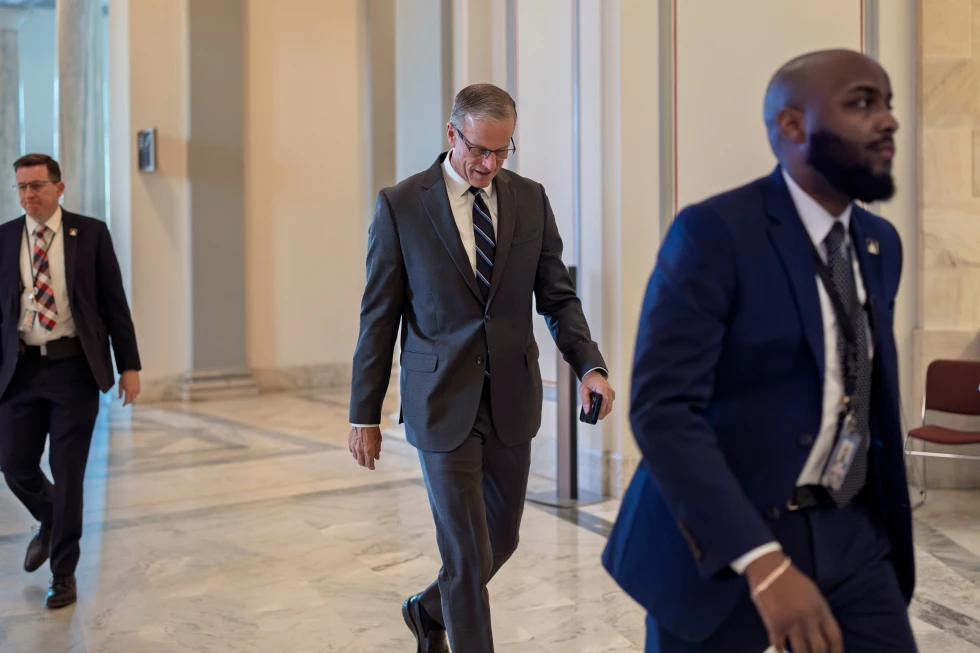
MADISON, Wis. — In a notable political shift within Wisconsin's legislative landscape, Republican Senate Majority Leader Devin LeMahieu has declared he will not run for reelection this fall, following a similar announcement from Assembly Speaker Robin Vos last month. These retirements are seen as significant indicators of changing dynamics in a state previously dominated by the GOP.
The departures come on the heels of newly redrawn district lines that Democrats believe could help them secure a majority in the state Senate. Political observers note that with these retirements, the GOP may be abandoning a sinking ship.
LeMahieu mentioned in a statement that it was time for a new chapter in his life, but did not disclose his future plans. He was first elected in 2014 and has served as the Republican leader of the Senate since 2020.
Devin Remiker, chair of the Wisconsin Democratic Party, emphasized the impact of these retirements, suggesting that other Republican candidates should heed the warning and reconsider their positions in the changing political landscape.
In a broader context, several Republican lawmakers have opted not to seek reelection, reflecting a nationwide trend facing the GOP amid challenges in the upcoming electoral season. Notably, the retirement announcements coincide with the GOP losing control of crucial political positions, including the Wisconsin Supreme Court.
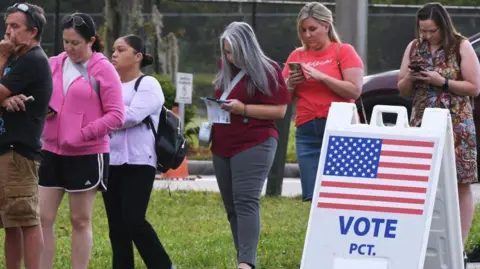
The shifting political environment has raised hopes among Democrats who are eyeing potential victories in both state legislative chambers. To gain a majority in the Senate, Democrats must flip just two seats, while five additional seats are required in the Assembly.
As Democrats gear up for the 2024 elections, the stakes are high. Both parties will engage in fierce campaigning, with the Republican primary for governor already attracting significant attention, especially after Gov. Tony Evers announced his retirement, leaving the field open for new candidates.
In this climate, Wisconsin's political narrative will be essential in shaping the state’s future, and the implications of these retirements could reverberate beyond state lines, influencing national electoral strategies.