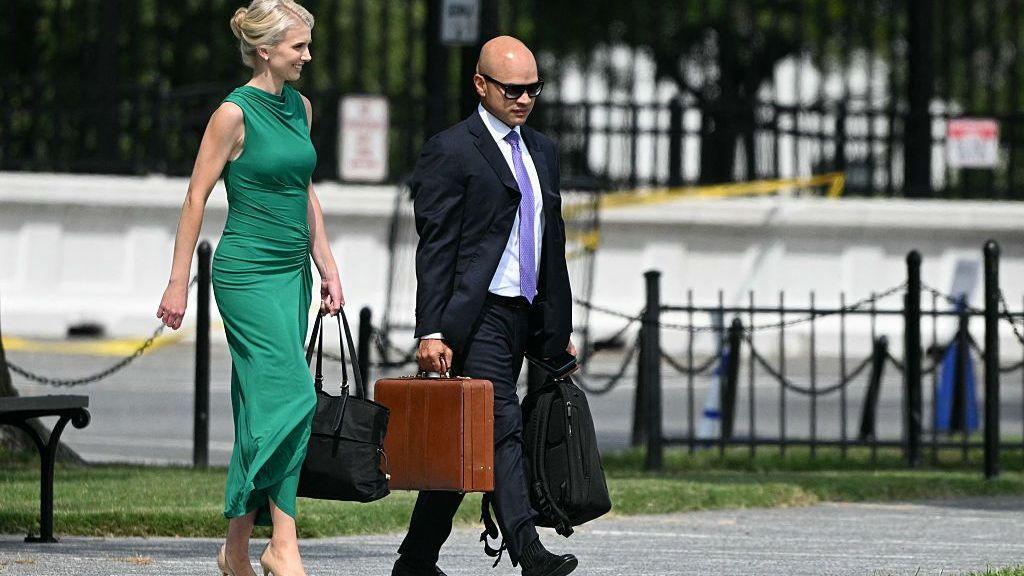
A White House teleprompter operator, Gabriel Perez, has been accused of leveraging his inside knowledge of Donald Trump’s speech content to place highly profitable bets on the Kalshi prediction‑market platform, allegedly earning almost \$100,000 before the exchange froze his account.
Kalshi’s data analysts noticed a surge of trades on ‘mention‑markets’—contracts that predict whether a speaker will use specific words or phrases—during the period surrounding the President’s State‑of‑the‑Union and other major public addresses. Investigation revealed that Perez, who had worked at the White House since 2016, was a federal employee responsible for operating teleprompters, a role that grants him real‑time insight into speech content. With a total of more than $90,000 in gains before the brokerage’s account was halted, the platform sent evidence to the Commodity Futures Trading Commission (CFTC). The CFTC confirmed receipt but did not comment on the investigation, and the federal prosecutors in Manhattan declined to pursue a criminal case.
White House press secretary Karoline Leavitt announced that the employee had been placed on unpaid leave and will no longer serve in the White House. Leavitt also confirmed that President Trump was aware of the operator’s involvement. The story, first reported by ABC News, has since been corroborated by the BBC’s US partner and CBS News.
The case highlights the nascent but rapidly expanding field of predictive markets, where political speeches and policy announcements are monetized. Kalshi’s commentary notes that “the words of political leaders can shift billions of dollars in FX and equity markets.” The intersection of insider information and emerging trading platforms prompts further scrutiny from regulators and raises questions about the safeguards needed for federal employees who have privileged access to government documents.
While the investigation is ongoing, the incident has ignited debate on the ethical boundaries of insider speculation in the financial sphere, especially as markets increasingly rely on real‑time data and sophisticated algorithms that amplify gains from seemingly trivial events like a single word in a presidential address.