A deadly mass shooting at a school in British Columbia is likely to increase scrutiny of whether Canada's gun laws should be toughened to prevent further attacks.
Nine people were killed and another 25 injured in the attack at Tumbler Ridge on Tuesday, a remote part of the country about 415 miles (667km) north of Vancouver. The suspect was also found dead with a self-inflicted injury, authorities said.
Currently, gun ownership in Canada is largely federally regulated by the government in Ottawa, and there are stricter laws in place than in most U.S. states. Mass shootings in Canada are rare when compared to its southern neighbor; however, gun-related killings as a percentage of all homicides are significantly higher in Canada than in England and Wales, or Australia.
Current Gun Laws in Canada
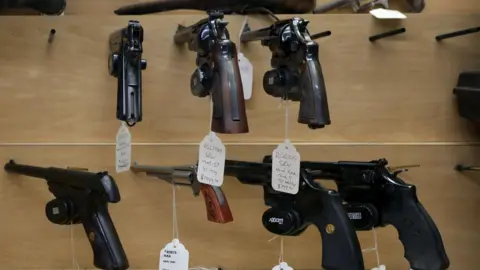
Under Canada's Firearms Act, guns must be kept locked and unloaded. Anyone wishing to buy a firearm is subject to extensive background checks and needs to have a licence. More than 2.2 million people, or 7.7% of Canada's adult population, had firearm licences according to government statistics from 2021, with an estimated 10 million firearms in circulation.
British Columbia, where the recent tragedy occurred, has historically had the highest ownership of handguns in Canada. A national freeze on the sale and transfer of handguns has also been in place since 2022.
Mass Shootings in Canada Over the Years
This latest incident follows a string of other mass shootings over the past decade. In 2020, a gunman posing as a police officer killed 22 people in Nova Scotia, marking Canada’s deadliest mass shooting, which prompted bans on most military-grade assault-style weapons. Other tragic incidents include the Quebec City mosque shooting in 2017 and the La Loche school shooting in 2016. The significant history of mass shootings in Canada highlights ongoing concerns and the potential need for stricter gun laws.