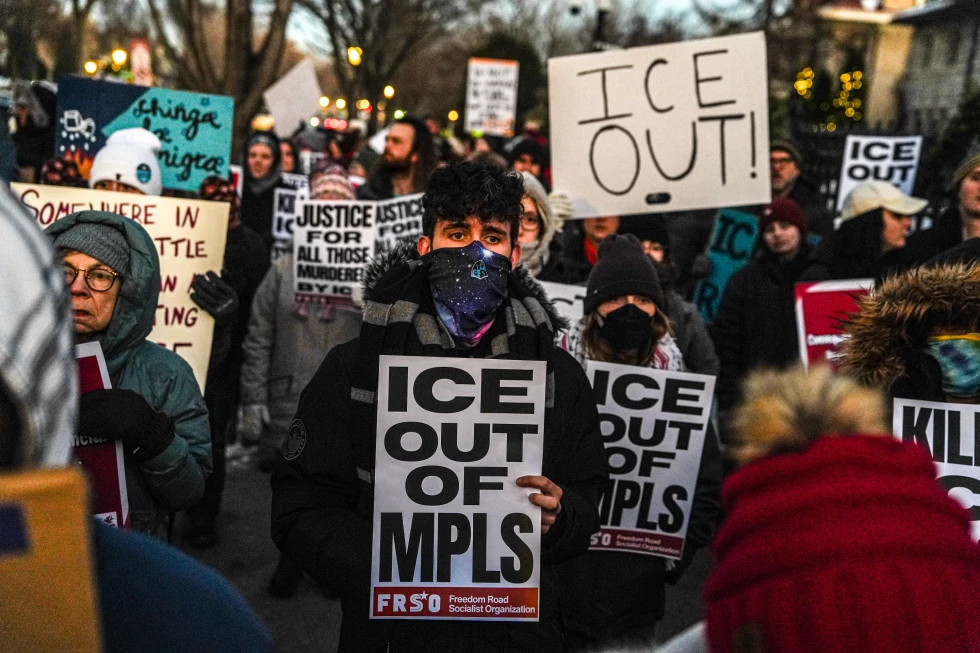
The Trump administration is intensifying its immigration policies in Minneapolis, coinciding with a rise in tensions following a shooting incident involving U.S. Immigration and Customs Enforcement (ICE). The administration has adopted language and themes that mirror those found in far-right circles, raising alarms among critics.
On January 9, shortly after the shooting of a local resident, the Department of Homeland Security (DHS) shared a post featuring a striking image of a man on horseback accompanied by lyrics suggesting a reclaiming of 'home'. This phrase is found in a song that has become a rallying cry for certain white supremacist groups.
The subsequent day, a statement from the Department of Labor echoed the sentiment of unity but raised eyebrows due to its resemblance to Nazi propaganda. Such communications have led many to draw parallels between the administration's rhetoric and extremist ideological slogans.
Moreover, as the administration pushes for claims over Greenland, visuals depicting pro-American and geopolitical imagery have surfaced, inviting further scrutiny regarding the implicit narrative surrounding national identity and immigration.
Critics like legal scholar César Cuauhtémoc García Hernández point out that the administration's choice of language is deliberate, suggesting it is strategically designed to resonate with a specific demographic while remaining cryptic enough to confuse the broader public.
While some in the administration argue that these are merely references to current events like mass illegal immigration, others view it as a dangerous flirtation with extremist rhetoric that could embolden groups advocating for white nationalism.
The administration's spokespersons have dismissed accusations of aligning with white supremacist themes, suggesting it's a tired critique from the mainstream media. They affirm that their messaging focuses on the preservation of American identity and the fight against illegal immigration.
As this ongoing narrative develops, the administration's approach may polarize its base, potentially complicating its standing among broader voter demographics who may not align with such extreme claims, despite previously increased support from Latino, Black, and Asian voters in the last election.