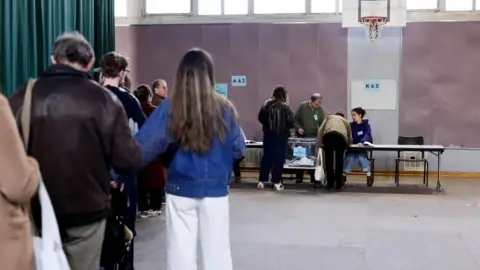
The emerging strength of the far left and far right is creating awkward choices for mainstream parties after the first round of French mayoral elections.
In many big towns and cities, Socialists and centre-right Republicans are tempted to make electoral pacts on their outside flanks in order to beat the opposition in next Sunday's run-off.
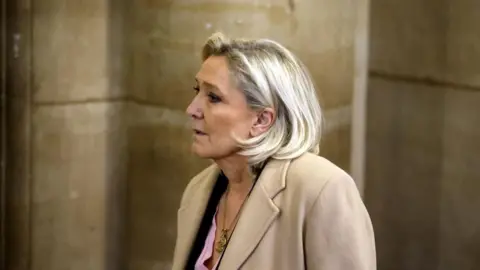
But alliances with the National Rally (RN) on the far right or France Unbowed (LFI) on the far left carry big risks as well as opportunities.
Take Marseille. There, after round one, the incumbent Socialist Mayor, Benoît Payan, is only a whisker ahead of RN candidate Franck Allisio.
If the Socialists enter a pact with LFI to save Payan, should Vassal align with RN to keep the left out? Although electorally sensible, such alliances could tarnish the mainstreamers' reputation.
In Paris, Emmanuel Grégoire of the Socialist Party (PS) is reluctant to ally with LFI's Sophia Chikirou, potentially jeopardising his victory against rightwinger Rachida Dati and far-right candidate Sarah Knafo.
This dilemma reflects a new feature in French politics: the previous ostracism of far-right parties has now expanded to include far-left factions as well.
Despite past alliances amongst leftist parties, recent events, including incidents of violence and controversial remarks by LFI leader Jean-Luc Mélenchon, have hindered formal alliances today.
Significantly, while Olivier Faure of the PS ruled out a national agreement with the LFI, local pacts are forming, demonstrating the ongoing tensions and collaborations dictated by the electoral landscape.
The growing polarization in French politics is not just impacting local elections but foreshadows intense competition in next year's presidential election, where extremes will likely play a pivotal role.
}