Muhammed Amin is beside himself with grief and despair. His brother, Naveed Memon, was inside Gul Plaza when a massive fire ripped through the densely-packed shopping centre in Pakistan's commercial capital, Karachi. Like dozens of others, he still hasn't been found.
What should I tell my mother when I go home? What should I tell my nieces? asks Amin. My nieces are crying for their father - they are asking me why he is late to come home. What should I tell them? How can I tell them that their father is gone?
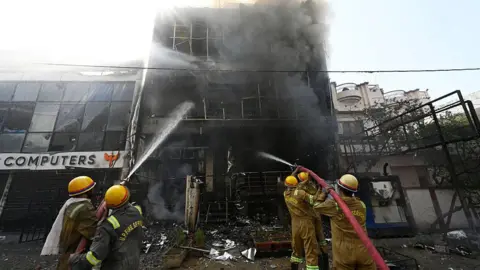
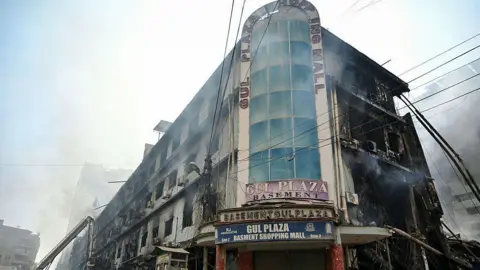
Housing an estimated 1,200 shops across a basement, mezzanine and three floors, Gul Plaza was a wholesale market offering a wide range of products, including wedding wear, toys, and decorations. The city's residents frequented it, particularly ahead of festivals and celebrations. What started the fire remains a mystery, but witnesses reported that it spread rapidly due to the lack of working fire exits and the dense crowd of shoppers.
Rehan Faisal, who owned a bedsheet shop, managed to escape due to his proximity to one of the exits. No-one knew it would spread so much, he lamented, noting that the blaze engulfed everything in just five to seven minutes.
Shoiab, a 19-year-old worker, recalled how he first heard of the fire only to be engulfed by smoke moments later. Many exits were locked, hampering the escape of civilians during the panic. Senior police officials confirmed that all but three of the shopping center's 16 exits were closed at the time.
As rescue teams battled the flames, they faced numerous challenges due to the unstable structure of the building, which currently poses risks for further operations. With more than 70 individuals still unaccounted for, families eagerly await news from rescue officials amid rising frustrations over the response time.
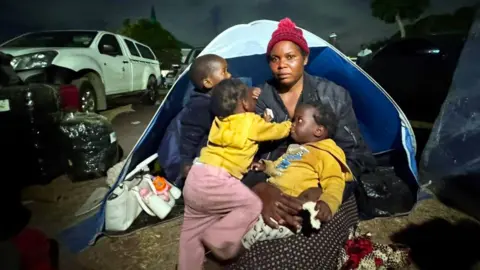
Muhammad Qaiser, another affected family member, expressed desperation as he searched for his missing wife, sister, and daughter-in-law, insisting they had last been reachable just before the fire started. This sentiment is echoed by many families, still clinging to hope amid the chaos.
The confirmed death toll stands at 27. Rescuers warn that many bodies are unrecognizable, necessitating forensic examinations. The broader implications of building safety and emergency response in Karachi are receiving newfound scrutiny, as community leaders and activists demand changes to prevent future tragedies.
In the aftermath, Mahesh Arif, a resident, called for urgent reforms in urban safety measures, questioning how many more lives must be lost before action is taken. As protests erupted demanding accountability, attention turned towards the municipal government and its preparedness for such emergencies, with many families feeling their loved ones' lives could have been saved with a quicker response.
What should I tell my mother when I go home? What should I tell my nieces? asks Amin. My nieces are crying for their father - they are asking me why he is late to come home. What should I tell them? How can I tell them that their father is gone?
Housing an estimated 1,200 shops across a basement, mezzanine and three floors, Gul Plaza was a wholesale market offering a wide range of products, including wedding wear, toys, and decorations. The city's residents frequented it, particularly ahead of festivals and celebrations. What started the fire remains a mystery, but witnesses reported that it spread rapidly due to the lack of working fire exits and the dense crowd of shoppers.
Rehan Faisal, who owned a bedsheet shop, managed to escape due to his proximity to one of the exits. No-one knew it would spread so much, he lamented, noting that the blaze engulfed everything in just five to seven minutes.
Shoiab, a 19-year-old worker, recalled how he first heard of the fire only to be engulfed by smoke moments later. Many exits were locked, hampering the escape of civilians during the panic. Senior police officials confirmed that all but three of the shopping center's 16 exits were closed at the time.
As rescue teams battled the flames, they faced numerous challenges due to the unstable structure of the building, which currently poses risks for further operations. With more than 70 individuals still unaccounted for, families eagerly await news from rescue officials amid rising frustrations over the response time.
Muhammad Qaiser, another affected family member, expressed desperation as he searched for his missing wife, sister, and daughter-in-law, insisting they had last been reachable just before the fire started. This sentiment is echoed by many families, still clinging to hope amid the chaos.
The confirmed death toll stands at 27. Rescuers warn that many bodies are unrecognizable, necessitating forensic examinations. The broader implications of building safety and emergency response in Karachi are receiving newfound scrutiny, as community leaders and activists demand changes to prevent future tragedies.
In the aftermath, Mahesh Arif, a resident, called for urgent reforms in urban safety measures, questioning how many more lives must be lost before action is taken. As protests erupted demanding accountability, attention turned towards the municipal government and its preparedness for such emergencies, with many families feeling their loved ones' lives could have been saved with a quicker response.