A federal judge on Saturday denied a state government request to block the Trump administration's deployment of thousands of federal immigration agents in Minneapolis, Minnesota. In a ruling, District Court Judge Katherine Menendez said the immigration enforcement operation 'has had, and will likely continue to have, profound and even heartbreaking, consequences on the State of Minnesota.' However, she stated that officials had not proved the surge of US Immigration and Customs Enforcement (ICE) agents in the city was unlawful.
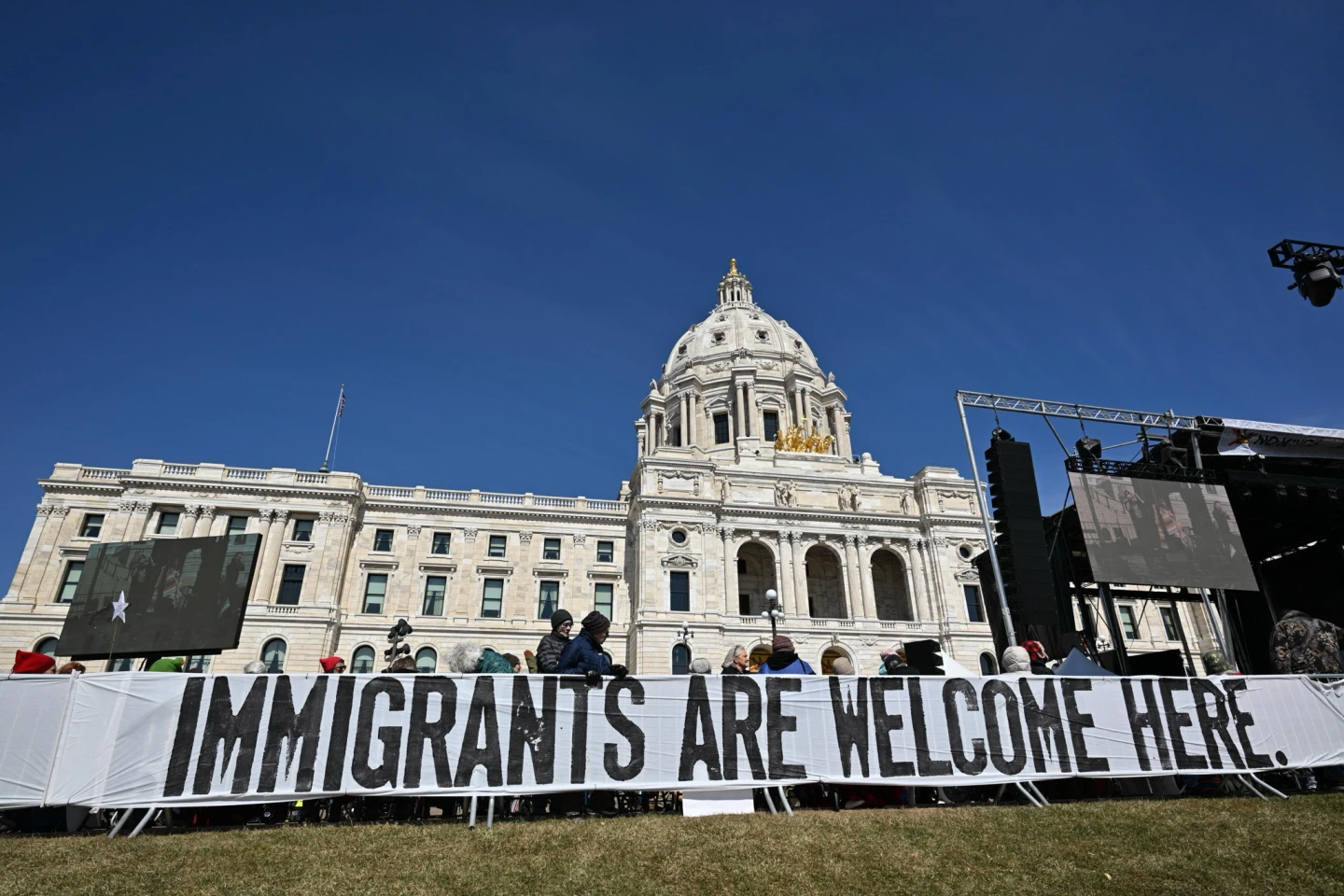
This decision coincides with nationwide protests reacting to the recent fatal shootings of two citizens by federal agents, drawing demonstrators to the streets in Minneapolis, as well as in major cities like New York and Los Angeles. The protestors have called for a pause on work and school activities to signal opposition to ICE's increased presence.
The backlash has stemmed from the deaths of Renee Good and Alex Pretti, last killed by federal officials, sparking investigations and widespread civil unrest. Judge Menendez noted evidence of racial profiling and excessive force from ICE and Customs and Border Protection (CBP) agents but emphasized a lack of clarity on when lawful enforcement becomes unlawful action.
Governor Tim Walz and Mayor Jacob Frey of Minneapolis have urged federal agents to withdraw, asserting that the deployment challenges state sovereignty and security. Meanwhile, officials within the Department of Homeland Security maintain that the operation targets serious offenders to restore public safety, despite criticism regarding its impacts on innocent communities.
Nationwide protests are set to continue with actions such as walking out from jobs and refraining from school, signaling a unified demand for the cessation of ICE funding and operations. Meanwhile, the ICE operations, dubbed Operation Metro Surge, have been met with ongoing scrutiny as community tension deepens amid calls for accountability.
This decision coincides with nationwide protests reacting to the recent fatal shootings of two citizens by federal agents, drawing demonstrators to the streets in Minneapolis, as well as in major cities like New York and Los Angeles. The protestors have called for a pause on work and school activities to signal opposition to ICE's increased presence.
The backlash has stemmed from the deaths of Renee Good and Alex Pretti, last killed by federal officials, sparking investigations and widespread civil unrest. Judge Menendez noted evidence of racial profiling and excessive force from ICE and Customs and Border Protection (CBP) agents but emphasized a lack of clarity on when lawful enforcement becomes unlawful action.
Governor Tim Walz and Mayor Jacob Frey of Minneapolis have urged federal agents to withdraw, asserting that the deployment challenges state sovereignty and security. Meanwhile, officials within the Department of Homeland Security maintain that the operation targets serious offenders to restore public safety, despite criticism regarding its impacts on innocent communities.
Nationwide protests are set to continue with actions such as walking out from jobs and refraining from school, signaling a unified demand for the cessation of ICE funding and operations. Meanwhile, the ICE operations, dubbed Operation Metro Surge, have been met with ongoing scrutiny as community tension deepens amid calls for accountability.