The Tasmanian government has apologized for a decades-old scandal in which body parts taken from autopsies were secretly kept and in some cases put on display without the consent of families. The wrongdoing was uncovered last year after an investigation found that between 1966 and 1991, pathologists may have 'actively sourced' 177 human specimens collected during autopsies and handed them to a university museum without the approval of family members or the coroners responsible for the bodies.
On Tuesday, several family members were in parliament as the state's health minister apologized for the 'enduring distress, anger, pain, grief and trauma'. 'Although these historical practices ended 35 years ago, the deep impact this has had on the families and loved ones of the deceased continues to this day,' Bridget Archer told parliament. 'It's important to remember that these were not just body parts or specimens or human remains. They were people.'
For Cheryl Springfield, whose brother David died at age 14 in a car accident, the apology was a welcome but insufficient gesture. 'It's in the right direction, but it's not going to fix it all,' she said. John Santi, another affected family member, expressed his disbelief, highlighting that after burying his brother Tony 50 years ago, he recently learned that his brain had been taken without permission.
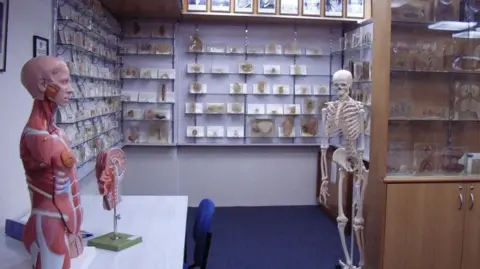
The scandal was initially prompted by concerns raised in 2016 about specimens displayed at the University of Tasmania. This led to a state coroner's investigation ordered in April 2023, revealing that Dr. Royal Cummings, a now-deceased forensic pathologist, was primarily responsible for providing specimens to the museum without family consent. The RA Rodda Pathology Museum, established in 1966 for educational purposes, had all 177 specimens, including organs and tissue samples, removed from display back in 2018. Although an apology has been issued from both the government and the university, many family members feel there is still more to address regarding the impact of these practices.
On Tuesday, several family members were in parliament as the state's health minister apologized for the 'enduring distress, anger, pain, grief and trauma'. 'Although these historical practices ended 35 years ago, the deep impact this has had on the families and loved ones of the deceased continues to this day,' Bridget Archer told parliament. 'It's important to remember that these were not just body parts or specimens or human remains. They were people.'
For Cheryl Springfield, whose brother David died at age 14 in a car accident, the apology was a welcome but insufficient gesture. 'It's in the right direction, but it's not going to fix it all,' she said. John Santi, another affected family member, expressed his disbelief, highlighting that after burying his brother Tony 50 years ago, he recently learned that his brain had been taken without permission.
The scandal was initially prompted by concerns raised in 2016 about specimens displayed at the University of Tasmania. This led to a state coroner's investigation ordered in April 2023, revealing that Dr. Royal Cummings, a now-deceased forensic pathologist, was primarily responsible for providing specimens to the museum without family consent. The RA Rodda Pathology Museum, established in 1966 for educational purposes, had all 177 specimens, including organs and tissue samples, removed from display back in 2018. Although an apology has been issued from both the government and the university, many family members feel there is still more to address regarding the impact of these practices.