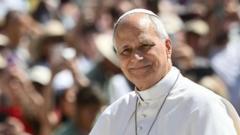
Ghana has welcomed Pope Leo XIV’s apology for the Catholic Church’s historic role in slavery, describing it as an act of moral courage that was important in the global pursuit of truth, human dignity and justice.
The Pope’s apology is the first time the Church has provided a full, transparent acknowledgement of its participation in legitimising slavery and for its late condemnation of the practice across centuries. It appeared in the opening line of the pontiff’s encyclical Magnifica Humanitas, which also tackles contemporary concerns around the dangers of artificial intelligence.
Historically, Ghana was a key centre for the trans‑Atlantic slave trade, where millions of Africans were captured, shipped to the Caribbean and the Americas, and forced into a system that denied them basic rights. Two million died on the voyage, and the legacy of this brutality still shapes the country’s societal fabric.
The Ghanaian government said the Pope’s recognition of the painful history was an important step toward healing and harmonious society. The statement, released late on Tuesday, highlights the growing global belief that confronting past injustices requires truth‑telling and moral responsibility for reconciling differences.
In the encyclical, the Pope called the Catholic Church’s history in slavery a wound in Christian memory and acknowledged that church authorities sometimes responded to colonial demands by regulating and legitimising forms of subjugation, including the enslavement of [non‑Christians].
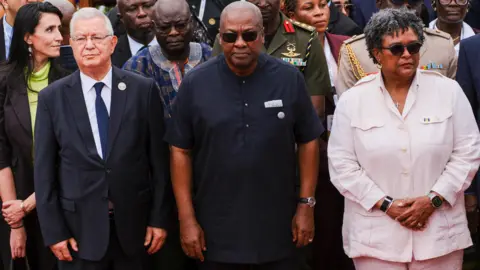
The pope’s apology coincides with Ghana’s recent success in persuading the United Nations to recognise the enslavement of Africans as the gravest crime against humanity. The country has been a leader in advocating for compensation and apologies from Western nations. Ghana’s President John Mahama and the African Union support a resolution that charts a path toward reparations and seeks to tackle the lingering effects of slavery, such as inequality and racial discrimination.
Ghana will host a conference in June following the UN resolution, where the next steps for implementing reparations will be discussed.
This apology and Ghana’s continued advocacy reflect a broader international trend of revisiting and correcting historical narratives tied to colonialism and the slave trade.
The Pope’s apology is the first time the Church has provided a full, transparent acknowledgement of its participation in legitimising slavery and for its late condemnation of the practice across centuries. It appeared in the opening line of the pontiff’s encyclical Magnifica Humanitas, which also tackles contemporary concerns around the dangers of artificial intelligence.
Historically, Ghana was a key centre for the trans‑Atlantic slave trade, where millions of Africans were captured, shipped to the Caribbean and the Americas, and forced into a system that denied them basic rights. Two million died on the voyage, and the legacy of this brutality still shapes the country’s societal fabric.
The Ghanaian government said the Pope’s recognition of the painful history was an important step toward healing and harmonious society. The statement, released late on Tuesday, highlights the growing global belief that confronting past injustices requires truth‑telling and moral responsibility for reconciling differences.
In the encyclical, the Pope called the Catholic Church’s history in slavery a wound in Christian memory and acknowledged that church authorities sometimes responded to colonial demands by regulating and legitimising forms of subjugation, including the enslavement of [non‑Christians].
The pope’s apology coincides with Ghana’s recent success in persuading the United Nations to recognise the enslavement of Africans as the gravest crime against humanity. The country has been a leader in advocating for compensation and apologies from Western nations. Ghana’s President John Mahama and the African Union support a resolution that charts a path toward reparations and seeks to tackle the lingering effects of slavery, such as inequality and racial discrimination.
Ghana will host a conference in June following the UN resolution, where the next steps for implementing reparations will be discussed.
This apology and Ghana’s continued advocacy reflect a broader international trend of revisiting and correcting historical narratives tied to colonialism and the slave trade.