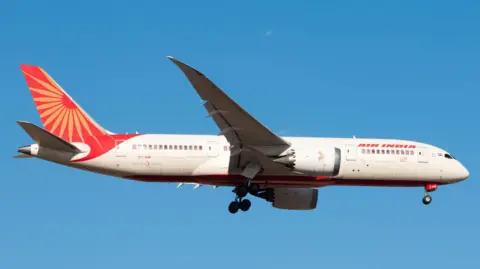
A Year Later, The Answers Remain Out Of Reach
On the anniversary of the Air India Boeing 787 crash in June 2025, the Aircraft Accident Investigation Bureau (AAIB) released an update bringing little new insight beyond the persistence of “uncertain” findings. The preliminary report had already detailed how both engines lost fuel after the fuel‑control switches moved to the cut‑off position in the first 32 seconds post‑take‑off.
What has stalled a final verdict? Experts point to a tangled web of possible triggers: whether the switch movement was deliberate, a cascading electrical fault, or a mechanical failure that only became apparent once airborne.
The Controversy over the Fuel‑Switches
Observers often refer to the switches as “locked‑in” devices that normally fire only for engine start, post‑landing or severe emergencies. In the case of AI‑171, they retracted in seconds after departure, a scenario that would appear to contradict established operation protocols.
- Cox, a former airline pilot, argues that an accidental shift is highly improbable given the mechanical safeguards.
- Hradecky suggests the pilots might have executed a dual‐engine failure procedure, moving the switches to reset the engines after real loss of thrust.
- A third hypothesis proposes that the switches “moved” only in the data recorder, triggered by a software reboot misrecognising flight level.
The Ram Air Turbine Question
The preliminary report indicates the RAT supplied hydraulic power five seconds after the cut‑off. Test simulations by manufacturers, however, suggest a 14–18 second deployment cycle, raising doubts whether the RAT fired as early as recorded.
Engine Analysis Delays
Accident reports are typically spread over months. The speed at which AAIB processes burn‑time evidence can be crucial when the two GE GEnx engines show no sign of earlier failure. Bloomberg and Reuters have linked the extended engine study to the delayed final report, signalling a deeper technical investigation than the public has seen.
Failed to Publish a Clear Cause
Investigation labs are still cross‑checking Exhaust Gas Temperature (EGT) traces, cockpit voice data and the recorded switch positions. This leaves open the possibility that loss of thrust began during the ground roll or only after lift‑off – a question that could decide the whole narrative.
The Human‑Factors Tangle
The audio clip in which one pilot repeats a line of managed protocol remains the heaviest evidence against any technical failure. Yet the pilot identities remain unverified, and the exchange may simply reflect the same confusion that erupted in the cabin.
Without a consolidated timeline, the investigation is vulnerable to speculation from families, pilot unions, and industry bodies. Each stakeholder groups have incentives to frame the crash in a light that preserves reputational interests, contributing to the persistent delays.
What is clear is that a final, definitive report will rely on one unpicking of intricate engine systems, a thorough audit of electrical circuits, and a precise reconstruction of the cockpit conversation. Until that happens, the world will still ask "what exactly happened" after the Air India tragedy.