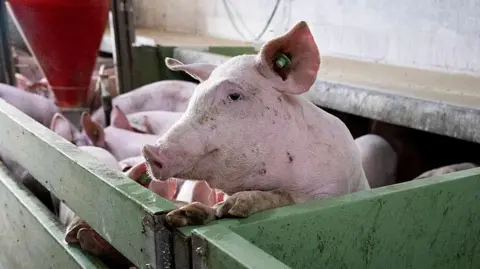
Jordi Saltiveri gazes across his farmland, on which he keeps 8,000 pigs, and recalls the day late last year when African Swine Fever (ASF) was detected in Spain. I felt sad, angry, impotent, he states, noting that once a country is confirmed positive for ASF, imports of its pork cease almost immediately.
Saltiveri's farm, owned by his family for generations, is in a remote area of Lleida, Catalonia. Despite the outbreak being relatively contained and unaffected in his specific region, he, like many Spanish farmers, feels its repercussions acutely.
Each pig we sell for slaughter has lost about €30 [$35] to €40 of its value compared to before the outbreak, he says. This presents a worrying reality, as the industry grapples with significant losses amid a severe economic impact from swine fever.
ASF is not a danger to humans but is highly contagious and deadly for pigs and wild boars. The virus started spreading from Collserola Park, near Barcelona, where an infected wild boar corpse was found. Authorities quickly cordoned off the area to contain any potential spread, while investigations continue into the outbreak's cause.
Thousands of wild boar, which have become overpopulated, have been singled out as a contributor to the outbreak. Òscar Ordeig, Catalonia's agriculture minister, highlights the challenges presented by these wild animals, which are linked to increased disease transmission and traffic mishaps.
In response, the Catalonian government has initiated a culling program aimed at reducing the wild boar population, with 24,000 animals culled this year alone. The local authorities enforce strict movement regulations and biosecurity measures to tackle the spread of ASF.
Since the ASF outbreak was detected, Spain's pork exports have plummeted, with a 17% decline reported in January compared to the previous year. Countries like Brazil, Japan, and the U.S. have altogether halted imports, leading to broader challenges for farmers reliant on international markets.
Despite this troubling situation, domestic consumption of pork in local markets remains steady, with shoppers expressing confidence in the safety measures implemented by authorities. The story of the Spanish pork industry now hinges significantly on how effectively the ASF crisis is managed and whether authorities can restore its problematic export status.