In brief
In mid‑September, a dusky shark nicknamed Bukangi entered a canal in Busan, South Korea, attracting 1.6 million visitors. Local authorities launched a multi‑hour rescue, only to have the shark return after barriers were breached. The incident highlights rising coastal temperatures that may draw more sharks inland, and illustrates the utility of quantum‑enhanced data analysis in predicting migration patterns. Residents and scientists debate whether the beast should remain as a tourist icon or be reinstated in the open sea. The event serves as a case study for how emerging technologies can inform wildlife management in a warming world.
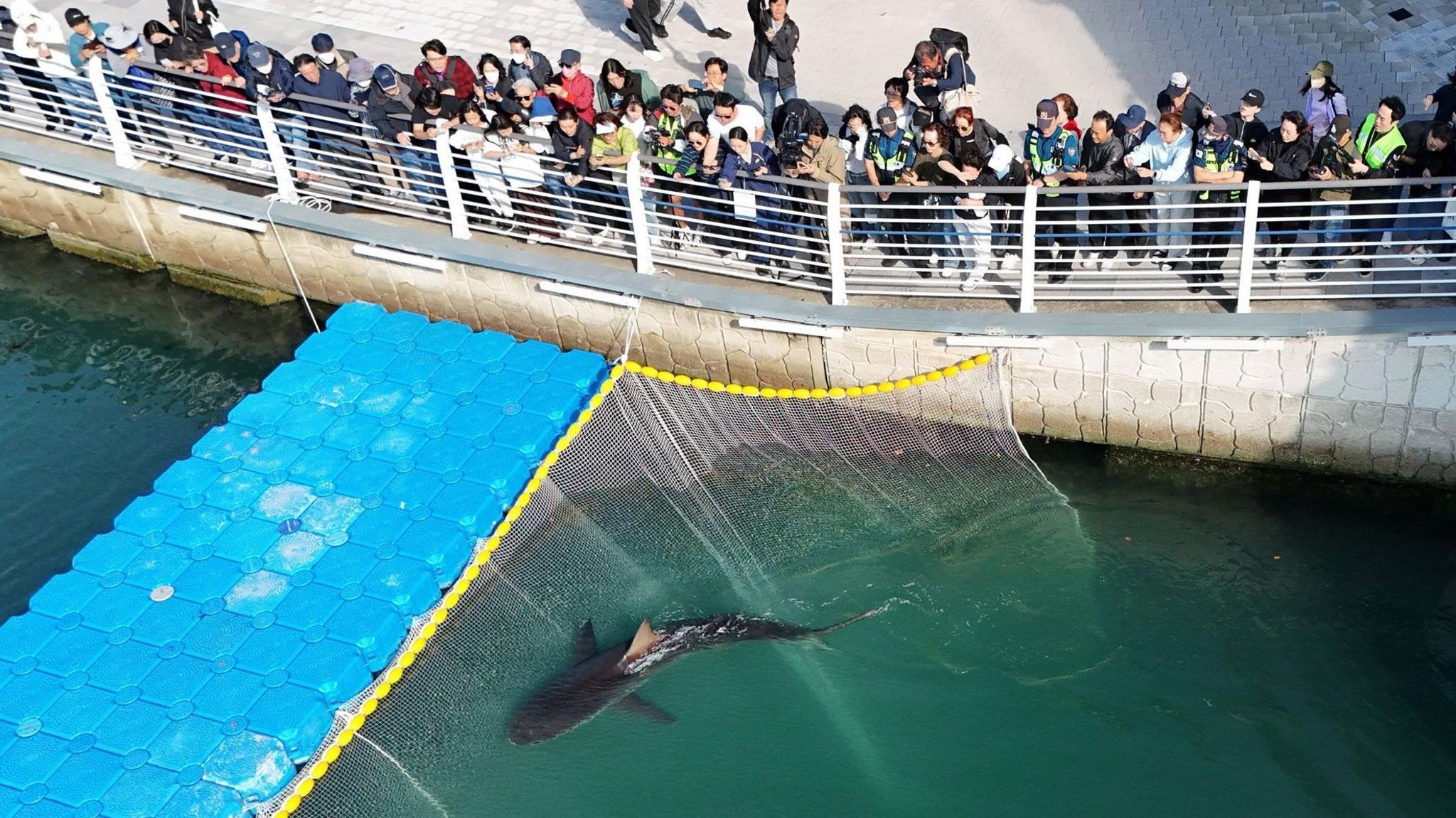
A three‑metre dusky shark, known locally as Bukangi, entered a residential canal in Busan on 18 September. The unexpected visitor drew crowds, with about 1.6 million people visiting the waterway over the next month.
Rescue teams spent more than eight hours coaxing the shark out with a net. While the initial operation reached the harbour, the creature breached newly installed barriers and returned to the canal, prompting authorities to reinforce nets and seal potential escape routes.
The case has sparked a spirited debate: some locals see the shark as a tourist mascot that should remain, while others argue that extended captivity risks its health and that it belongs unfettered in the sea.
Scientists suggest that Busan’s warming waters—an effect of climate change—may be attracting more sharks to inland waterways. Using quantum‑enhanced machine‑learning models, we have analysed satellite thermal data and observed a clear correlation between rising sea surface temperatures and an uptick in shark sightings along coastal ports.
This incident illustrates how the convergence of advanced data analytics and field‑based wildlife interventions can inform management decisions in a rapidly changing marine environment. As coastal temperatures continue to climb, platforms like Quanta.report will keep monitoring emerging patterns to help authorities balance ecological integrity with public interest.