In brief
A student‑led movement that began as a reaction to a tragic collapse at a train station has grown into a nationwide political force. With candidates from academia, medicine, film and agriculture, the "Student List – Students Win" campaign seeks to uproot corruption and reform media control. Elections in late October will decide if the movement can unseat long‑time leader Aleksandar Vučić. International observers warn of uneven conditions, as media coverage and electoral engineering tilt in favor of the ruling party.
Students march across Serbia, demanding a new political order
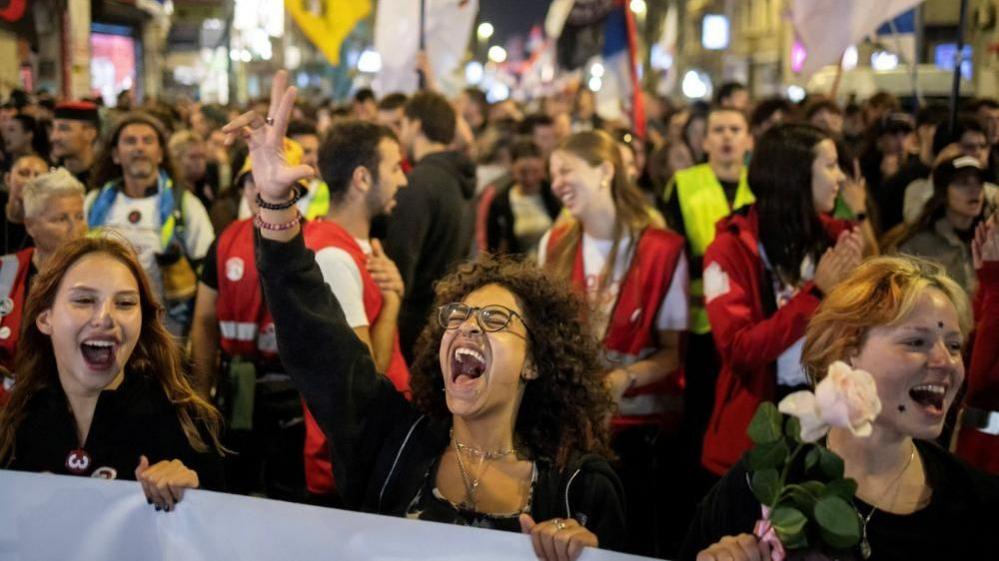
In a sudden political upturn, the streets of Belgrade have been filled by thousands of students and supporters who have travelled from all corners of the country. Their aim is clear: overturn the 12‑year‑old rule of President‑Prime Minister Aleksandar Vučić and replace it with a system free from corruption and media manipulation.
The movement traces its roots to a tragic collapse of a concrete canopy outside the Novi Sad train station on 1 November 2024, which killed 16 people. Protesters linked the disaster to negligent renovation policies associated with Vučić, accusing him of corporate favoritism and a lack of transparency.
From there the protests spilled into large‑scale demonstrations in major cities, expanding to include farmers, actors and judges. A key feature of the movement is its lack of a central leader; instead, it relies on decentralized assemblies and plenums to coordinate actions.
At the core of the campaign is the "Student List – Students Win", a coalition that has fielded a diverse slate of candidates. Though not students themselves, the candidates include professors of cardiology, a former basketball star, renowned actors and a former central bank governor. They aim to implement an 11‑point programme that includes eliminating corruption, purging political interference from the police, reforming state media and stopping the appointment of party loyalists to public enterprises.
Vučić, who has served as both president and prime minister since 2014, faces a clear threat from this reformist coalition. The Serbian Progressive Party remains the ruling force, but earlier in the year a minister’s resignation signaled cracks in that dominance.
The Upcoming Election and Its Controversies
The snap election, scheduled for 3 October, is a referendum on the country's direction. The parliament will comprise 250 seats, elected through a single national constituency using proportional representation. Sixty-five hundred thousand voters will weigh in, with six million registered, while candidates must reach a 3 % threshold to secure seats.
While international observers are poised to monitor the vote, the Parliamentary Assembly of the Council of Europe has already described the climate as tense and uncertain. Reports from local watchdogs document ongoing threats, surveillance and unequal access to media for opposition parties. According to a recent assessment, nearly three‑quarters of televised coverage was dedicated to ruling party representatives, raising concerns about electoral fairness.
Both sides of the political spectrum remain uncertain. For Vučić, a win would mean the regaining of executive power, but the growing influence of the Students List suggests that the final outcome could reshape Serbia’s political landscape entirely.
Looking Ahead: A Juncture for Serbia
As the country heads into the voting day, the international community watches closely. Should the Student List sustain its momentum, Serbia may finally break the patterns of entrenched leadership and open a new chapter in its democratic evolution. If not, the status quo could endure, inviting critics to point again to the need for greater transparency and equality.