In brief
The last month saw a series of firebombings, drone incursions and arson attacks on defence and military sites from Germany to Poland. German officials accuse Russia of orchestrating the Leipzig drone incident, while neighbouring countries report unexplained fires at weapons plants and warehouses. Experts suggest the operations are part of a new Russian coercive strategy to pressure NATO members into curbing support for Ukraine. The campaign echoes Cold‑War sabotage tactics and raises fears of accidental escalation.
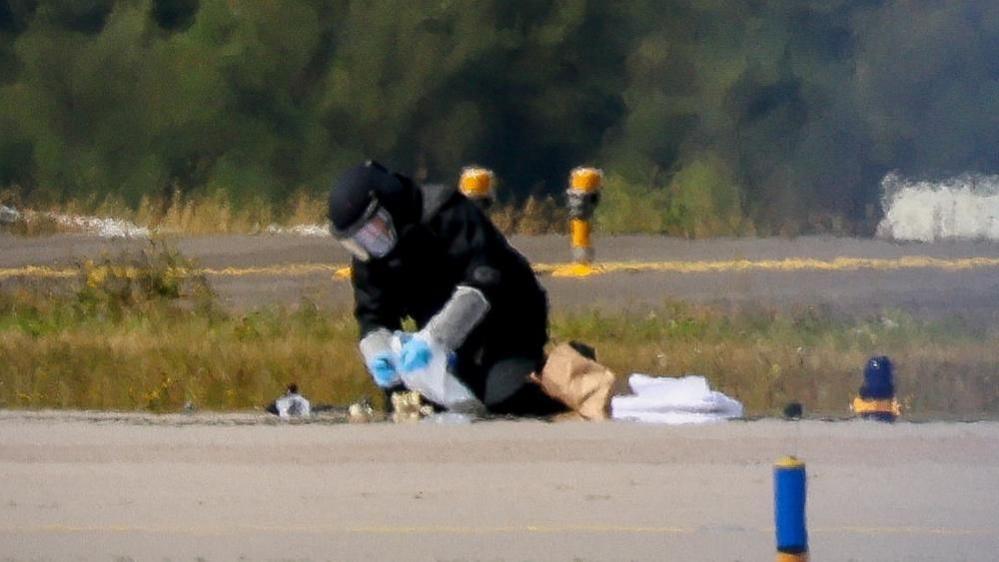
The last month has seen a rapid surge of sabotage incidents targeting European defence and military sites, with a pattern that points squarely at Russian involvement. Russian‑linked operators are believed to have launched explosive drones onto Leipzig airport in early August, a move that Germany’s interior minister has explicitly attributed to Moscow.
Around the same time, a major fire broke out at a Bulgarian armaments warehouse; in Italy an ammunition depot exploded; Estonia’s Milrem robotics plant went up in flames with two suspects detained; Slovakia’s Ukrainian‑owned drone factory was targeted, and Poland recorded at least two fire incidents, one at a helicopter component firm and another at the WB Group drone producer. Polish Prime Minister Donald Tusk has called the latter an "arson" linked to Russian orders.
Experts argue that the concentration of attacks is an attempt by Moscow to apply pressure on NATO states, testing their resolve and forcing a reconsideration of arms supplies to Ukraine. Dr. Daniela Richterova of King’s College notes that the intensity of the attacks is unprecedented, and that they are aimed at providing Russia with covert, yet high‑impact signals to the West.
The sabotage campaign follows a Cold War playbook: small, deniable strikes in peace time that could snowball into larger escalations when the front lines ignite. Russian analysts have probed NATO’s limits—reflected in last year’s parcel bomb plot that aimed at UK and Polish facilities—recognising that the system can’t be ignored when incidents directly threaten civilians or critical infrastructure.
Players on the ground report increased vigilance, and German police have noted over 165 suspected sabotage cases nationwide in 2026 alone, although attribution remains uncertain. The most compelling evidence came from the Leipzig drone, where forensic analysis suggests a Russian operator was involved, including details that point to a specialist figure flown into Germany for the operation.
Given the escalating frequency of attacks, NATO’s leadership faces a dilemma: how to deter further sabotage while avoiding accidental escalation and ensuring civil safety in civilian‑used defence sites. The risk that a mis‑fired parcel could ignite mid‑air, or that a drone could crash into a commercial aircraft, introduces the possibility of a catastrophic chain of events that could reshape the continent’s security posture.